

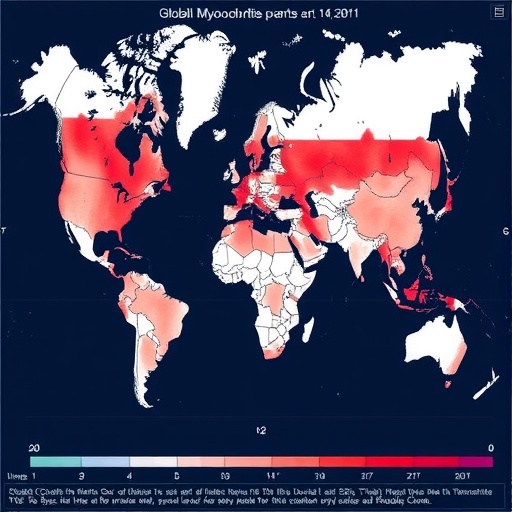
Myocarditis stands as a complex and multifaceted inflammatory disease of the heart muscle, manifesting a broad spectrum of clinical presentations and etiologies. This condition affects approximately one million individuals globally each year, burdening healthcare systems with an estimated 17,000 deaths annually. Despite its worldwide prevalence, the incidence of myocarditis does not conform to uniform patterns, instead varying dramatically across different geographic regions, age groups, and between sexes. Such disparity underscores the intricate interplay of environmental, biological, and socioeconomic factors influencing the onset and progression of myocarditis.
At its core, myocarditis results from direct injury to the myocardium, commonly instigated by infectious agents or immune-mediated responses. The etiological landscape of myocarditis is notably heterogeneous, with causative factors pivoting depending on local epidemiology and demographic variables. In wealthier nations, the disease predominantly originates from infection with cardiotropic viruses, such as parvovirus B19 and human herpesvirus 6. These viruses are frequently implicated in lymphocytic myocarditis, particularly affecting pediatric populations, where they trigger an inflammatory cascade leading to myocardial damage.
Conversely, in low-to-middle-income countries (LMICs), the etiological spectrum shifts markedly. Here, pathogen diversity escalates beyond classic viral agents to include arthropod-borne viruses like dengue virus, retroviruses such as human immunodeficiency virus (HIV), and parasitic infections. Among these, malaria-causing Plasmodium species and Trypanosoma cruzi, the etiologic agent of Chagas disease, are paramount in contributing to myocarditis incidence. These infectious agents induce myocarditis through complex pathogenic mechanisms, ranging from direct myocardial invasion to immune-mediated myocardial injury.
The recognition that myocarditis is influenced by systemic autoimmune disorders and genetic susceptibilities adds further layers of complexity to its pathogenesis. Autoimmune myocarditis arises when the immune system erroneously targets cardiac tissue, an event often precipitated by molecular mimicry or dysregulated immune responses following infection or other triggers. Additionally, emerging iatrogenic causes, particularly immune checkpoint inhibitors employed in cancer therapy and novel gene therapeutics, have been increasingly implicated in myocarditis cases. These modern medical interventions, while revolutionizing treatment paradigms, have unveiled previously unrecognized risks by modulating immune surveillance and cardiac cell gene expression.
Epidemiological studies aiming to quantify the global burden of myocarditis face formidable challenges. Variability in diagnostic criteria—from clinical suspicion and imaging modalities to histopathological confirmation via endomyocardial biopsy—significantly impacts reported incidence and prevalence data. Moreover, many cases remain undiagnosed, especially in resource-limited settings where access to advanced diagnostic tools such as cardiac magnetic resonance imaging (CMR) and molecular diagnostics is constrained. This diagnostic gap contributes to underestimation of the true myocarditis burden worldwide.
In high-income settings, the utilization of sophisticated imaging and biomarker-driven protocols facilitates early diagnosis and risk stratification. Multiparametric CMR has revolutionized noninvasive detection of myocardial inflammation, fibrosis, and edema, enabling clinicians to delineate myocarditis from mimics such as ischemic heart disease and cardiomyopathies. Biomarkers, including cardiac troponins and novel inflammatory markers, complement imaging data to improve diagnostic accuracy and prognostication. Yet, these advances remain largely inaccessible in LMICs, perpetuating an inequity in detection and management.
The disparity in myocarditis epidemiology also extends to demographic factors like age and sex. Notably, male individuals exhibit higher myocarditis susceptibility and severity, a phenomenon potentially related to sex hormone influence on immune modulation and viral tropism. Age-related differences reflect evolving immune competence and exposure risk; pediatric myocarditis frequently stems from viral infections, whereas adult myocarditis may involve autoimmune and iatrogenic etiologies to a greater extent.
Understanding myocarditis within a global framework mandates integrating data from diverse populations and healthcare environments. Multicentric registries capturing granular clinical, immunological, and genetic data can illuminate patterns of susceptibility, clinical outcomes, and therapeutic responses. Such registries must prioritize inclusivity, especially representing underexplored regions bearing significant infectious disease burdens linked to myocarditis.
Innovations in multi-omics technologies—encompassing genomics, transcriptomics, proteomics, and metabolomics—are poised to redefine myocarditis research and clinical practice. These approaches can unravel molecular signatures predictive of disease susceptibility, progression, and treatment response. Coupled with advanced imaging and biomarker development, multi-omics driven precision medicine offers a promising frontier in myocarditis management, tailored to individual pathogenic profiles and regional epidemiology.
Translating these scientific advances into practical interventions necessitates overcoming infrastructural and economic barriers, particularly in LMICs where myocarditis contributes disproportionately to cardiovascular morbidity and mortality. Capacity building for diagnostic services, development of cost-effective screening tools, and training of healthcare professionals in myocarditis recognition are critical steps to mitigate the global disease burden.
Furthermore, refinement and standardization of diagnostic criteria are paramount. Harmonizing clinical guidelines and incorporating emerging biomarkers and imaging standards can improve disease classification and facilitate international research collaboration. Such efforts enhance data comparability and enable robust epidemiologic insights, essential for informed public health strategies and resource allocation.
The multifactorial nature of myocarditis also challenges therapeutic approaches. Management ranges from supportive care and immunosuppressive regimens to antiviral therapies and mechanical circulatory support in severe cases. Understanding pathogen-specific mechanisms and individual host responses will enable development of targeted therapies, minimizing treatment-related adverse effects and improving outcomes.
Ultimately, addressing myocarditis demands a comprehensive, interdisciplinary approach bridging cardiology, infectious diseases, immunology, and global health. Enhanced surveillance systems, coupled with technological advances, hold the promise of transforming myocarditis from an elusive diagnosis to a manageable condition. Such progress is vital to reducing the substantial morbidity and mortality myocarditis inflicts worldwide, particularly among the most vulnerable populations.
As the global medical community intensifies research efforts, the convergence of epidemiological insights and molecular innovations stands to illuminate the complexities of myocarditis. This paradigm shift will foster precision medicine initiatives and equitable healthcare delivery, shaping the future trajectory of myocarditis diagnosis, treatment, and prevention across continents.
Subject of Research: Global epidemiology and multifactorial etiology of myocarditis, including geographic, demographic, and socioeconomic disparities.
Article Title: Global epidemiology of myocarditis: disparities in age, sex and geography.
Article References:
Klingel, K., Tschöpe, C., Yon, D.K. et al. Global epidemiology of myocarditis: disparities in age, sex and geography. Nat Rev Cardiol (2026). https://doi.org/10.1038/s41569-026-01276-w
Image Credits: AI Generated
DOI: https://doi.org/10.1038/s41569-026-01276-w
Keywords: myocarditis, epidemiology, cardiotropic viruses, parvovirus B19, human herpesvirus 6, dengue virus, HIV, Plasmodium, Trypanosoma cruzi, Chagas disease, immune checkpoint inhibitors, gene therapy, multi-omics, cardiac magnetic resonance imaging, diagnostic disparities


