

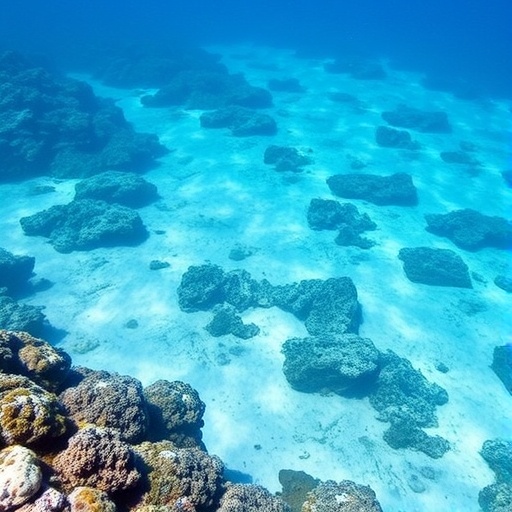
In an alarming revelation for the future of global marine ecosystems, recent research published in Nature Communications sheds light on the extensive and severe damage inflicted upon coral reefs during the 2014-2017 Global Coral Bleaching Event. This unprecedented phenomenon has left an indelible mark on coral health worldwide, revealing vulnerabilities that threaten biodiversity, fisheries, and coastal protection. The study meticulously quantifies bleaching severity and spatial extent, highlighting the profound impact of climate change on these vital underwater habitats.
Coral reefs, often described as the “rainforests of the sea,” are amongst the most biologically diverse ecosystems on Earth. They provide essential ecosystem services, including habitat provision for myriad marine species, supporting fisheries that feed millions, and protecting coastlines from erosion and storm surges. However, these ecosystems are highly sensitive to temperature changes. When seawater temperatures rise above the typical seasonal maximum, corals become stressed and expel the symbiotic algae, zooxanthellae, that live within their tissues. This process, known as bleaching, deprives corals of their primary energy source, often resulting in mortality if the stressful conditions persist.
The authors, led by C.M. Eakin and colleagues, conducted a comprehensive global assessment to map out reef damage using satellite data combined with in situ observations collected over the four-year period of the bleaching event. This event was marked by anomalous sea surface temperature elevations, linked directly to a potent combination of climate drivers, including the most intense El Niño recorded in recent history. Their multi-disciplinary approach integrated temperature anomaly data, reef vulnerability indices, and ecological assessments to deliver an unprecedented synthesis of bleaching impacts worldwide.
One of the remarkable aspects uncovered is the sheer geographic scale over which the bleaching occurred. Coral reef systems in the Indo-Pacific, the Caribbean, and even relatively isolated reef structures in the Indian Ocean faced simultaneous exposure to harmful thermal stress. This simultaneous bleaching represents one of the largest coral mortality events ever recorded, erasing decades of conservation and recovery achievements in many locations. The authors detail how some reef systems experienced bleaching of over 90% of their coral populations, leading to massive reductions in coral cover and significant changes in reef structure.
The physiological mechanisms underlying coral susceptibility are complex but stem largely from the breakdown of the delicate symbiosis with zooxanthellae. Thermal stress disrupts photosynthetic processes in these algae, generating toxic reactive oxygen species that damage both algal and coral cells. This biochemical cascade triggers expulsion of the algae, leaving corals colorless and energy-depleted. Prolonged bleaching events impede recovery, resulting in coral tissue death and increased vulnerability to disease and predation.
Importantly, the research highlights extreme heterogeneity in bleaching severity, influenced by local factors such as water quality, depth, and pre-existing stressors. Some reefs demonstrated resilience or partial recovery where mitigating conditions allowed corals to adapt or acclimate. These observations underscore the urgent need for nuanced management strategies that account for local environmental contexts while addressing the broader drivers of climate change.
The findings also carry significant implications for ecosystem services. Coral bleaching diminishes reef complexity and productivity, undermining fish populations and the livelihoods that depend on them. The threat extends beyond ecological degradation—human communities reliant on coral reefs for food security, tourism, and coastal protection face heightened socioeconomic risks. This cascade effect highlights the interconnectedness of environmental health and human well-being.
From a methodological perspective, the study’s integration of satellite-derived sea surface temperature anomalies with in-water surveys represents a powerful model for future monitoring efforts. High-resolution global datasets allow for near-real-time detection of bleaching events, enabling faster response from conservation stakeholders. Furthermore, the authors advocate for enhanced global coordination in reef monitoring, emphasizing the need for standardized protocols to improve data comparability and predictive modeling.
Crucially, the comprehensive dataset generated by the 2014-2017 event provides a baseline for evaluating future coral responses to climate stressors. By establishing historical benchmarks, scientists can better differentiate between natural variability and human-induced impacts. This is vital for refining climate models and identifying potentially resilient coral genotypes or populations that may inform restoration and assisted evolution initiatives.
The study also advances the understanding of feedback mechanisms within reef ecosystems. Loss of live coral reduces structural complexity, impairing habitat provision and altering community composition. These shifts may favor algal dominance and further inhibit coral recovery, initiating a potential phase shift in reef ecosystems. The cascading consequences of such transitions are profound, threatening the biodiversity that coral reefs historically support.
From a broader climatological view, the coral bleaching event serves as an indicator of ocean health and a gauge of climate change impacts. Rising greenhouse gas concentrations have elevated baseline ocean temperatures, while increasing the frequency and severity of marine heatwaves. These stressors are projected to worsen, challenging the long-term persistence of coral reefs globally unless robust mitigation efforts are enacted.
In response to these threats, the authors underscore the imperative of curbing carbon emissions to stabilize global temperatures. They also advocate for adaptive management strategies that enhance reef resilience through local interventions such as reducing pollution, managing fisheries sustainably, and protecting critical habitats. Additionally, technological innovations including coral breeding programs and assisted gene flow offer promising approaches, albeit requiring more research and cautious application.
The publication of this research is poised to influence policy frameworks at national and international levels, urging integration of coral reef conservation in global climate agendas. It serves as both a cautionary tale and a call to action, emphasizing that coral reefs’ survival hinges on immediate, coordinated efforts spanning scientific, governmental, and community domains.
This sobering analysis of the 2014-2017 bleaching event not only documents ecological devastation but also provides a roadmap for future research and conservation. By elucidating the complex interplay between thermal stress, coral physiology, and ecosystem dynamics, the study equips scientists and policymakers with critical insights to tackle one of the most pressing environmental challenges of our time. The preservation of coral reefs is not merely an environmental objective but a necessary step in safeguarding planetary resilience and human livelihoods for generations to come.
Subject of Research: Coral reef damage caused by the 2014-2017 Global Coral Bleaching Event.
Article Title: Severe and widespread coral reef damage during the 2014-2017 Global Coral Bleaching Event.
Article References:
Eakin, C.M., Heron, S.F., Connolly, S.R. et al. Severe and widespread coral reef damage during the 2014-2017 Global Coral Bleaching Event. Nat Commun 17, 1318 (2026). https://doi.org/10.1038/s41467-025-67506-w
Image Credits: AI Generated
DOI: https://doi.org/10.1038/s41467-025-67506-w


