

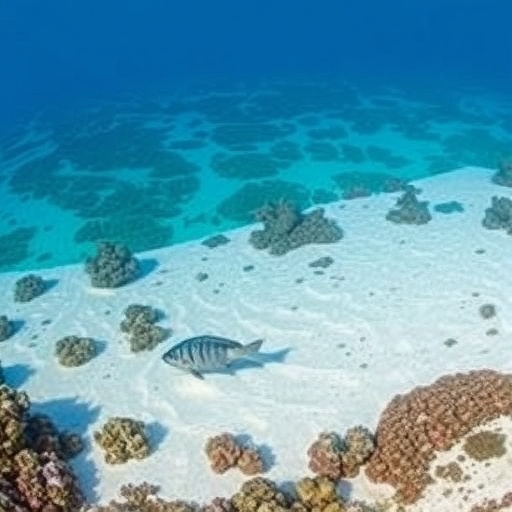
The ongoing climate crisis has reached an alarming inflection point, which is vividly highlighted by the significant findings from the recent study published in the journal “Coral Reefs.” Researchers have meticulously documented the fourth global coral bleaching event, a phenomenon that has been exacerbated by rising ocean temperatures, intensified solar irradiance, and declining water quality. These changes, largely attributed to anthropogenic climate change, have ushered in an era characterized by near-annual occurrences of coral bleaching, posing an existential threat to marine ecosystems and the biodiversity they support.
The findings elucidate the biology and ecology of coral reefs and underscore the critical role they play in marine biodiversity. These vibrant ecosystems, often referred to as the “rainforests of the sea,” harbor thousands of marine species, including fish, mollusks, and various invertebrates. The cost of losing coral reefs is astronomical, not just environmentally but also economically, with significant impacts on fisheries, tourism, and coastal protection. The review of the data has unequivocally shown that the frequency and severity of bleaching events are increasing, leading to coral mortality that directly threatens the overall health of marine ecosystems.
Corals are complex organisms that form a symbiotic relationship with zooxanthellae, microscopic algae that live within their tissues. This relationship is crucial, as it allows corals to obtain energy through photosynthesis. However, when environmental conditions deteriorate—specifically through elevated water temperatures—coral polyps expel their symbiotic algae, leading to a phenomenon known as bleaching. Without these algae, the corals lose their color and the primary source of their energy, ultimately leading to their demise if stressful conditions persist.
The recent research highlights that this fourth global coral bleaching event is not merely an isolated incident, as previous events have indicated a trend characterized by increasing frequency and intensity. The authors explain that the last major bleaching event, which occurred in 2016, acted as a precursor to subsequent episodes. The cyclical nature of these events means that reefs are now facing stressors that were previously rarely encountered. This underscores the alarming trajectory of marine health, where resilient coral populations are consistently eroded by environmental stressors.
Data collected from satellite imagery have enabled researchers to observe coral reef changes on a global scale. Using advanced technology, scientists can monitor temperature anomalies, assess the health of coral reefs, and evaluate the impacts of various stressors in real-time. These tools are indispensable for understanding how marine ecosystems react under duress and leveraging that knowledge to inform conservation efforts. Continued monitoring is essential, as it provides the necessary framework to gauge whether current policies are sufficient or if more aggressive actions are needed to mitigate climate change.
Moreover, the socio-economic implications of coral reef degradation are profound. The loss of coral ecosystems directly impacts livelihoods tied to fisheries and tourism, crucial sectors for many coastal communities. Collaborative management strategies that encompass scientific research with local stakeholder engagement are vital for developing actionable solutions. As highlighted in the study, protecting coral reefs is not merely about preserving biodiversity; it is about safeguarding the livelihoods of millions and maintaining the ocean’s vitality.
The study serves as a call to action for global stakeholders, emphasizing the urgency of addressing climate change through immediate, coordinated efforts. The ramifications of continuing on the current trajectory are unequivocal: as coral reefs decline, so too does the ecosystem’s resilience and capacity to adapt to future environmental changes. This presents not just an ecological crisis but an ethical challenge for societies worldwide, as decisions made today will resonate for generations to come.
Furthermore, the implications of this research extend beyond the equatorial waters where coral reefs are typically expected to thrive. As climate change alters global oceanic conditions, previously stable regions may become more vulnerable to bleaching events. Thus, the approach to coral conservation must also reconsider geographical boundaries and focus on a holistic understanding of oceanic health.
In documenting shifting temperatures, the data suggest that urgent measures need to be put in place. Strategies include reducing carbon emissions, implementing marine protected areas, and scientific interventions that may aid in coral restoration efforts. The prospect of engineering heat-resistant coral strains or enhancing natural resilience through selective breeding is emerging as a promising area of research that may provide a lifeline for struggling coral ecosystems.
The potential for community-led initiatives is also highlighted as an integral part of the solution. Stakeholders from local fishermen to tourism operators must be involved in the conservation dialogue. Their traditional knowledge and vested interest in the health of coral reefs make them invaluable partners in fostering sustainable practices that prioritize ecosystem resilience and recovery.
In conclusion, the insights from this pivotal research underscore the necessity for immediate and sustained action to combat the climate crisis affecting coral reefs. As humanity grapples with the reality of near-annual coral bleaching events, the imperative remains clear: ensuring the survival of these ecosystems is not solely an environmental concern, but a fundamental responsibility to the planet and future generations.
While the road ahead is fraught with challenges, this study offers hope. It serves as a powerful reminder of the resilience inherent in nature, provided that we commit ourselves to nurturing and protecting it. The fourth global coral bleaching event stands as both a warning and an opportunity to revitalize our collective efforts toward meaningful climate action.
Subject of Research: Global Coral Bleaching Events
Article Title: The 4th global coral bleaching event: ushering in an era of near-annual bleaching.
Article References:
Spady, B.L., Skirving, W.J., De La Cour, J.L. et al. The 4th global coral bleaching event: ushering in an era of near-annual bleaching. Coral Reefs (2026). https://doi.org/10.1007/s00338-025-02810-x
Image Credits: AI Generated
DOI: https://doi.org/10.1007/s00338-025-02810-x
Keywords: Coral bleaching, climate change, marine ecosystems, coral reefs, biodiversity conservation.


