

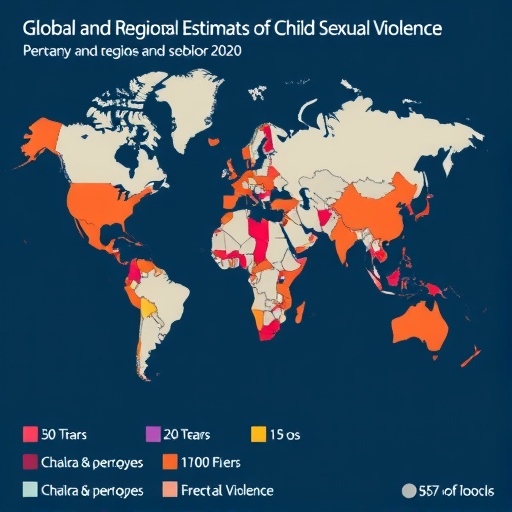
In an ambitious effort to shed light on a deeply troubling yet under-examined global crisis, researchers have published a comprehensive meta-analysis revealing the staggering prevalence of sexual violence against children (SVAC) worldwide. This systematic review, drawing on data from over 1,400 studies encompassing more than seven million individuals, provides the most expansive and current estimates to date of the lifetime and recent experiences of childhood sexual violence across different continents and cultures. The findings underscore the urgent necessity for coordinated and evidence-based interventions that can meaningfully reduce this pervasive public health challenge.
Sexual violence against children is a critical yet persistently hidden issue that transcends geographic, cultural, and socioeconomic boundaries. Despite decades of advocacy, the lack of consistent and reliable prevalence data has hampered global efforts to assess the true scale of the problem and tailor prevention strategies effectively. Addressing this data deficit, the research team undertook a meticulous review process by scouring a broad range of databases in six different languages, spanning publications from 2010 through mid-2024. This exhaustive search culminated in the inclusion of 1,412 studies representing 147 countries, allowing for nuanced regional comparisons and a global synthesis.
One of the most striking revelations from the analysis is the high proportion of individuals reporting some form of sexual violence during childhood. The pooled lifetime prevalence figures reveal that approximately one in five women and nearly one in six men globally have experienced such trauma prior to turning eighteen. These figures, inclusive of both contact and non-contact forms of sexual violence, unveil a harrowing reality that demands urgent attention from policymakers, healthcare providers, and child protection agencies alike.
Delving deeper into the nature of these abuses, the study distinguishes between broader categories of sexual violence and direct physical contact violence, such as rape or sexual assault. While around 20% of women and 17% of men reported any exposure to sexual violence, approximately 12% of women and 10% of men disclosed experiences involving contact violence. This differentiation highlights the varied manifestations of SVAC and reflects the complex spectrum of abuse survivors endure.
Crucially, the research goes beyond static lifetime prevalence numbers by estimating the annual incidence of SVAC. The analysis estimates that in 2024 alone, approximately 73 million girls and 61 million boys worldwide have experienced sexual violence. Within this group, nearly 43 million girls and 35 million boys were subjected to rape or sexual assault. Such recent annual estimates provide a sobering snapshot of ongoing risks faced by children and underscore that SVAC is neither a relic of the past nor a phenomenon confined to isolated regions.
Geographical disparities in prevalence rates emerge as a key finding from the study. In most regions, girls face a somewhat higher risk of sexual violence than boys — a reflection of entrenched gender inequalities and vulnerabilities. However, the global gender gap reported here is notably narrower than in prior meta-analyses, highlighting that boys remain significantly at risk as well. This finding challenges common misconceptions that SVAC predominantly affects girls and calls for inclusive prevention and support programs that address the needs of all children.
The research team employed a sophisticated Bayesian hierarchical model to produce these estimates, allowing them to adjust for marked differences in study methodologies, definitions, and reporting biases across the diverse source materials. This technical approach enhances the robustness and comparability of prevalence figures, providing policymakers with a more reliable evidence base. Importantly, it addresses inherent challenges in SVAC research, such as the underreporting of abuse, heterogeneity of data collection instruments, and varying cultural contexts surrounding disclosure.
Despite the extensive scope of this analysis, the authors recognize significant gaps remain, particularly for regions with limited data or where sexual violence may be subject to greater social stigma and legal barriers. The study emphasizes the pressing need for more standardized designs in future research, promoting harmonized definitions and methodologies to enable better cross-country comparisons and to track trends over time. Filling these evidence gaps is critical to ensuring that interventions are tailored appropriately and equitable.
Beyond the quantitative findings, the implications of this research resonate across multiple sectors, calling for comprehensive, multisystemic responses. Preventing SVAC requires not only health sector engagement but also coordinated involvement from education systems, social services, justice frameworks, and community leadership. Effective strategies hinge on culturally sensitive, trauma-informed approaches that empower survivors and foster safe environments for children.
The study further highlights the importance of widespread, population-based surveillance and enhanced data quality in capturing the prevalence of SVAC. Such data are vital to monitor progress towards international child protection goals and to measure the impact of interventions. The meta-analysis establishes a foundational benchmark, marking a pivotal milestone in global efforts to confront SVAC with the scientific rigor and urgency it demands.
Given the scale and persistence of childhood sexual violence unearthed, this research sends a sobering message: SVAC is a massive, ongoing public health crisis with lifelong repercussions for survivors and societies alike. The profound psychological, physical, and social harms underscore that protecting children from sexual violence is not just a child welfare issue but a critical determinant of global health and human rights.
In response, the study advocates for a paradigm shift toward prevention, urging stakeholders to prioritize evidence-based policies and community mobilization. Investments in early intervention, education on healthy relationships, and accessible support services are vital components of this shift. Moreover, the importance of survivor-centered care and reducing barriers to reporting cannot be overstated.
The data also reinforce that tackling SVAC requires integrating efforts within broader frameworks addressing violence against children and sexual and gender-based violence. Addressing root causes such as gender inequality, poverty, and social exclusion forms a crucial underpinning for sustained reductions in prevalence. Only through comprehensive and multisectoral action can meaningful progress be achieved in reducing the burden of SVAC.
This monumental body of research stands as both a testament to what is known and a clarion call for what remains undone. By delivering the most precise and comprehensive prevalence estimates of childhood sexual violence ever compiled, it lays the groundwork for accelerated advocacy, policy development, and resource allocation. As the global community strives towards safer futures for children, this work illuminates the path forward with clarity and urgency.
The authors’ use of rigorous methods, extensive multilingual data collection, and innovative modeling marks a significant advance in SVAC surveillance. These methodological strengths provide confidence that the figures reported here represent the most accurate global portrait to date, illuminating a stark reality that demands immediate and sustained attention from governments, international agencies, and civil society alike.
Ultimately, this research leaves no room for complacency: millions of children continue to suffer sexual violence in silence. It is a profound human and public health emergency that cannot be ignored. The call to action is unequivocal — prioritize children’s safety through well-designed, evidence-informed prevention and response efforts, underpinned by rigorous, standardized data collection. Only through such committed action can the cycle of violence be broken and children worldwide be afforded their fundamental right to grow up free from harm.
Subject of Research: Global prevalence of sexual violence against children (SVAC)
Article Title: A systematic review of the global and regional estimates of the prevalence of sexual violence against children
Article References:
Fang, X., Ren, J., Kang, J. et al. A systematic review of the global and regional estimates of the prevalence of sexual violence against children. Nat Hum Behav (2026). https://doi.org/10.1038/s41562-026-02436-1
Image Credits: AI Generated


