

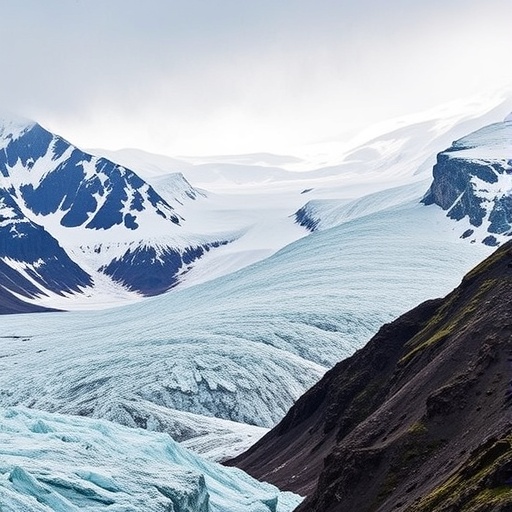
Glacier surges represent one of nature’s captivating phenomena, illustrating the dynamic interplay between ice and the environment. These events, characterized by abrupt increases in glacier flow, highlight the unpredictable nature and fluidity of glacial behavior. During a surge, massive volumes of ice are rapidly displaced from higher altitudes to lower elevations, often resulting in the glacier’s front advancing significantly. Understanding these surges is not only crucial for grasping the mechanics of glacial movements but also for assessing their potential impacts on ecosystems and human settlements.
Recent studies categorize glaciers into two primary types: those that surge and those that do not. The distinction lies not merely in their physical characteristics but fundamentally in their behavior under changing climatic conditions. While most glaciers flow steadily, surge-type glaciers exhibit dramatic shifts in their flow rates, demonstrating periods of relative calm followed by phases of rapid movement. This cyclic behavior—often recurring every few years to over a century—poses unique challenges to researchers attempting to predict future glacier dynamics in light of ongoing climate change.
The primary driving force behind these surges has been identified as a reduction in basal friction. At the glacier’s base, where ice meets underlying rock or sediment, friction plays a crucial role in regulating movement. During a surge, warm meltwater can infiltrate the glacier bed, lubricating the interface and allowing for accelerated flow. This reduction in friction can trigger a cascade of events that lead to significant glacial movement, with climate conditions acting as a catalyst in this intricate system.
Globally, approximately 3,100 surge-type glaciers have been identified, with a staggering 50.5% located in High Mountain Asia, and around 48.3% found in the Arctic and Subarctic regions. This concentration suggests that these regions have unique climatic and geological conditions that favor the development of surge instabilities. The intricate relationship between ice mass, temperature, and precipitation in these areas provides fertile ground for studying the multifaceted nature of glacier dynamics. As the planet warms, researchers are increasingly noting peculiar alterations in the behaviors of these glaciers, raising alarms about the implications for regional and global water resources.
Surge-related hazards are significant concerns linked to these phenomena. Historical data indicate that at least 81 surge-type glaciers have triggered dangerous incidents, including ice-dammed glacial lake outburst floods (GLOFs). These floods can wreak havoc, leading to infrastructure damage, displacement of communities, and even loss of life. As meltwater accumulates behind ice dams, the potential for sudden failure grows, posing acute risks to downstream ecosystems and human settlements. The unpredictability of these events makes them particularly concerning, emphasizing the urgent need for more comprehensive monitoring and predictive capabilities.
The implications of glacier surges extend beyond immediate hazards. The surge phenomenon is closely linked to broader changes in the earth’s climate system. Variations in temperature and precipitation patterns are reshaping these ice giants, influencing their stability and behavior. As glaciers respond to warming temperatures, understanding these relationships becomes imperative for predicting future behavior and potential impacts on the hydrosphere. Therefore, it is essential to assess how these changes may influence surge frequency, intensity, and associated hazards in the years to come.
Future research in this field should adopt a multifaceted approach to capture the complexities of glacier surges. High-resolution remote sensing data and direct observational techniques will be essential for enhancing our understanding of basal processes that occur throughout all phases of a surge event. By observing glaciers in real-time, scientists can gain insights into the flow dynamics and the underlying geological and hydrological factors at play. This knowledge is pivotal for developing accurate numerical models that can simulate glacier behavior under varying climatic scenarios.
The past and present scenarios are not merely academic; they provide crucial lessons as glaciers continue to behave unpredictably in a warming world. There is an emerging urgency to understand how increased melting and shifting climatic patterns will affect the behavior of these glaciers in the future. Preparing for the implications of these potential outcomes will be critical for preserving freshwater resources and minimizing hazards in regions reliant on glacial meltwater.
As researchers strive to unravel the complexities behind glacier surging, emerging technologies and methodologies hold promise for advancing our understanding. Innovations in remote sensing and data analysis, alongside traditional field studies, are changing the landscape of glacier research. Collaborations across disciplines—combining climatology, geology, hydrology, and remote sensing—can yield holistic perspectives that enhance our predictive capabilities.
In summary, glacier surges encapsulate the nuanced and evolving nature of ice dynamics within the context of climate change. Addressing the challenges posed by these phenomena requires a synergistic effort focused on advancing scientific understanding while enhancing mitigation strategies for surge-related hazards. Upcoming research endeavors should prioritize capturing high-resolution data of glaciers, understanding their behaviors, and projecting their future trajectories, ultimately informing our responses to the ever-changing climate landscape.
As we continue to witness the rapid alterations of our planet, glacier surges offer a critical lens through which to understand the broader implications of climate change. The stability and longevity of many glacier systems are under threat, highlighting an urgent need for concerted efforts in research, monitoring, and preparedness. Only through a robust scientific inquiry into the behaviors of surge-type glaciers can we hope to manage the cascading effects of their inevitable transformations in a warming world.
The fascinating dance of glaciers and climate provides insight into the earth’s sensitive systems, underscoring the importance of a sustainable approach to environmental stewardship. We stand at a pivotal moment in our understanding of glacier dynamics, one that could define our approach to climate change for years to come. The quest for knowledge about these glacial phenomena is not just an academic pursuit; it’s a vital component of safeguarding our environment and communities against the inevitable changes ahead.
Subject of Research: Glacier surging and its implications in a changing climate
Article Title: Glacier surging and surge-related hazards in a changing climate
Article References:
Lovell, H., Benn, D.I., Jiskoot, H. et al. Glacier surging and surge-related hazards in a changing climate. Nat Rev Earth Environ (2026). https://doi.org/10.1038/s43017-025-00757-9
Image Credits: AI Generated
DOI:
Keywords: glacier surges, climate change, environmental hazards, glacial dynamics, remote sensing, hydrology.


