

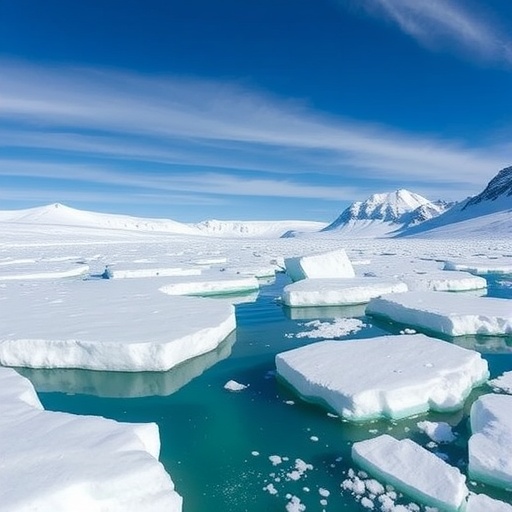
Recent geological studies have illuminated the dynamic interplay between climate change and terrestrial weathering processes, revealing profound implications for our understanding of elemental cycling on a global scale. In particular, research conducted by Salinas-Reyes et al. has explored the changes in terrestrial weathering following glacial retreat and its subsequent impact on neodymium isotopes in the North Atlantic. This interdisciplinary study offers a fresh perspective on the biogeochemical processes that govern our planet’s systems in the face of ongoing climatic shifts.
In the wake of glacial retreat, the landscapes previously covered in ice are undergoing significant transformations. These modifications are not merely physical; they also incite intricate chemical weathering processes. The study emphasizes that as glaciers recede, the exposure of mineral surfaces initiates enhanced chemical reactions with atmospheric CO2 and rainfall, which are critical in the global carbon cycle. The mineralogical composition of the newly uncovered terrain plays a pivotal role in determining how these chemical weathering reactions unfold, showcasing a delicate balance between temperature, precipitation, and the biochemical dynamics of the soil.
Neodymium isotopes, particularly, serve as a powerful tool for tracing these weathering processes. These isotopes have unique signatures that reflect their geological origins and can provide insights into past oceanic currents and continental weathering rates. As glacial regions expose fresh rock surfaces, the resultant weathering not only alters the isotopic landscape but also reshapes our knowledge of oceanic and climatic interactions across centuries. Salinas-Reyes and their colleagues meticulously documented these processes to unveil how shifts in sediment composition can persistently affect North Atlantic water masses.
The research underscores that isotopic changes in the North Atlantic are indicative of broader global patterns. When glaciers retreat, the input of newly weathered materials into the ocean alters the existing chemical gradients, which can, in turn, affect marine biota and their evolutionary trajectories. By monitoring these changes, scientists can glean insights into how terrestrial systems influence marine environments, an understanding critical in the context of global climate change.
One significant finding of the study is the timeline of isotopic changes. The researchers identified that alterations in neodymium isotopes occur rapidly following the glacial retreat, indicating a swift response in the geological processes that govern elemental distributions in the oceans. This finding emphasizes the need for more extensive temporal observation of these processes to understand their long-term implications fully.
Moreover, the study utilized advanced analytical techniques, combining field observations with isotopic measurements and geochemical modeling to create a comprehensive picture of the interactions at play. Salinas-Reyes et al. leveraged state-of-the-art methods such as laser ablation and multi-collector inductively coupled plasma mass spectrometry (MC-ICP-MS) to examine the isotopic variations in minute sediment samples from the affected regions. This precision allowed for a more nuanced understanding of the interplay between weathering rates and climatic factors.
The implications of this research extend beyond the realm of geology into environmental science and policy-making. As global temperatures rise and glaciers around the world continue to retreat, the findings of this study prompt urgent questions about the rate of oceanographic change and its consequences for marine ecosystems. For instance, are the changes observed in the North Atlantic indicative of broader shifts occurring in other oceans as well? This critical inquiry could shape future research agendas and conservation strategies.
Another important aspect to consider is the role of human activity in influencing weathering processes. Urbanization, agriculture, and other anthropogenic factors contribute to the acceleration of chemical weathering through alterations in land use and pollution. As we continue to exert pressure on natural landscapes, understanding how these human-induced changes interact with natural weathering processes becomes essential to predicting future shifts in elemental cycling and its implications for global ecosystems.
Furthermore, the study advocates for a more integrated approach to understanding climate change. By linking terrestrial, oceanic, and atmospheric systems, researchers can cultivate a holistic view of the Earth’s processes. Such integrated perspectives could lead to groundbreaking insights that support climate change mitigation efforts and inform sustainable practices.
In conclusion, the research conducted by Salinas-Reyes et al. presents a crucial exploration of terrestrial weathering processes following glacial retreat and their significant effects on North Atlantic neodymium isotopes. Their work not only enriches our understanding of geological and environmental interconnections but also serves as a clarion call for increased attention to the changing dynamics of our planet in the face of climatic pressures. By continuing to investigate these complex systems, the scientific community can better prepare for the challenges that lie ahead in a rapidly changing world.
The insights gleaned from this study have far-reaching implications, underscoring the necessity for comprehensive climate research that bridges the gap between various scientific disciplines. As we confront unprecedented changes in our environment, this kind of interdisciplinary collaboration will be vital in addressing the multifaceted challenges posed by climate change and ensuring a sustainable future for generations to come.
The endeavor to decode the intricate relationship between glacial retreat, weathering processes, and neodymium isotopes is not merely an academic exercise; it is a foundational piece of the urgent puzzle facing humanity. As we gather and analyze data, the hope remains that our evolving understanding will facilitate informed decision-making and enhance resilience amid the ongoing climate crisis.
Ultimately, this research represents a step forward in untangling the threads of a perplexing tapestry—where terrestrial events resonate through oceanic systems and, ultimately, the global climate. The lessons drawn from the icy retreats of our glaciers may illuminate pathways to navigate the uncertain future that lies ahead, one where the foundations of our ecosystems and their elemental cycles are preserved for the benefit of our planet and its inhabitants.
Subject of Research: Changes in terrestrial weathering processes following glacial retreat and their impact on North Atlantic neodymium isotopes.
Article Title: Changes in terrestrial weathering following glacial retreat reveal processes altering North Atlantic neodymium isotopes.
Article References: Salinas-Reyes, J.T., Martin, E.E., Martin, J.B. et al. Changes in terrestrial weathering following glacial retreat reveal processes altering North Atlantic neodymium isotopes. Commun Earth Environ (2026). https://doi.org/10.1038/s43247-026-03220-9
Image Credits: AI Generated
DOI:
Keywords: Glacial retreat, terrestrial weathering, neodymium isotopes, North Atlantic, climate change, elemental cycling, geological processes, environmental science.


