

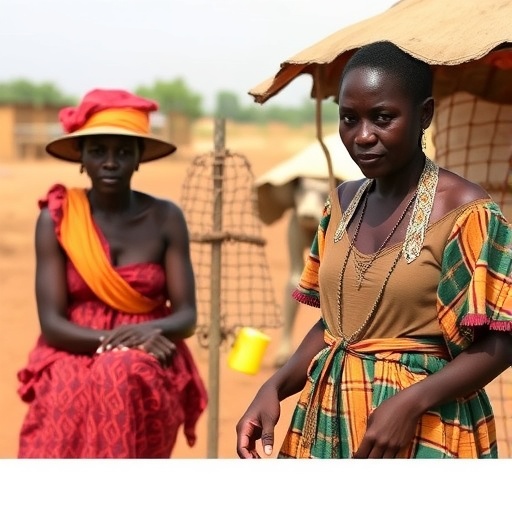
In the labyrinth of global displacement crises, the deeply entrenched gendered vulnerabilities that emerge in conflict-driven contexts are often overshadowed by broader humanitarian narratives. A groundbreaking study recently published in the International Journal for Equity in Health unequivocally brings these dimensions into sharp relief by meticulously analyzing the perceptions and attitudes toward gender-based violence (GBV) among internally displaced persons (IDPs) in Burkina Faso. This research elucidates not only the multifaceted nature of GBV within displaced communities but also reveals the complex socio-cultural underpinnings that exacerbate these vulnerabilities.
Burkina Faso, a nation grappling with escalating internal conflicts fueled by terrorism and intercommunal violence, has seen a massive displacement of populations within its borders. With over a million people uprooted from their homes, the disruption has had far-reaching impacts beyond the immediate loss of shelter. The study, led by Bayoulou, Ngangue, and Toure among other experts, spotlights how the intersection of displacement and gender amplifies the risk and incidence of violence against women and marginalized genders, comprising a critical aspect of public health and human rights discourse.
At the heart of the research lies a methodical examination of IDP communities’ lived experiences and perceptions concerning gender-based violence. This was achieved through an array of qualitative data collection techniques, including in-depth interviews and focus group discussions, which provided granular insights into how GBV is perceived, reported, and addressed—or ignored—in displacement settings. The researchers observed that displacement compounds existing patriarchal norms, often intensifying the prevalence and acceptance of violence, thereby perpetuating cycles of abuse.
One of the pivotal technical revelations revolves around the signaling framework individuals use to articulate their experiences concerning GBV. Often constrained by social taboos and the stigmatization associated with victimhood, many survivors employ coded language and indirect references that pose significant challenges for effective intervention by humanitarian actors. This nuanced understanding of communicative behavior among displaced populations is invaluable for tailoring culturally sensitive support mechanisms.
The study further elaborates on the structural barriers that impede access to justice and healthcare services for GBV survivors in displacement camps and host communities. These barriers include inadequate legal infrastructure, scarcity of trained personnel, and logistical hurdles in accessing healthcare facilities—all exacerbated by the fragile geopolitical environment. By dissecting these impediments at a micro and macro level, the research underscores the urgency for integrated policy responses to strengthen support frameworks.
Importantly, the authors explore the roles of various stakeholders, including government entities, NGOs, and community leaders, in both perpetuating and mitigating gender-based violence. The analysis reveals a complex dynamic where certain actors, intentionally or inadvertently, uphold discriminatory practices, while others strive to empower survivors and transform cultural norms. This dichotomy highlights the necessity for multi-sectoral collaboration and capacity building within community systems.
A significant contribution of the paper lies in its proposed theoretical model that links conflict-induced displacement to increased vulnerability through the mediation of gender-power relations. This model, supported by empirical data, illustrates how disruptions to social cohesion and protective kinship networks during displacement escalate risks of exploitation and violence, particularly targeting women, girls, and LGBTQ+ individuals.
Technically, the study employs advanced qualitative analytic methodologies, including thematic content analysis and discourse analysis, to parse the layered meanings embedded in participants’ narratives. These approaches enable a rigorous interrogation of the data, unraveling the intersectionalities of gender, displacement, and violence, which traditional quantitative metrics often fail to capture comprehensively.
The researchers’ attention to psychosocial dimensions stands out, shedding light on the long-term impacts of GBV on mental health within displaced communities. Survivors frequently endure compounded trauma, including depression, anxiety, and post-traumatic stress disorder, which in turn affects their agency and participation in rebuilding efforts. Such findings advocate for holistic intervention models incorporating mental health support alongside physical protection.
Moreover, the study engages with technological innovations that could enhance GBV response programs in displacement contexts. For instance, mobile health (mHealth) platforms and anonymous reporting tools are discussed as potential game-changers in overcoming stigma and safety fears among survivors, illustrating the confluence of technology and humanitarian action.
The gendered nuances explored also elucidate how men and boys, often overlooked in GBV discourse, experience and sometimes perpetrate violence within displacement settings. Recognizing masculinity’s role in these dynamics is critical for designing inclusive prevention strategies that address harmful gender norms and facilitate community-wide resilience.
By contextualizing findings within Burkina Faso’s socio-political landscape, the study aligns its conclusions with regional realities, thereby enhancing the relevance and applicability of recommended interventions. This localized perspective is essential in avoiding one-size-fits-all approaches and fostering ownership among affected communities.
The implications of this research extend beyond academic circles, offering policymakers actionable insights for drafting targeted legislation and programmatic investments that prioritize protection for displaced women and gender minorities. Furthermore, it underpins advocacy efforts aimed at amplifying the voices of those most vulnerable to conflict-induced gender-based violence.
Finally, the study calls for intensified international cooperation and funding to strengthen monitoring and accountability mechanisms that can track progress in GBV mitigation within displacement contexts. This drive towards evidence-based policy making embodies a critical shift in humanitarian and public health paradigms.
In sum, Bayoulou and colleagues’ incisive examination of gender-based violence amid conflict-driven displacement in Burkina Faso is a keystone addition to global health equity literature. The research not only exposes the harsh realities faced by displaced populations but also charts a path toward more empathetic, effective, and contextually grounded interventions. As displacement crises proliferate worldwide, such detailed, gender-sensitive analysis is indispensable in shaping a future where the dignity and safety of all displaced persons are safeguarded.
Subject of Research: Gender-based violence perceptions and attitudes among internally displaced persons in conflict-driven displacement settings in Burkina Faso.
Article Title: Unveiling the gendered dimensions of conflict-driven displacement: analyzing perceptions and attitudes toward gender-based violence among internally displaced persons in Burkina Faso.
Article References:
Bayoulou, S., Ngangue, P., Toure, I. et al. Unveiling the gendered dimensions of conflict-driven displacement: analyzing perceptions and attitudes toward gender-based violence among internally displaced persons in Burkina Faso. Int J Equity Health 24, 346 (2025). https://doi.org/10.1186/s12939-025-02590-4
Image Credits: AI Generated


