

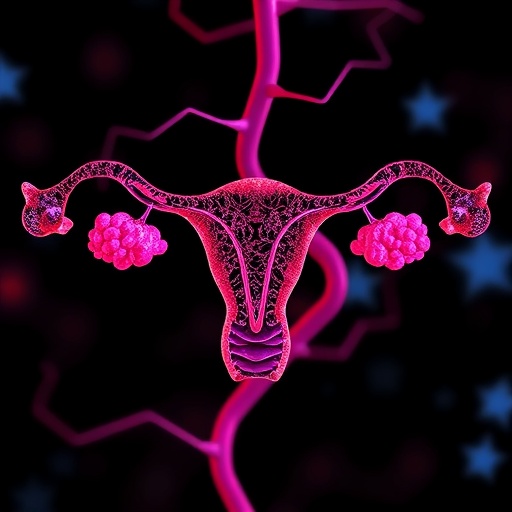
In a groundbreaking study published in Nature Communications, a team of researchers led by Lai, Huang, and Ma has unveiled critical insights into the pathophysiology of Ovarian Hyperstimulation Syndrome (OHSS), a complication that has long challenged reproductive medicine. Their thorough examination of how the receptors for follicle-stimulating hormone (FSHR) and luteinizing hormone (LHR) compensate functionally offers a fresh perspective on both the origins of OHSS and innovative therapeutic approaches.
OHSS is a potentially serious condition that arises frequently as an adverse effect of fertility treatments involving ovarian stimulation. Characterized by enlarged ovaries and fluid accumulation in the abdomen and chest, OHSS can range from mild discomfort to life-threatening illness. Despite advances in assisted reproductive technologies, the precise molecular mechanisms triggering this syndrome have remained elusive, hindering the creation of targeted treatments.
The investigators employed sophisticated molecular biology techniques to dissect the intricate interplay between FSHR and LHR, two critical receptors regulating ovarian follicle development and ovulation. These receptors, responsive to their respective hormones FSH and LH, orchestrate a complex cascade of intracellular events controlling follicular growth, steroidogenesis, and luteinization. Caprioli’s team zeroed in on the compensatory dynamics between these receptors when one pathway is inhibited or overactivated, hypothesizing that this homeostatic mechanism contributes meaningfully to OHSS pathogenesis.
Detailed analyses revealed that under certain stimulation protocols, altered expression and activation of FSHR and LHR receptors create an imbalance that exacerbates ovarian hyperactivation. Intriguingly, the data suggest that when LHR signaling is diminished, FSHR pathways hypertrophy to maintain follicular function, inadvertently promoting hyperstimulation and vascular endothelial growth factor (VEGF) release, which increases vascular permeability—a hallmark of OHSS. Conversely, heightened LHR activity can similarly provoke pathological responses, underscoring the delicate equilibrium these receptors maintain.
This dual receptor compensation model provides a paradigm shift from earlier theories that primarily implicated either excessive luteinizing hormone activity or vascular factors in isolation. By integrating receptor cross-talk and feedback loops, the study offers a more comprehensive framework for understanding OHSS. Furthermore, this mechanistic insight opens avenues for precision medicine strategies aiming to modulate receptor function selectively rather than broadly suppress ovarian stimulation.
The translational implications are significant. The team proposes novel pharmacological interventions targeting this receptor interplay, potentially including FSHR or LHR antagonists or modulators that fine-tune signaling thresholds. In clinical settings, such treatments might prevent the development or progression of OHSS without compromising the efficacy of ovarian stimulation protocols essential for successful in vitro fertilization (IVF).
In addition to pharmacological innovation, the research suggests modifications to existing hormonal stimulation regimens. By closely monitoring receptor activity and hormonal profiles, clinicians could tailor dosages in real-time, thereby minimizing the risk of receptor imbalance and hyperstimulation. This personalized medicine approach symbolizes a major leap forward in the safety and efficacy of fertility treatments.
The comprehensive study also underscores the importance of receptor synergy in ovarian physiology beyond OHSS. Enhanced understanding of FSHR and LHR interactions offers insights potentially applicable to other reproductive disorders, including polycystic ovary syndrome (PCOS) and premature ovarian failure. As such, this research has far-reaching implications across the spectrum of female reproductive health.
Advanced imaging and molecular assays employed by the team allowed visualization of receptor localization changes and signaling alterations at unprecedented resolution. These data illuminate how receptor dynamics fluctuate throughout the ovarian stimulation cycle, contributing further evidence to the compensation hypothesis. Together, these findings resonate with emerging trends in cell signaling research emphasizing receptor cooperativity and network robustness.
While the study’s findings are promising, the authors acknowledge the need for extensive clinical trials to validate the safety and efficacy of proposed treatments in diverse patient populations. Variables such as genetic background, ovarian reserve, and comorbid conditions might influence receptor behavior and treatment response, necessitating careful evaluation before widespread adoption.
Ultimately, this study represents a landmark achievement in reproductive endocrinology. By elucidating the compensatory mechanisms of FSHR and LHR functional interactions, Lai and colleagues have not only demystified the molecular basis of OHSS but also paved the way for novel therapeutic interventions that could dramatically improve outcomes for patients undergoing fertility treatments.
The promise of these findings extends beyond infertility clinics. Understanding receptor compensation mechanisms offers a window into fundamental biological processes governing hormone regulation and cellular adaptation. This research exemplifies how deep molecular insights can translate into clinical breakthroughs with transformative impact.
As the global demand for assisted reproductive technologies grows, the ability to mitigate complications like OHSS becomes increasingly critical. This pioneering work charts a clear course toward safer fertility protocols, enhancing both patient safety and the success rates of interventions aimed at overcoming infertility.
It is anticipated that the wider scientific community will build upon these findings, leveraging receptor biology to develop innovative diagnostic tools and precise hormonal modulators. The potential to customize treatments based on receptor functionality heralds a new era of targeted reproductive medicine.
In conclusion, the elucidation of FSHR and LHR functional compensation mechanisms marks a scientific milestone. It not only deepens the understanding of ovarian hyperstimulation syndrome but also revolutionizes therapeutic strategies, ushering in safer and more effective fertility treatments that could benefit millions worldwide.
Subject of Research: The molecular mechanisms underlying Ovarian Hyperstimulation Syndrome focusing on the functional compensation between follicle-stimulating hormone receptor (FSHR) and luteinizing hormone receptor (LHR).
Article Title: FSHR and LHR functional compensation reveals the mechanism and treatment of Ovarian Hyperstimulation Syndrome.
Article References:
Lai, S., Huang, Y., Ma, S. et al. FSHR and LHR functional compensation reveals the mechanism and treatment of Ovarian Hyperstimulation Syndrome.
Nat Commun (2026). https://doi.org/10.1038/s41467-026-71338-7
Image Credits: AI Generated


