

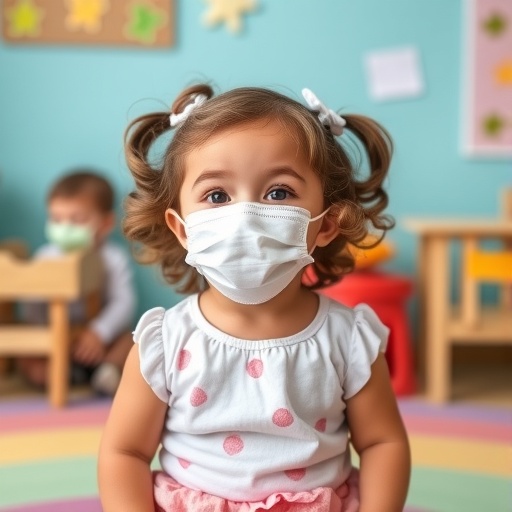
Young children who begin their early education journey by attending nursery are known to fall ill more frequently compared to their peers who remain at home during these formative years. However, the narrative is far from straightforward. Recent comprehensive reviews conducted by a collaborative team of parent-scientists affiliated with institutions such as University College London (UCL), University of Cambridge, and Cornell University reveal a nuanced understanding of illness patterns in young children. Notably, those exposed to nursery environments in their early years appear to build stronger immune defenses, ultimately experiencing fewer infections once they transition to formal schooling.
This groundbreaking review, published in the prestigious journal Clinical Microbiology Reviews, delves deeply into epidemiological data and immunological mechanisms underpinning the susceptibility of nursery-attending children to infections. The research, authored by a group of clinically and academically versed parents who themselves are immersed in the realities of childcare, underscores the universal experience of recurrent childhood infections within group care settings. Yet, it simultaneously unpacks the complexities behind these observations, suggesting that early communal exposure acts as a critical ‘boot camp’ for developing robust immunity.
Central to this research is the finding that infants typically encounter a barrage of infections upon starting nursery. Statistically, a one-year-old child attending daycare is expected to suffer approximately 12 to 15 respiratory tract infections, alongside two gastrointestinal illnesses — such as viral bouts of diarrhea and vomiting — and one or two rash-inducing infections within their first year. These figures reflect a substantial health burden, which also impacts parental productivity and well-being. The study poignantly highlights how these infection patterns are not mere coincidences but reflect the intrinsic susceptibility of immature immune systems encountering a diverse microbial milieu for the first time.
From an immunological perspective, the vulnerability of young children to frequent infections in nursery settings originates from their still-developing adaptive immune responses. At birth, infants receive passive immunity primarily through maternal antibodies transferred via the placenta, which provide temporary protection against various pathogens. However, this immunity steadily wanes in the first year of life coinciding with the introduction of nursery care. Consequently, children face heightened susceptibility as their immune systems have yet to curate a comprehensive memory of antigens encountered in their environment.
The transmissibility of common childhood pathogens within nurseries compounds this vulnerability. Communal environments, with close contact and shared surfaces, facilitate rapid pathogen spread, making children more prone to catching—and consequently passing on—respiratory viruses, gastroenteric infections, and other communicable diseases. This phenomenon, often misconstrued as a failure of hygiene or institutional care standards, is fundamentally a reflection of natural pathogen dynamics coupled with immune immaturity, rather than negligent childcare practices.
Intriguingly, the review reveals that the high infection rates seen among nursery-attending children lead to accelerated immune education, effectively preparing their immunity for future challenges. This immersive microbial exposure induces immunological memory and resilience, displaying a protective effect as children age. By the time these children enter formal schooling, the frequency and severity of infections markedly decrease compared to peers who were not exposed to early group childcare, highlighting an adaptive advantage conferred by early pathogen encounters.
This natural immune priming aligns with the concept that group childcare environments act as immune ‘boot camps.’ Here, repeated exposure to diverse microorganisms trains the children’s immune systems to mount efficient and specific adaptive responses. This accelerated learning curve equips them to better handle subsequent infectious challenges, reduces the incidence of symptomatic illness, and supports healthier trajectories through early childhood.
The psychological and logistical ramifications for families also warrant recognition. Parents commonly face frequent workplace absences to care for ailing children, a phenomenon normalized through societal experience but often overlooked in public health discourse. These unavoidable interruptions stem from the natural course of immune system development in communal settings, emphasizing a need for employer understanding and supportive workplace policies that accommodate the realities of early childhood infections.
From a preventative perspective, vaccination emerges as the cornerstone of safeguarding children within nursery environments. The study strongly advocates for rigorous adherence to immunization schedules, highlighting vaccines such as the recently introduced MMRV (measles, mumps, rubella, and varicella) vaccine. These immunizations provide critical protection against severe infections that can cause considerable morbidity in young children and disrupt families and institutions alike.
Furthermore, public health guidance focusing on appropriate illness management in childcare settings remains paramount. Guidelines recommending that children remain at home while acutely unwell, and for a reasonable recovery period thereafter, play vital roles in limiting pathogen transmission. Such protocols mitigate the risk of outbreaks in nurseries and reduce cumulative illness burden, complementing vaccination strategies and supporting the overall health ecosystem.
Over time, the immune maturation observed in nursery-attending children means that both they and their caregivers experience fewer infections as these children grow older. This trend highlights the dynamic interaction between environment, microbial exposure, and immune system development. Scientific perspectives from epidemiology, immunology, and virology converge to form a comprehensive picture of how early social environments shape childhood health trajectories.
The research affirms that nursery attendance, despite its initial challenges with recurrent infections, confers demonstrable long-term immunological benefits. It transforms early exposure to pathogens from a parental concern into a scientifically understood mechanism for fostering enduring immunity. This paradigm shift encourages a balanced societal approach that acknowledges the complexities of infection transmission while promoting strategies to enhance child health and development.
In summary, this seminal review not only advances our scientific understanding of infection dynamics in early childhood but also empowers parents, clinicians, employers, and policymakers with evidence-based insights. It underscores the intricate interplay between immune system maturation and environmental exposure, positioning early childcare environments as vital arenas for cultivating resilient, healthy children prepared to thrive in diverse social settings.
Subject of Research: Infection patterns and immune system development in young children attending nursery settings
Article Title: Germ factories or immune boot camps? Infection and immunity in childcare settings
News Publication Date: 18-Mar-2026
Web References: https://doi.org/10.1128/cmr.00253-25
Keywords: Infectious disease transmission, Epidemiology, Infectious diseases, Infants, Children, Parenting


