

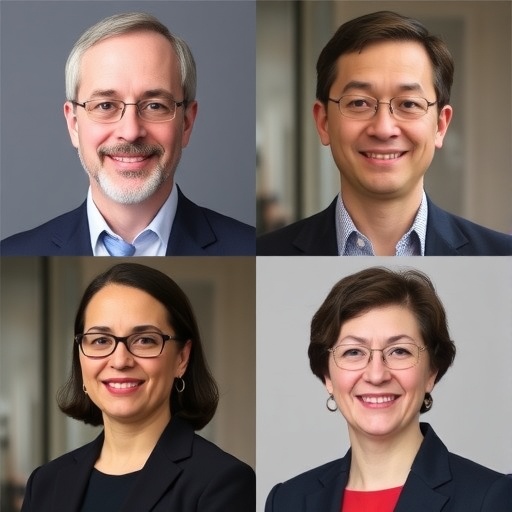
Four distinguished early-career faculty members at New York University have been honored with the prestigious Alfred P. Sloan Foundation Research Fellowships for 2026. This recognition is bestowed upon the most promising and innovative researchers in the United States and Canada, highlighting their potential to drive groundbreaking discoveries across diverse scientific frontiers. The 2026 cohort includes Danique Jeurissen, an assistant professor of neural science; Marvin Parasram, an assistant professor of chemistry; and two scholars from the Courant Institute School of Mathematics, Computing, and Data Science—Florian Schäfer and Joseph Tassarotti.
The Alfred P. Sloan Foundation, renowned for its mission to advance scientific knowledge, awards these fellowships to early-stage researchers who have demonstrated exceptional capacity and creativity in their respective disciplines. Each fellow receives a grant of $75,000 distributed over two years to expedite their innovative investigations. Since 1955, the Sloan Research Fellowships have nurtured scientific careers that have profoundly influenced modern science, with an impressive alumnus including Nobel Laureates, Fields Medalists, and National Medal of Science recipients.
Danique Jeurissen’s research tackles one of the most intricate puzzles in neuroscience: the brain’s resilience and adaptability following injury. Her lab utilizes advanced behavioral paradigms coupled with causal manipulation technologies and electrophysiology to discern how the brain reroutes information flow when primary cortical pathways are disrupted. This research aims to unravel compensatory neural mechanisms that could elucidate natural recovery processes post-stroke or traumatic brain injury, potentially guiding the development of therapeutic interventions that align with the brain’s endogenous repair systems.
In the realm of chemistry, Marvin Parasram focuses on streamlining the integration of heteroatoms—atoms other than hydrogen or carbon—into complex organic structures, which are central to the development of pharmaceuticals. His innovative approach leverages light-activated 1,3-dipoles, unique reactive intermediates characterized by delocalized charges, to efficiently introduce heteroatoms into molecular frameworks. This methodology avoids traditional challenges such as harsh reaction conditions and limited selectivity, offering a sustainable and versatile paradigm for synthesizing medicinal compounds with enhanced efficacy and tailored biological activity.
Theoretical and computational sciences find two new representatives among the NYU fellows in Florian Schäfer and Joseph Tassarotti. Schäfer’s work bridges numerical computation with statistical inference, a synergistic approach that holds promise for industries ranging from aerospace engineering to computer graphics. His current research on information geometric mechanics revisits the statistical underpinnings of computational mechanics to formulate algorithms that integrate physical simulations with probabilistic models, potentially revolutionizing optimization and reliability in simulated environments.
Joseph Tassarotti’s investigations lie at the frontier of formal verification in computer science, addressing the complexity of highly non-deterministic programs—systems where unpredictability arises due to randomness or distributed execution across multiple computational units. These programs underpin critical applications in security and large-scale cloud computing but pose substantial challenges to conventional debugging techniques. His team devises robust program logic frameworks that provide rigorous mathematical proofs ensuring software correctness, thereby enhancing trustworthiness in critical computational infrastructures.
NYU’s selection of four Sloan Fellows in a single year underscores the institution’s role as a nexus for cutting-edge research and academic excellence. The Courant Institute School of Mathematics, Computing, and Data Science, recently established as a testament to NYU’s commitment to interdisciplinary scholarship, exemplifies this ethos by integrating applied and pure mathematics with data science and computer science under one academic umbrella. This environment not only fosters collaboration across traditional disciplinary boundaries but also propels innovation at the intersection of theory and application.
The Sloan Fellowship’s legacy is further cemented by its distinguished alumni: of the hundreds of recipients over decades, 59 have gone on to receive Nobel Prizes, including John Clarke, the physics laureate named just last year. The fellowship’s distinctiveness lies in its emphasis on both recognizing early promise and providing flexible support that allows researchers to explore bold scientific questions with autonomy. This model has proven successful in cultivating leaders who redefine their fields and expand humanity’s scientific horizons.
The scientific pursuits of this year’s NYU fellows also highlight the importance of interdisciplinary approaches in tackling complex problems. From understanding the plasticity of the brain’s neural networks and advancing medicinal chemistry through innovative synthetic methods to refining computational tools that assure software reliability and enhance physical simulations, their collective expertise cuts across biology, chemistry, mathematics, and computer science.
Danique Jeurissen’s focus on how neural activity reconfigures following injury could transform rehabilitation strategies by pinpointing new therapeutic targets that capitalize on the brain’s inherent flexibility. Her work has profound implications for millions affected by strokes and traumatic brain injuries, conditions that impose immense societal and healthcare burdens. By elucidating alternative pathways for information processing, her experiments could lead to treatments that not only repair but also improve functional recovery through a deeper understanding of neuroplasticity.
Similarly, Marvin Parasram’s advances in chemical biology propose a paradigm shift in how heteroatoms are utilized in drug design. The traditional synthesis of complex molecules often demands multiple steps and harsh conditions that hinder efficiency and scalability. By harnessing photochemical activation of 1,3-dipoles, Parasram’s approach promises a more streamlined, environmentally friendly process that enhances the ability to create diverse bioactive compounds, potentially accelerating the drug discovery pipeline.
The emergence of innovative computational models by Florian Schäfer integrates geometric principles from statistics with mechanical systems, potentially allowing more accurate predictive modeling in engineering disciplines. Information geometric mechanics could offer new insights into the behavior of materials and structures under various conditions, optimizing design and reducing experimental costs. These methodologies exemplify how mathematical abstractions translate into practical tools for industry.
Joseph Tassarotti’s contributions lie in the realm of software verification, particularly focused on stochastic and distributed systems where traditional testing methodologies fail to guarantee correctness. By developing program logics tailored to these paradigms, his research enhances software reliability, which is critical in contexts such as cybersecurity, cloud infrastructure, and privacy-preserving technologies. This foundational work provides a framework for building safer and more resilient software systems in an increasingly digital world.
The collective achievements and trajectories of these NYU Sloan Fellows reflect broader trends in contemporary science: the merging of disciplines, the prioritization of translational impact, and the embrace of novel methodologies—be it leveraging light in chemical reactions or geometric statistics in simulation. Their work not only advances theoretical understanding but also paves the way for applications that resonate beyond academic boundaries.
Furthermore, the Alfred P. Sloan Foundation’s support extends beyond funding, nurturing a vibrant community of scholars who push boundaries in STEM fields and economics. The fellows’ network facilitates collaboration, mentorship, and dissemination of knowledge, amplifying individual research impact across institutions and disciplines. This holistic support system contributes to sustained scientific progress and innovation.
As we look ahead, the breakthroughs anticipated from these NYU scientists have the potential to redefine their respective domains and inspire new lines of inquiry. The fellowship’s backing enables them to pursue high-risk, high-reward projects that might otherwise lack support, fostering an environment where novel ideas can flourish into transformative discoveries. The scientific community and society at large stand to benefit profoundly from their endeavors.
New York University, with its global reach and commitment to research excellence, continues to cultivate talent that advances frontiers of knowledge. The integration of diverse disciplines within its academic paradigm, as exemplified by the newly formed Courant Institute School of Mathematics, Computing, and Data Science, ensures that such distinguished researchers operate within a fertile intellectual ecosystem. This synergy is vital for sustaining the pipeline of innovation critical to addressing complex challenges of the modern world.
In summary, the 2026 cohort of NYU Sloan Fellows exemplifies the pinnacle of early-career scientific achievement, epitomizing both intellectual rigor and creative exploration. Their work spans fundamental neuroscience, synthetic chemistry, computational mechanics, and software verification, demonstrating the expansive scope and interdisciplinary nature of contemporary scientific inquiry. Their promising research trajectories inspire anticipation for future discoveries that will reshape our understanding and capabilities across multiple fields.
Subject of Research: Neuroscience, Chemistry, Computational Mechanics, and Software Verification
Article Title: NYU’s 2026 Sloan Foundation Fellows: Pioneering Innovations Across Neuroscience, Chemistry, and Computational Sciences
News Publication Date: 2026
Web References:
- NYU Faculty – Danique Jeurissen
- NYU Faculty – Marvin Parasram
- NYU News on Florian Schäfer
- Joseph Tassarotti’s NYU Homepage
- Sloan Fellows Database
- Alfred P. Sloan Foundation
Image Credits: Photos courtesy of New York University
Keywords: Early career scientists, Brain injuries, Neuroscience, Chemical biology, Chemistry, Computer science, Software, Computational mechanics, Mathematical modeling, Statistics


