

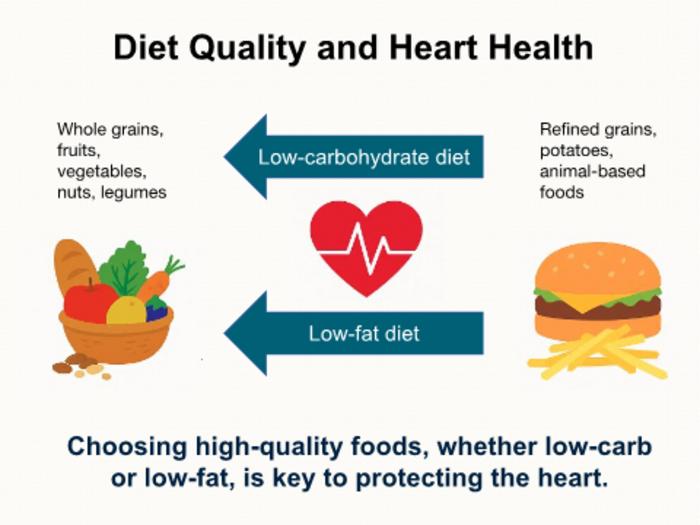
A groundbreaking study involving nearly 200,000 participants observed over multiple decades has shed new light on the ongoing debate surrounding diet quality and cardiovascular health. The comprehensive research reveals that the quality of foods consumed plays a role as significant as the macronutrient composition—specifically, low-carbohydrate or low-fat content—in influencing heart disease risk. The findings emphasize that prioritizing nutrient-dense, minimally processed foods within these dietary frameworks offers superior protection against coronary heart disease compared to diets emphasizing unhealthy food sources.
Over the past twenty years, low-carbohydrate and low-fat diets have dominated nutritional discourse thanks to their touted benefits, including weight management, improved glycemic control, and favorable lipid profiles. Yet, the question of how these diets affect long-term cardiovascular outcomes has remained unresolved. This study navigates this complex terrain by integrating extensive dietary intake data with clinical endpoints collected from established longitudinal cohort studies, providing one of the most robust assessments to date of how food quality within these diets modulates heart health.
Dr. Zhiyuan Wu, lead researcher and postdoctoral fellow at Harvard T.H. Chan School of Public Health, underscores a pivotal insight: it is not merely the carbohydrate or fat content of a diet that determines cardiovascular risk, but critically, the sources from which these macronutrients are derived. Diets rich in whole grains, fruits, vegetables, nuts, legumes, and other plant-based, minimally processed foods were strongly correlated with reduced incidence of coronary heart disease. Conversely, diets that leaned heavily on refined carbohydrates, saturated fats, and animal-based proteins were linked to elevated heart disease risk, irrespective of the diet’s macronutrient classification.
The study draws upon data from three expansive cohorts: the Health Professionals Follow-Up Study comprising 43,430 men, the Nurses’ Health Study with 64,164 female participants, and the Nurses’ Health Study II including 92,189 women. Spanning more than three decades, these cohorts offered detailed longitudinal dietary information and cardiovascular outcomes data, supporting a nuanced analysis of diet quality indices within low-carbohydrate and low-fat dietary patterns.
Detailed dietary assessments relied on validated food frequency questionnaires, allowing researchers to assign quality scores to participants’ low-carbohydrate and low-fat diets. High-quality carbohydrates, fats, and proteins were classified based on their food sources—whole grains and plant-based foods were deemed beneficial, whereas refined grains, potatoes, processed meats, and saturated fats from animal sources were categorized as lower quality. This stratification provided crucial insights into how subtle variations in diet composition influence metabolic health and cardiovascular risk.
To bolster the clinical findings, the researchers also incorporated metabolomics analyses on blood samples from over 10,000 individuals. By profiling hundreds of blood metabolites associated with metabolic regulation, the team could elucidate biological pathways through which diet quality impacts cardiovascular risk factors. This integrative approach allowed for a more mechanistic understanding of the interplay between dietary patterns, metabolism, and heart disease progression.
One of the key revelations from the analyses was that adherence to healthy versions of either low-carbohydrate or low-fat diets resulted in approximately a 15% reduction in coronary heart disease risk compared to unhealthy dietary patterns. Notably, this protective effect was observed regardless of reliance on carbohydrate or fat restriction, strongly indicating that food quality supersedes nutrient quantity in dictating cardiovascular outcomes.
Dr. Wu highlights the implications for clinical practice and public health messaging: “Improving food quality should be the cornerstone of dietary recommendations aimed at heart disease prevention. Emphasizing whole, minimally processed foods, primarily plant-based sources, and reducing intake of refined grains, added sugars, and processed animal products can substantially lower heart disease risk, regardless of whether one follows a low-carb or low-fat diet framework.”
The translational impact of these findings extends beyond cardiovascular disease, prompting future investigations into how dietary quality modulates risk for other chronic conditions such as type 2 diabetes and cancer. Researchers are also interested in exploring how genetic predispositions and lifestyle factors interact with diet quality to influence individual metabolic responses and health trajectories. Such insights could refine nutritional guidance towards personalized diet recommendations tailored to unique biological profiles.
Practically, the study reinforces the importance of consumer education on interpreting food labels and recognizing added low-quality ingredients, such as excess sugars and refined starches in processed products. Fostering awareness about the nuances of food quality can empower individuals to make more informed choices conducive to long-term cardiovascular health.
The findings will be formally presented by Dr. Wu at NUTRITION 2025, the annual meeting of the American Society for Nutrition, where experts will have the opportunity to dissect the data and explore its broader implications. While these conclusions currently await peer-reviewed publication, the robust nature of the cohorts and multimodal analyses underscore the potential for these insights to shape future dietary guidelines and public health interventions.
In essence, this study challenges conventional paradigms that prioritize macronutrient manipulation alone, advocating instead for a paradigm shift that recognizes the paramount importance of food quality in promoting cardiovascular wellness. It is a salient reminder that the source and processing of foods profoundly influence the metabolic and pathological pathways leading to heart disease, offering a potent, actionable avenue for disease prevention.
Subject of Research: The impact of dietary food quality within low-carbohydrate and low-fat diets on cardiovascular health outcomes
Article Title: Food quality trumps macronutrient composition in reducing coronary heart disease risk: Insights from a multi-cohort longitudinal study
News Publication Date: [Not specified in original content]
Web References:
Image Credits: Zhiyuan Wu, Harvard T.H. Chan School of Public Health
Keywords: Heart disease, Diets, Carbohydrates, Nutrition


