

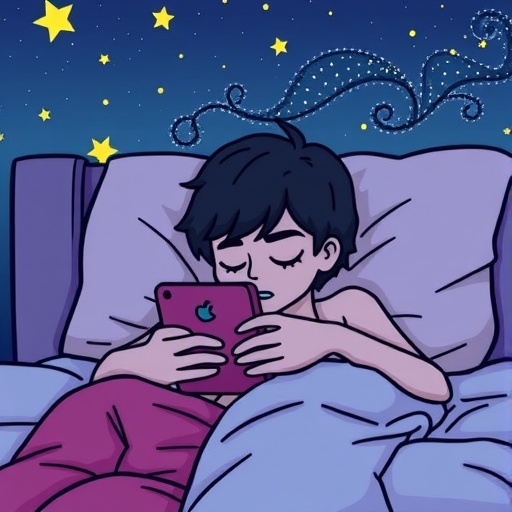
In the age of digital hyperconnectivity, the human psyche is increasingly subjected to novel stressors that blur the boundaries between information consumption and mental health. A groundbreaking study by Camadan and Uzunoğlu, recently published in BMC Psychology, offers profound insights into the intricate interplay between phenomenon known as doomscrolling and the degradation of sleep quality. This research particularly highlights the mediating influences of two emergent psychological constructs: FoMO (Fear of Missing Out) and nomophobia (the anxiety of being without a mobile phone).
Doomscrolling refers to the compulsive activity of continuously scrolling through bad news on social media or news platforms, despite its adverse emotional impact. It epitomizes a behavioral pattern that has escalated with the ubiquitous presence of smartphones and constant internet access. The insidious effect of this behavior extends beyond transient mood fluctuations, potentially eliciting a cascade of physiological and psychological consequences, notably in the domain of sleep hygiene.
FoMO, a relatively recent psychological term, encapsulates the pervasive apprehension that others might be experiencing rewarding events from which one is absent. This fear fuels compulsive social media engagement and disrupts emotional equilibrium. Nomophobia, colloquially described as the fear of being without one’s mobile device, compounds this phenomenon by anchoring individuals to digital devices as their primary conduits for social reassurance and information, thus exacerbating anxiety and dependence.
The study meticulously delineates how FoMO and nomophobia function as critical mediators in the relationship between doomscrolling and poor sleep. Through robust psychometric analyses and longitudinal data collection, it becomes evident that the fear-driven compulsion to remain digitally omnipresent extends the duration and intensity of exposure to negative online content, enhancing cognitive arousal at times typically reserved for rest.
The link between sleep quality and mental health is well established, yet this research carves a unique niche by focusing on the antecedents of compromised sleep stemming from digital behaviors intertwined with specific fears. Sleep deprivation or fragmentation engendered by late-night doomscrolling sessions disrupts circadian rhythms, suppresses melatonin production, and elevates cortisol levels – all harbingers of a stress response that can trigger or worsen psychiatric conditions.
One of the pivotal technical findings regards the neurophysiological mechanisms by which sustained engagement with distressing digital content prolongs activation of brain areas associated with emotional regulation and vigilance. The limbic system, particularly the amygdala, remains hyperactive, preventing the brain’s natural transition into the parasympathetic ‘rest and digest’ state necessary for quality sleep.
Furthermore, the research underscores the crucial role of smartphone proximity in magnifying nomophobia’s effects. The ubiquitous presence of devices within arm’s reach acts as a constant reminder of potential social and informational loss, intensifying anxiety even during supposed downtime. This proximity effect contributes to heightened arousal and fragmented sleep patterns, as micro-awakenings occur during the night in response to device notifications or the urge to check for unseen updates.
Camadan and Uzunoğlu’s work also explores how the content type impacts psychological response. Negative news, characterized by conflict, tragedy, and uncertainty, disproportionately triggers threat responses in the brain, which amplifies stress hormone secretion and hypervigilance. These physiological responses directly impede the initiation and maintenance of sleep, thereby creating a vicious cycle wherein poor sleep further diminishes emotional resilience against doomscrolling triggers.
From a behavioral standpoint, the study notes that doomscrolling is not merely a passive activity. It reflects an underlying attempt to regain control by seeking informational certainty in a chaotic world. However, due to the inherently negative and often sensational nature of news feeds, this coping strategy paradoxically increases uncertainty, anxiety, and ultimately sleep disturbance.
Technological implications arising from the research suggest that app developers and platform designers could implement features to mitigate these adverse effects. Potential interventions include ‘wind-down’ modes that reduce screen brightness and limit content to positive or neutral news during evening hours, as well as prompts encouraging users to disengage from continuous scrolling to preserve sleep hygiene.
Importantly, the research advocates for cognitive-behavioral interventions targeting FoMO and nomophobia. Techniques fostering digital mindfulness, such as scheduled device-free periods and psychoeducation about media consumption’s impact on well-being, may help individuals break the unrelenting loop of stress-inducing digital behaviors prior to sleep.
This study also contributes to the expanding field of sleep psychology by validating the significance of psychosocial factors mediated by modern technology use. It emphasizes that addressing sleep disorders requires a comprehensive assessment of digital lifestyle patterns, not merely physiological symptoms or traditional sleep hygiene measures.
Clinicians should consider screening for FoMO and nomophobia levels in patients presenting with insomnia or related complaints. Tailoring therapeutic approaches to include managing anxiety related to digital connectivity and social comparison could optimize outcomes for individuals disrupted by this contemporary digital malaise.
Moreover, public health policymakers are urged to recognize the societal dimensions of this phenomenon. Campaigns promoting healthy digital habits, especially in younger demographics prone to FoMO and nomophobia, could serve as preventive measures against the widening crisis of sleep disorders linked to pervasive digital media consumption.
As future research progresses, elucidating the neurobiological pathways bridging emotional states induced by digital engagement and sleep architecture will be crucial. Integration of neuroimaging techniques alongside psychometric evaluations may reveal biomarkers indicative of individuals at greatest risk for sleep deterioration caused by doomscrolling behaviors.
In conclusion, the integration of FoMO and nomophobia as explanatory variables in the doomscrolling-sleep quality nexus marks a pivotal advance in understanding the mental health ramifications of modern technology use. The findings by Camadan and Uzunoğlu provide a scientific foundation for targeted interventions aimed at improving both psychological well-being and sleep health in the digital era.
The implications of this research resonate widely, from everyday smartphone users confronting nightly temptations to stay plugged in, to clinicians striving to untangle multifaceted sleep complaints, and designers seeking to foster healthier engagement with digital environments. As society continues to navigate the digital transformation, balancing connectivity with mental and physical health will remain a paramount challenge informed by such seminal insights.
Subject of Research: The mediating roles of FoMO and nomophobia in the relationship between doomscrolling and sleep quality.
Article Title: The role of FoMO and nomophobia in explaining the relationship between doomscrolling and poor sleep quality.
Article References: Camadan, F., Uzunoğlu, Ö. The role of FoMO and nomophobia in explaining the relationship between doomscrolling and poor sleep quality. BMC Psychol (2025). https://doi.org/10.1186/s40359-025-03865-9
Image Credits: AI Generated


