

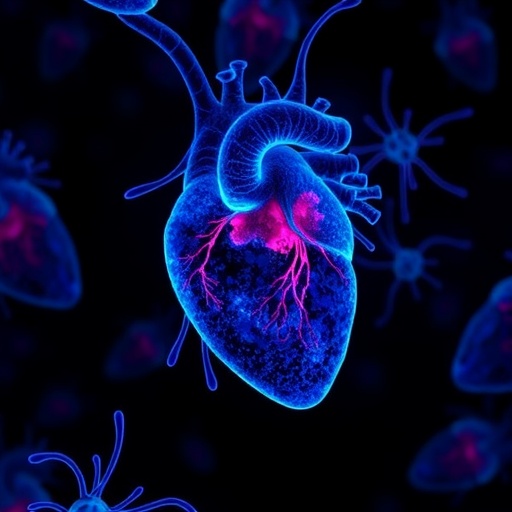
Emerging research has unveiled a critical pathway by which prenatal exposure to oxycodone, a potent opioid, disrupts fetal heart development through alterations in placental small extracellular vesicles (sEVs). Published in the acclaimed journal Extracellular Vesicles and Circulating Nucleic Acids, this pioneering study utilizes a rigorous preclinical model to elucidate the molecular disruptions occurring at the maternal-fetal interface, revealing how oxycodone compromises the placenta’s essential role in nurturing and signaling to the developing heart.
The placenta, a multifaceted organ vital for fetal growth and development, communicates with the fetus via numerous mechanisms, including the secretion of small extracellular vesicles. sEVs are nanoscale, membrane-bound packets that function as molecular messengers, ferrying proteins, lipids, and nucleic acids that coordinate developmental processes. The team behind this study focused on characterizing the proteomic landscape of placental sEVs isolated from pregnancies exposed to oxycodone compared to saline-treated controls, employing cutting-edge technologies such as electron microscopy, nanoparticle tracking analysis, and comprehensive quantitative proteomics.
Their investigations revealed a perturbation in sEV production and composition triggered by oxycodone exposure. Specifically, the placental sEVs from oxycodone-exposed pregnancies were markedly smaller in size but more abundant in number. This shift in vesicle biogenesis and cargo loading suggests an underlying cellular stress response within the placental tissue, reflecting a pathological remodeling of the extracellular vesicle system. Such alterations may disturb the finely tuned molecular dialogue between the placenta and fetus, with far-reaching implications for organogenesis.
Proteomic analyses yielded dramatic insights with the identification of 456 distinct proteins within placental sEVs, among which over 100 exhibited statistically significant differential expression profiles. Proteins linked to protein synthesis and vesicle trafficking were upregulated, pointing toward a reprogrammed and distressed placental state actively modifying its secretory profile. Conversely, proteins associated with fundamental metabolic pathways, including fatty acid β-oxidation, mitochondrial energy metabolism, and detoxification processes, were notably downregulated, suggesting a compromised metabolic support system crucial for fetal vitality.
Of paramount concern was the coordinated downregulation of a quintet of proteins—Atp2a2, Lmna, Tgfb3, Agt, and Sgce—that are intimately connected to cardiomyopathies, a spectrum of diseases characterized by weakened cardiac muscle function. These proteins play essential roles in calcium handling, nuclear architecture, extracellular matrix remodeling, hormonal regulation, and cytoskeletal integrity within cardiac tissue. Their diminished presence in placental sEVs indicates a disrupted signaling axis that could predispose the developing heart to structural and functional abnormalities when exposed in utero to oxycodone.
This disruption in placental-derived vesicular communication provides compelling evidence for a mechanistic link between maternal opioid consumption and increased fetal susceptibility to cardiac pathology. The findings underscore the placenta’s active participation in fetal heart development and suggest that altered sEV cargo composition serves as a molecular fingerprint reflecting in utero drug exposure.
Beyond mechanistic revelations, the study highlights the translational potential of placental sEVs as sensitive, noninvasive biomarkers for early detection of fetal cardiac risk in opioid-exposed pregnancies. Clinical application of such biomarkers could revolutionize prenatal diagnostics by offering real-time insights into placental function and fetal well-being, enabling targeted interventions to mitigate long-term cardiac morbidity.
This work represents an integrative systems biology approach, harnessing the power of proteomics and vesicle biology to unravel the complex cascade of molecular events bridging maternal environmental insults and fetal organogenesis. The ability to trace changes in a discrete vesicle population informs not only developmental toxicology but also expands our grasp of intercellular communication under pathological conditions.
Moreover, the identified molecular signature within placental sEVs may facilitate the development of therapeutic strategies aimed at restoring normal vesicle biogenesis or modulating their cargo. Such interventions could potentially reverse or prevent the detrimental cardiac outcomes associated with prenatal opioid exposure, contributing to improved neonatal health trajectories.
The study, titled “Chronic in utero oxycodone exposure alters placental small EV proteome and fetal cardiomyopathy-linked pathways,” was published on February 10, 2026, in Extracellular Vesicles and Circulating Nucleic Acids. It advances the frontiers of fetal medicine by pinpointing precise proteomic alterations that translate maternal drug use into concrete developmental vulnerabilities.
Taken together, these findings catalyze a paradigm shift in understanding opioid-related fetal harm, moving beyond general toxicity toward a detailed molecular narrative. They invite further clinical validation to establish placental sEV analysis as a standard component of prenatal care in high-risk pregnancies complicated by opioid use.
As the opioid epidemic continues to generate profound public health challenges globally, deciphering its impact on the most vulnerable—developing fetuses—remains imperative. This research offers a beacon of hope, charting a path toward precision diagnostics and tailored therapeutic avenues grounded in molecular insights.
Future directions should explore temporal dynamics of sEV alterations throughout gestation, potential reversibility upon cessation of opioid exposure, and the interplay with other placental signaling modalities. Integrating these data with fetal cardiac imaging and functional assays could yield a holistic framework for risk stratification and management.
In conclusion, the intricate interplay between maternal oxycodone use, placental small extracellular vesicles, and fetal cardiomyopathy susceptibility elucidated by this study provides a compelling narrative for the molecular underpinnings of opioid-induced developmental toxicity. It invites a reexamination of maternal-fetal medicine practices, emphasizing the necessity for vigilant monitoring and innovative interventions aimed at safeguarding fetal cardiac health in opioid-affected pregnancies.
Subject of Research: Not applicable
Article Title: Chronic in utero oxycodone exposure alters placental small EV proteome and fetal cardiomyopathy-linked pathways
News Publication Date: 10-Feb-2026
Web References:
https://dx.doi.org/10.20517/evcna.2025.138
Image Credits: HIGHER EDUCATION PRESS
Keywords: Cell biology, extracellular vesicles, oxycodone, prenatal exposure, placenta, fetal development, cardiomyopathy, proteomics, small extracellular vesicles, maternal-fetal signaling


