

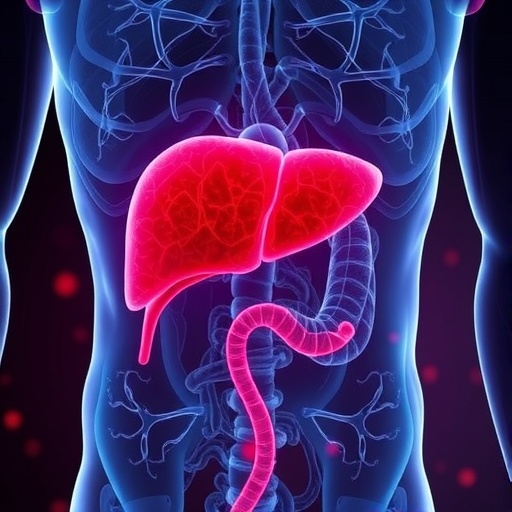
In a groundbreaking study published in Nature Metabolism this February, researchers have unveiled a fundamental biological mechanism linking feeding patterns to the rhythmic secretion of liver proteins via glycogen metabolism. This innovative work not only deepens our understanding of how nutrient intake orchestrates molecular rhythms in the liver but also opens new avenues for tackling metabolic diseases rooted in circadian dysfunction.
The liver is a master regulator of metabolism, interfacing closely with peripheral organ systems to maintain systemic homeostasis. Its ability to secrete proteins in a time-dependent manner has long been recognized, but the biochemical underpinnings that tie these oscillations to feeding cycles have remained elusive. The study, spearheaded by Weger, Mauvoisin, Hoyle, and collaborators, employed cutting-edge proteomics alongside sophisticated chronobiological methodologies to untangle the complex interplay between glycogen metabolism and liver protein dynamics.
Central to the liver’s nutrient-sensing capacity is glycogen, the primary storage form of glucose. This polysaccharide serves as a vital energy reservoir, balancing supply and demand during fasting and refeeding periods. The researchers discovered that feeding directly modulates glycogen turnover, which acts as a biochemical signal triggering oscillatory secretion of specific proteins. This finding challenges the historical view that rhythmic gene expression alone governs liver secretion cycles, highlighting instead a pivotal metabolic feedback loop.
The team’s approach was multifaceted, combining in vivo mouse models with liver-specific glycogen metabolism mutants, encompassing large-scale time-resolved proteomic analyses. These models allowed precise temporal mapping of protein secretion profiles under varying feeding regimens. The data revealed that disrupting glycogen metabolism abolishes the rhythmic secretion of numerous liver proteins, underscoring the integral role glycogen plays beyond mere energy storage.
Moreover, the temporal correlation between glycogen levels and secreted protein abundance suggests a tightly regulated conduit whereby hepatocytes translate metabolic state into functional output. This mechanism ensures that protein secretion aligns with anticipated physiological needs, such as nutrient absorption and energy distribution, maintaining circadian harmony within the metabolic network.
Intriguingly, the study identified that feeding cues reset the liver’s metabolic clock through glycogen flux, thereby synchronizing peripheral rhythms with systemic nutrient availability. This bidirectional feedback illustrates that feeding is not merely a passive provider of substrates but an active modulator of circadian physiology, implicating glycogen metabolism as a molecular timekeeper within hepatic tissue.
Significantly, the research sheds light on the selective nature of protein secretion influenced by glycogen metabolism. Not all secreted proteins demonstrated rhythmic patterns, indicating a highly orchestrated and selective secretory program under metabolic control. This specificity could be vital for optimizing metabolic efficiency and resource allocation within an organism’s daily cycle.
The implications of these discoveries are profound for metabolic medicine. Conditions like nonalcoholic fatty liver disease, diabetes, and obesity often involve disrupted circadian rhythms and impaired glycogen storage dynamics. By elucidating the glycogen-dependent mechanisms of temporal protein secretion, novel therapeutic strategies targeting metabolic timing and liver function may emerge, offering more precise interventions.
Furthermore, this study revitalizes the broader scientific discourse on how feeding behavior impacts systemic physiology via clock-controlled metabolic pathways. The revelation that glycogen metabolism serves as a nexus connecting nutrient status to circadian protein trafficking provides a compelling framework for future exploration into diet-timing interventions and chronotherapy.
Technically, the researchers utilized advanced mass spectrometry to quantify proteomic changes with high temporal resolution, complemented by circadian transcriptomics to parse out transcriptional versus metabolic regulatory layers. This integrative approach allowed unprecedented insight into post-transcriptional control mechanisms influenced by glycogen turnover, illustrating a multilayered regulatory architecture in hepatic secretory dynamics.
The study also highlights the dynamic plasticity of liver metabolism in response to environmental and dietary stimuli, emphasizing how metabolic states can reprogram cellular functions rhythmically. Such plasticity ensures metabolic resilience and supports adaptation to fluctuating nutritional landscapes, critical for survival and optimal health.
In conclusion, Weger et al. have provided a transformative perspective on liver chronobiology, positioning glycogen metabolism at the heart of feeding-regulated protein secretion rhythms. This paradigm shift enhances our comprehension of metabolic timing mechanisms and underlines the importance of synchronizing feeding schedules with biological clocks to maintain metabolic health.
With its innovative methodologies, comprehensive data, and profound physiological insights, this research is poised to influence a wide range of disciplines, from molecular biology to clinical nutrition, while providing a molecular framework for understanding how metabolic rhythms are intricately linked to feeding behavior and liver function.
As the field moves forward, these findings lay fertile ground for translational research, inviting further exploration into how manipulation of glycogen metabolism could modulate liver secretory patterns to correct metabolic disorders and optimize therapeutic timing. The future of metabolic health may well hinge on such finely tuned orchestration of rhythms rooted in glycogen dynamics.
Subject of Research: Feeding-regulated glycogen metabolism and its role in rhythmic liver protein secretion.
Article Title: Feeding-regulated glycogen metabolism drives rhythmic liver protein secretion.
Article References:
Weger, M., Mauvoisin, D., Hoyle, D. et al. Feeding-regulated glycogen metabolism drives rhythmic liver protein secretion. Nat Metab 8, 327–349 (2026). https://doi.org/10.1038/s42255-026-01453-8
Image Credits: AI Generated
DOI: February 2026


