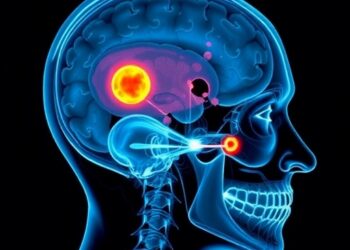
A groundbreaking advancement in dementia care is on the horizon with the development of the “Continu-A-Mente” project, which promises to transform transitional care for individuals living with dementia and behavioral disorders. Spearheaded by researchers including Pozzi, Ferrara, and Staglianò, this innovative program aims to bridge the critical gap between hospital environments and community-based care through a meticulously tailored activity program. This bridge is designed not only to enhance patient outcomes but also to alleviate the systemic pressure on healthcare services globally as the dementia population rises steadily.
Central to the “Continu-A-Mente” project’s innovation is its focus on personalized activity plans that address the unique cognitive and behavioral challenges faced by each individual with dementia. Traditional care approaches often fail to accommodate the nuanced needs arising from the complex interplay of behavioral disorders in dementia, which frequently leads to poor health outcomes and increased hospital readmissions. This tailored methodology leverages detailed assessments of patient capabilities, preferences, and behavioral symptomatology to optimize daily activities, thus promoting therapeutic engagement and cognitive stimulation.
One of the technical marvels underlying the program is its comprehensive assessment protocol, which integrates neuropsychological evaluations with behavioral symptom scales and caregiver reports. This multidimensional diagnostic framework informs the creation of activity regimens designed to mitigate agitation, aggression, and apathy—common behavioral disturbances in dementia patients. By aligning activities with patients’ preserved skills and interests, the program enhances adherence and fosters a serene environment that can reduce pharmacological interventions and their associated risks.
The multidisciplinary nature of the Continu-A-Mente program represents a pivotal shift in dementia care paradigms. It involves collaboration between neurologists, geriatricians, occupational therapists, psychologists, and social workers, thereby ensuring a holistic approach to patient management. The seamless transfer of patient information from hospital to community-based care providers through integrated electronic health records supports continuity, minimizes errors, and facilitates adaptations in care as patients’ clinical profiles evolve.
Feasibility studies conducted as part of the project have illustrated promising results with regard to both patient-centric outcomes and healthcare system efficiency. Participants engaged in the tailored activity program demonstrated statistically significant improvements in behavioral symptom control, as measured by scales such as the Neuropsychiatric Inventory and the Cohen-Mansfield Agitation Inventory. Furthermore, caregiver burden was reduced, an often underappreciated yet crucial factor influencing the sustainability of at-home dementia care.
From a neurobiological perspective, Continu-A-Mente capitalizes on the concept of neuroplasticity preservation in later life. By stimulating residual cognitive pathways and maintaining functional autonomy through meaningful activities, the program potentially slows cognitive deterioration, thereby extending patients’ quality of life. Experimentation with activity protocols emphasizes sensory-motor engagement, memory reminiscence therapy, and social interaction components—each grounded in evidence-based neuroscientific principles.
Healthcare cost reduction is a compelling advantage highlighted by the project’s findings. By decreasing the frequency of hospital readmissions caused by exacerbated behavioral symptoms and complications, the program eases economic pressures on tertiary care institutions. Simultaneously, enhanced community care capacities support aging in place, widely recognized as beneficial for mental health, patient satisfaction, and system sustainability.
The interdisciplinary training modules embedded within the Continu-A-Mente framework equip community care providers with essential skills for managing complex dementia cases. This capacity-building focus not only ensures program fidelity but also empowers caregivers with strategies to recognize and preempt crisis episodes, leading to safer environments and fewer emergency interventions. Consequently, the program addresses one of the most pervasive challenges in dementia management: the unpredictable nature of behavioral disturbances.
Technological integration is another cornerstone of the program’s scalability and efficacy. The use of digital monitoring tools, wearable sensors, and telehealth platforms allows real-time tracking of behavioral patterns and physiological markers, enabling proactive adjustments to activity plans. This data-driven approach enhances responsiveness and individualization beyond the limitations of intermittent clinical assessments, representing a leap forward in personalized care delivery.
The project also tackles ethical considerations pivotal to dementia care—namely, respect for patient autonomy and dignity. By incorporating patient preferences and involving individuals as active participants in their own care plans, Continu-A-Mente shifts away from paternalistic models toward empowerment. This ethical grounding resonates with evolving societal values and legal frameworks protecting the rights of cognitively impaired individuals.
Looking ahead, the research team envisions expanding the scope of Continu-A-Mente through randomized controlled trials across diverse healthcare settings and populations. Such rigorous evaluation will further validate the program’s efficacy and cost-effectiveness while informing guidelines for widespread implementation. Moreover, adaptations for different cultural contexts and varying levels of healthcare infrastructure will be essential for global applicability.
As the dementia epidemic intensifies, innovative programs like Continu-A-Mente exemplify the transformative potential of personalized, interdisciplinary care strategies. By bridging the often-disconnected realms of hospital and community care, this project not only addresses immediate clinical needs but also lays the groundwork for sustainable, humane management of dementia and associated behavioral disorders. The implications for patients, families, and healthcare systems are profound, heralding a new era of dementia care innovation.
In summary, the “Continu-A-Mente” project heralds a paradigm shift in dementia care by integrating tailored activity programs with a seamless hospital-to-community transition. The program’s multidimensional approach targets behavioral symptom reduction, neuroplasticity enhancement, caregiver support, and system efficiency through state-of-the-art assessment protocols, interdisciplinary collaboration, and technological innovation. Early evidence attests to its efficacy and feasibility, marking it as a promising model for future dementia care frameworks worldwide. This breakthrough opens new avenues to improve quality of life for millions affected by dementia and offers hope amidst the mounting global healthcare challenge.
Subject of Research: Feasibility and effectiveness of a tailored activity program to facilitate transition and care continuity for people living with dementia and behavioral disorders.
Article Title: Feasibility of the tailored activity program to bridge hospital and community care for people living with dementia and behavioral disorders: The “Continu-A-Mente” project.
Article References:
Pozzi, C., Ferrara, M.C., Staglianò, A. et al. Feasibility of the tailored activity program to bridge hospital and community care for people living with dementia and behavioral disorders: The “Continu-A-Mente” project. BMC Geriatr (2026). https://doi.org/10.1186/s12877-026-07237-9
Image Credits: AI Generated