

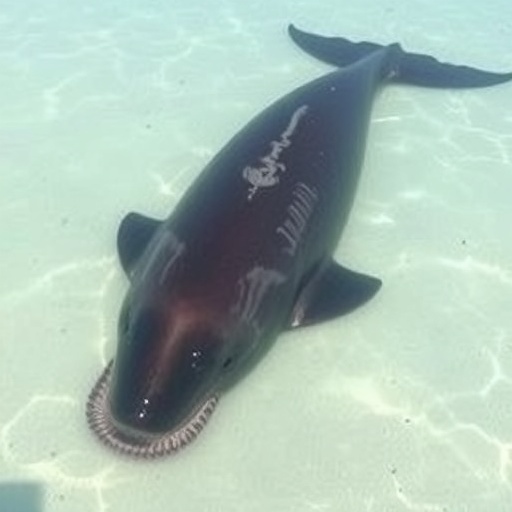
Pygmy sperm whales, scientifically known as Kogia breviceps, constitute one of the ocean’s most mysterious and elusive species. Residing predominantly in offshore waters, these small whales are seldom observed in their natural habitat, partly due to their deep-diving habits and tendency to form small, inconspicuous groups. Unlike many marine mammals that frequent coastal areas, pygmy sperm whales venture into the deep ocean, making direct observation and behavioral studies a formidable challenge for marine biologists and ecologists. This scarcity of in situ data has left much about their biology, ecology, and health shrouded in mystery.
The vast majority of scientific understanding of pygmy sperm whales emerges from the unfortunate reality of strandings, events in which whales are found beached or otherwise incapacitated along coastlines. In the southeastern United States, particularly along Florida’s Atlantic coast, these whales strand with peculiar frequency compared to other large marine mammals. These strandings have been invaluable to scientists, providing unique opportunities to perform necropsies and histological examinations otherwise impossible in wild, free-swimming individuals. This strandings-centric approach, while informative, inherently limits perspectives predominantly to sick or compromised animals, potentially skewing the understanding of the species’ typical health and microbiota.
One of the most recurrent pathological findings during post-mortem assessments of these stranded pygmy sperm whales are gastrointestinal maladies, with stomach ulcers being a pronounced condition. These ulcers often co-occur with infections by Helicobacter bacteria, a genus that is well-known in human medicine for its role in chronic gastritis, peptic ulcers, and even gastric carcinoma. The presence of Helicobacter species in pygmy sperm whales raises intriguing questions about cross-host similarities in bacterial pathogenesis, as well as the broader implications for marine mammal health.
A landmark study recently conducted by researchers at Florida Atlantic University’s Harbor Branch Oceanographic Institute—and their multidisciplinary collaborators—has unveiled novel Helicobacter genotypes residing within the stomachs of these whales. Leveraging over 20 years of comprehensive stranding data, the scientists identified three previously undocumented bacterial genotypes, provisionally named Kogia Helicobacter 1, 2, and 3. These discoveries, published in the Journal of Wildlife Diseases, represent the first documented instance of these specific Helicobacter strains in pygmy sperm whales and mark a significant advancement in marine microbiology.
Employing a suite of advanced methodologies—including histopathological analysis, molecular diagnostics, and DNA sequencing—the team systematically examined archival stomach tissue samples from stranded whales between 1999 and 2020. Four individual whales exhibited visible colonization by spiral-shaped, “spirilliform” bacteria embedded within the gastric mucosa. Genetic analyses confirmed that two of these genotypes, Kogia Helicobacter 1 and 2, exhibit close genetic affiliations with known Helicobacter species found in other cetaceans, such as dolphins and porpoises, as well as in humans. Conversely, Kogia Helicobacter 3 diverges significantly, occupying a distinct and previously uncharacterized lineage, suggesting a greater undiscovered microbial diversity in marine environments than previously anticipated.
The histological examinations revealed compelling evidence of gastric disease among the affected pygmy sperm whales. Notably, all specimens positive for these novel Helicobacter genotypes displayed pathological signs consistent with gastritis, including mucosal inflammation, ulceration, fibrotic remodeling, and the presence of nematode parasites. One particularly remarkable case also indicated colitis, an inflammation of the colon, implying that Helicobacter infections in these whales may extend beyond the stomach, challenging traditional notions about the localization of these bacteria. Although the infections were not explicitly determined to be the cause of death in any case, the severity of the gastric lesions accentuates the potential clinical significance of these bacteria in marine mammal pathology.
Since their initial identification in marine mammals in the early 2000s, Helicobacter species have been documented across multiple cetacean species worldwide. Clinical manifestations associated with these infections can include lethargy, anorexia, regurgitation, and gastric ulcerations—symptoms that closely parallel Helicobacter-related diseases in humans. This parallelism indicates a remarkable convergence in microbial-host interactions and pathobiology between distantly related mammals inhabiting fundamentally different ecosystems, underscoring the importance of comparative pathological studies.
The detection of these novel Helicobacter strains in pygmy sperm whales not only illuminates the obscure microbial diversity harbored by marine mammals but also raises essential questions about the implications of persistent bacterial infections on the health and viability of vulnerable whale populations. The potential for chronic gastric infections to compromise foraging efficiency, immunocompetence, and overall fitness could have profound ripple effects across individual animals and their social groups, with possible consequences at the population level—particularly in a species already susceptible to anthropogenic pressures and environmental changes.
The multidisciplinary collaboration underlying this research involves experts from FAU Harbor Branch, the University of Florida College of Veterinary Medicine, Colorado State University’s Diagnostic Medicine Center, and Marine Mammal Pathology Services. This broad partnership highlights the importance of integrative approaches combining marine biology, veterinary pathology, molecular genetics, and ecological monitoring to unravel complex host-pathogen dynamics in the ocean environment. Moreover, the study exemplifies the critical importance of long-term marine mammal stranding response initiatives, which provide continuous access to biological specimens and longitudinal data essential for detecting emerging diseases and novel pathogens.
The discoveries presented in this research deliver a clarion call for increased attention to marine microbial ecology and its interface with mammalian health. The ocean’s hidden microbial realm likely teems with undiscovered bacterial species that influence the biology of marine hosts in subtle yet fundamental ways. As antibiotic resistance, climate change, and habitat degradation alter microbial compositions and host susceptibility, understanding these unseen microbial players becomes ever more urgent for conservation and wildlife management.
Funded in part by the Florida State Specialty License Plate Program’s “Protect Florida Whales” grant, this study not only enriches scientific knowledge but also underscores the societal value of supporting marine wildlife research. Every stranded whale carries a narrative of survival, disease, and environmental pressures, offering researchers unprecedented windows into marine ecosystems’ health and resilience. As we decode these stories, we edge closer to safeguarding ocean biodiversity amidst a rapidly transforming planet.
—
Subject of Research: Animals
Article Title: NOVEL GASTRIC HELICOBACTER SPECIES IN STRANDED PYGMY SPERM WHALES (KOGIA BREVICEPS) ON THE EAST COAST OF FLORIDA, USA
News Publication Date: 16-Feb-2026
Web References:
Journal of Wildlife Diseases Article DOI
Image Credits: FAU Harbor Branch
Keywords: Whales, Marine mammals, Wildlife, Bacterial genetics, Bacteria, Genetics, Microbial genetics, Molecular genetics, Disease vectors, Gastrointestinal disorders, Colitis, Aquatic animals, Stomach, Gastrointestinal tract, Intestines


