

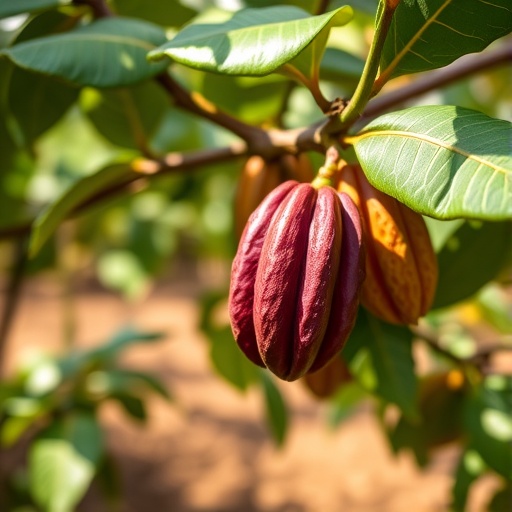
In a groundbreaking study, researchers have delved into the intricate and vital world of cocoa farming in Côte d’Ivoire, spotlighting the farmer-driven strategies that could sustain cocoa livelihoods for generations. This research comes at a pivotal time when global cocoa production faces multifaceted challenges ranging from climate change impacts to socio-economic hurdles. Cocoa is not just a crop; it is a cultural cornerstone for many Ivorian communities, and enhancing the livelihoods of cocoa farmers directly correlates to better socioeconomic outcomes for entire regions.
The study, led by researchers such as Van Hee, Ollendorf, and Coral, focuses primarily on how local farmers can leverage their intrinsic knowledge and cultural practices to foster sustainable cocoa production. Instead of imposing external solutions, which often lack contextual relevance, the researchers advocate for the empowerment of farmers to innovate within their systems. This approach promises increased resilience against changing climatic conditions, market fluctuations, and resource scarcity, making it a timely exploration.
Côte d’Ivoire, being the world’s largest producer of cocoa, plays a pivotal role in the international chocolate industry. Yet, despite its critical position, many farmers live below the poverty line, grappling with inadequate resources and limited access to technology. This stark reality raises an urgent question: how can the cocoa sector transition towards a sustainable model that benefits the farmers as much as it benefits global consumers? The answer could lie in redefining the relationship between farmers and their means of production.
The farmers of Côte d’Ivoire have a deep-rooted heritage in cocoa cultivation, honed over generations. This indigenous knowledge is invaluable – it’s not merely about planting and harvesting cocoa but encompasses soil management, pest control, and even marketing strategies. The study emphasizes the importance of harnessing this local expertise and integrating it with modern agricultural practices. This synergistic approach could enhance productivity, biodiversity, and, notably, the economic returns for farmers.
Through interviews and field studies, the research illuminates several farmer-driven initiatives already underway in various Ivorian communities. Some farmers are experimenting with intercropping techniques, integrating cocoa with other cash crops and food staples. This not only diversifies their income but also reduces vulnerability to crop failure. Moreover, these methods can improve soil health while minimizing the use of harmful pesticides, thereby promoting environmental sustainability.
The study also highlights the power of cooperative initiatives, where farmers join forces to share resources, knowledge, and market access. Through these cooperatives, cocoa producers can negotiate better prices and gain collective bargaining power against large chocolate companies. As a result, farmers can secure fair compensation for their labor, thus contributing to poverty alleviation in their communities and fostering the growth of local economies.
Nevertheless, significant challenges remain. One pressing issue is the prevalence of child labor in cocoa farming, a concern that has garnered international attention. The research underscores the need for a multi-stakeholder approach that includes not only farmers but also governments, NGOs, and consumers. By collectively advocating for ethical sourcing and fair trade practices, stakeholders can effectuate systemic change that uplifts the entire cocoa sector and safeguards the rights of vulnerable populations.
As the world becomes increasingly aware of the environmental and social implications of agriculture, the study aligns with a broader movement towards sustainable food systems. The researchers argue that understanding the intricate relationships within cocoa farming ecosystems is paramount. Sustainable practices have the potential to enhance not only cocoa yield and quality but also the long-term viability of forests and biodiversity in the region.
The research, published in the journal ‘Discover Sustainability,’ reflects a shift in academic perspectives. Traditionally, agricultural sustainability might have focused solely on ecological aspects. However, this study reinforces that social equity and economic feasibility are equally critical. By prioritizing a holistic approach that encompasses these elements, the path forward becomes clearer and more achievable.
The researchers call for policymakers to take heed of their findings. Implementing supportive policies that empower farmers, protect the environment, and incentivize sustainable practices is essential. Moreover, fostering educational programs tailored to local contexts can ensure that future generations of farmers possess the knowledge and skills needed to navigate an evolving agricultural landscape.
Moreover, with the surge in consumer advocacy for ethical sourcing and sustainability, the market for responsibly produced cocoa speaks volumes. Chocolate brands that champion fair trade and sustainable practices are increasingly rewarded by conscious consumers. Thus, there is a compelling economic argument for cocoa producers to adopt the practices outlined in the study and to integrate their deeply rooted wisdom into modern agricultural frameworks.
As this research gains traction, its implications extend beyond Côte d’Ivoire. It serves as a potential blueprint for cocoa farming in other regions, particularly in West Africa, where similar challenges are prevalent. By focusing on farmer-led initiatives, the cocoa sector can transition from traditional models that often exacerbate inequality to more sustainable systems that champion both environmental stewardship and social justice.
In conclusion, this extensive study orchestrated by Van Hee and colleagues sheds light on the transformative power of farmer-driven approaches to sustainability in cocoa farming. As the world grapples with the complexities of agricultural sustainability, integrating indigenous knowledge with modern techniques emerges as a critical pathway. Through collective efforts, stakeholders within the cocoa sector can forge a brighter and more equitable future for farmers, consumers, and the environment alike.
Subject of Research: Farmer-driven approaches for sustainable cocoa livelihoods in Côte d’Ivoire.
Article Title: Correction: Exploring farmer-driven approaches for sustainable cocoa livelihoods in Côte d’ivoire.
Article References:
Van Hee, J., Ollendorf, F., Coral, C. et al. Correction: Exploring farmer-driven approaches for sustainable cocoa livelihoods in Côte d’ivoire.
Discov Sustain 6, 1479 (2025). https://doi.org/10.1007/s43621-025-02528-4
Image Credits: AI Generated
DOI: 10.1007/s43621-025-02528-4
Keywords: Cocoa sustainability, farmer-driven initiatives, Côte d’Ivoire, agricultural practices, economic empowerment, cooperative models, ethical sourcing, climate adaptation.


