

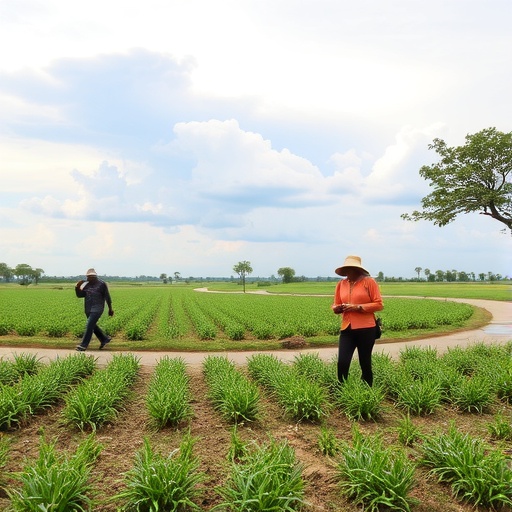
Amidst the looming specter of climate change, vulnerability amongst smallholder farmers has become a pressing issue, particularly in regions like the Wolaita Zone in Southern Ethiopia. Recent research published in the journal Discover Sustainability throws a spotlight on the intricate web of factors influencing both the drivers and barriers to climate change adaptation for these farmers. Conducted by researchers Dalle, Gecho, and Bedeke, the study delves deep into the socio-economic dynamics, environmental conditions, and cultural contexts that dictate how these farmers respond—or fail to respond—to the growing challenges posed by climate instability.
The Wolaita Zone, rich in agricultural potential, has faced unprecedented changes in weather patterns, significantly affecting its smallholder farmers who largely depend on rain-fed agriculture. These changes manifest as unpredictable rainfall, extended drought periods, and more frequent instances of crop disease. The intensity of these changes has necessitated adaptation strategies, but the path to effective adaptation is fraught with obstacles. The research identifies critical drivers that encourage these farmers to adapt, such as access to information, credits, and community networks, while simultaneously outlining the barriers, which include financial constraints, traditional belief systems, and inadequate infrastructure.
Empirical evidence from the study underscores that access to information is one of the foremost catalysts for adaptation. Farmers who engage with extension services and utilize modern communication technologies demonstrate a greater propensity to adopt climate-resilient practices. This finding stresses the importance of education and outreach programs, which can serve not just to enlighten farmers about best practices but also to empower them with the tools necessary to make informed decisions regarding their agricultural activities.
However, the study also reveals a disheartening level of financial limitation faced by smallholder farmers in the Wolaita Zone. The capital required to invest in climate-resilient technologies or to alter irrigation practices can be daunting. Many farmers lack access to formal financial services, pushing them towards informal and often exorbitant lending options. This financial strain ultimately limits their ability to adapt, trapping them in a cycle of vulnerability. Addressing this issue requires not only innovative financing solutions but a broader restructuring of agricultural financing systems to ensure that smallholder farmers can access affordable and reliable funding.
In addition to economic factors, the cultural context within which these farmers operate plays a substantial role in their adaptive capacity. Traditional beliefs and practices around agriculture are often deeply entrenched, and many farmers are hesitant to abandon these methods. This cultural inertia can stymie the adoption of new techniques that might enhance resilience. Findings from the research indicate that efforts to promote climate adaptation must be sensitive to these traditions, integrating local knowledge with new scientific insights to foster a more palatable transition for these farmers.
Delving into the environmental aspect, the research emphasizes the increasing unpredictability of weather patterns driven by climate change. This unpredictability not only affects crop yields but also demoralizes farmers who have grown accustomed to more stable conditions. As a result, many farmers express a sense of helplessness and uncertainty about the future of their agricultural practices. The study advocates for a multifaceted approach that combines immediate relief strategies with long-term planning to build resilience against such uncertainty.
Community networks emerge as another pivotal driver of adaptation. Farmers who are part of cooperative societies or community groups exhibit a greater inclination towards collective adaptation strategies. These networks create platforms for knowledge sharing and mutual support, proving to be essential assets in navigating the challenges posed by climate change. Strengthening these communal ties can therefore be instrumental in equipping farmers with the resources and knowledge-sharing opportunities required to better respond to climatic threats.
However, the findings also reveal the existence of significant gaps in infrastructure supporting smallholder agriculture in the Wolaita Zone. Poor road networks, insufficient access to markets, and limited storage facilities exacerbate the difficulties of implementing adaptive practices. For farmers, the lack of adequate infrastructure means that even when they invest in better technologies, they may still struggle to access markets or lose crops due to inadequate storage options. Investments in rural infrastructure are critical, not just for immediate agricultural successes, but also for fostering long-term resilience against climate impacts.
Moreover, the socio-political landscape significantly influences adaptation strategies as well. Policies at the local, regional, and national levels can either facilitate or impede farmers’ efforts to adapt. The research underscores the necessity for policies that align with grassroots realities. Policymakers must engage with farmers directly to understand their needs and incorporate their voices in the crafting of resilience-building policies. Such engagement can ensure that the strategies developed are not only contextually relevant but are also practical and actionable.
The implications of this study extend far beyond the borders of Ethiopia. The challenges faced by smallholder farmers in Wolaita resonate with similar scenarios found in many developing regions around the globe. As climate change becomes an ever-present challenge, the lessons gleaned from this research provide critical insights for global agricultural adaptation strategies. Collaborative efforts engaging a spectrum of stakeholders—from governmental bodies to NGOs and the private sector—will be essential for bolstering the adaptive capacities of smallholder farmers worldwide.
In conclusion, the drivers and barriers to climate adaptation elucidated in this research present a roadmap for enhancing resilience among smallholder farmers in the Wolaita Zone. By analyzing the socio-economic, cultural, and infrastructural nuances at play, Dalle, Gecho, and Bedeke offer valuable guidelines for practitioners, policymakers, and researchers alike. The urgent call to action is clear: there is a need for comprehensive, inclusive support systems that empower farmers to navigate the unpredictable terrain of climate change. Only through a concerted effort can the agricultural sector hope to flourish in the face of adversity.
As the world stares down the inevitable impacts of climate change, the narratives from smallholder farmers like those in the Wolaita Zone compel action. Their experiences hold lessons not just for their own communities, but for the global collective. By addressing both the drivers and barriers to adaptation, we can forge pathways toward a sustainable future—one where farmers are not merely surviving but thriving amidst the uncertainties brought forth by a changing climate.
Subject of Research: Drivers and barriers of climate change adaptation among smallholder farmers in Wolaita Zone, Southern Ethiopia.
Article Title: Drivers and barriers of climate change adaptation among smallholder farmers in the Wolaita Zone, Southern Ethiopia.
Article References:
Dalle, D., Gecho, Y. & Bedeke, S.B. Drivers and barriers of climate change adaptation among smallholder farmers in the Wolaita Zone, Southern Ethiopia.
Discov Sustain (2025). https://doi.org/10.1007/s43621-025-02450-9
Image Credits: AI Generated
DOI:
Keywords: Climate Change, Adaptation, Smallholder Farmers, Wolaita Zone, Ethiopia, Agricultural Resilience, Socio-Economic Factors, Community Networks, Cultural Context, Infrastructure, Agricultural Policy.


