

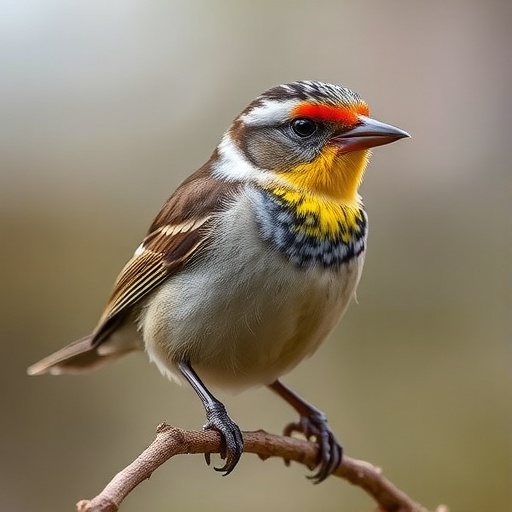
A groundbreaking study emerging from the University of Oxford sheds new light on how extreme weather events influence the growth and survival of great tit nestlings in the UK. Published on 11 March 2026, this research uniquely combines six decades of ecological data with meticulous daily weather records to unravel how temperature and precipitation patterns during critical developmental windows impact fledgling success. The findings reveal a nuanced relationship between early-life climate challenges and bird physiology, highlighting the buffering effect of phenological shifts in breeding timing.
Drawing on an extensive dataset comprising over 80,000 individual great tits from Wytham Woods, Oxford, researchers tracked how the incidence of cold snaps, heavy rainfall, and heat extremes during specific nestling stages affected body mass at fledging. Body mass at fledging is a crucial determinant of survival prospects, as it reflects the chick’s nutritional status and developmental health. The study identifies that the harshest cold during the first week post-hatching significantly impairs growth, likely due to the nestlings’ underdeveloped thermoregulatory abilities, forcing energy allocation away from somatic growth towards maintaining body temperature.
Concurrently, intense rainfall presented a growing threat as nestlings matured, especially as it impedes parental foraging behaviors and diminishes prey availability due to the displacement of caterpillars from their natural vegetation habitats. These cascading ecological effects culminate in a measurable reduction of fledging weight by approximately 3%. However, the research took a particularly intriguing turn by uncovering that when extreme heat co-occurred with heavy rainfall, the decline in fledging mass was exacerbated, plunging by as much as 27% in broods laid later in the season, underscoring the complex interactive effects of multi-faceted climatic stressors.
Lead author Devi Satarkar from the University of Oxford emphasized that adaptive shifts in breeding phenology—specifically laying eggs earlier in the season—have provided some relief against the negative impacts of escalating temperature extremes. Early breeding aligns hatching with peak caterpillar abundance, securing optimal food resources for rapidly growing nestlings. Yet, this shift entails trade-offs, exposing chicks to late-season cold spells that carry substantial survival costs. As climate change amplifies the frequency and amplitude of extreme events, these finely balanced life-history strategies face increasing pressure, with unknown long-term consequences for population dynamics.
Physiologically, hatchlings are highly vulnerable due to incomplete feather development, limiting their ability to thermoregulate efficiently. During cold snaps, increased metabolic demands divert critical energy from growth to thermogenesis. Simultaneously, inclement weather reduces parents’ foraging efficiency, as persistent rain and low temperatures depress insect activity and availability. Caterpillars, the primary dietary resource, are also mechanically dislodged by heavy rainfall, creating a food shortage during a period of peak energetic demand. These findings reflect the sensitivity of early developmental stages to microclimatic variability, underscoring the importance of temporal and spatial habitat characteristics.
Paradoxically, the study reports that heat extremes during the nestling period tend to increase fledging mass. This counterintuitive result is hypothesized to stem from the relatively mild nature of heat events in Oxfordshire compared to southern Europe, where heat stress often exceeds critical thermal maxima. Moderate warm spells enhance insect activity and visibility, facilitating easier prey capture and extending parental foraging windows. Additionally, higher temperatures reduce the thermoregulatory burden on nestlings and enhance the water content in caterpillars, mitigating dehydration risks. These idiosyncratic regional responses highlight the complexity of ecological interactions under shifting climatic baselines.
A stark difference emerges between early-season and late-season broods in response to heat waves. Early breeders benefit substantially from warm conditions coinciding with peak prey abundance and favorable thermal niches. Conversely, later broods, despite experiencing similar peak temperatures of 16-17°C, exhibit a pronounced reduction in fledgling body mass, about one-third lighter. This discrepancy likely reflects diminished food resources or cumulative stressors later in the breeding season. Consequently, temporal variation within a breeding season critically mediates resilience to weather extremes, emphasizing the adaptive significance of breeding phenology as a survival mechanism.
Longitudinal analyses indicate modest but consistent declines in survival probabilities to adulthood following exposure to extreme cold and heavy rainfall during development. In contrast, heat extremes confer slight survival advantages under current climatic regimes. However, these benefits are fragile as rising global temperatures increasingly push local conditions toward thresholds considered deleterious in other biogeographic zones. The anticipated escalation in the frequency and intensity of extreme weather mandates ongoing monitoring to understand emergent risks and population viability.
This research also points to the necessity of integrating microclimate assessments and fine-scale habitat variability into conservation strategies. Conservation interventions such as strategic nest box placement and woodland management can mitigate the exposure of vulnerable nestlings to extreme weather during critical developmental windows. By enhancing local environmental buffering capacity, these measures have the potential to stabilize population trajectories amidst increasing climatic volatility. This study serves as a call for immediate action to incorporate climate resilience into wildlife stewardship frameworks.
The collaborative research team aims to continue their longitudinal monitoring of the Wytham great tit population, seeking to quantify shifting impacts as climate change advances. In particular, investigations will explore whether moderate heatwaves transition toward harmful extremes over coming decades and how adaptive breeding behaviors evolve in response. These insights will be crucial for forecasting population responses and guiding conservation priorities under rapidly changing environmental conditions.
By leveraging an unparalleled temporal dataset alongside detailed weather logs, this study exemplifies the power of long-term ecological research. Its granular analysis of developmental-stage-specific vulnerability to climatic extremes provides novel mechanistic insights into how weather interacts with physiology, behavior, and ecology to shape survival outcomes in wild avian populations. The work underscores the intricacies of climate change impacts, cautioning against simplistic assumptions and advocating for detailed, context-specific evaluations of vulnerability.
In conclusion, this landmark study elucidates the multifaceted effects of extreme climate events on the early-life stages of great tits, revealing both threats and unexpected benefits mediated by timing and environmental interaction. It highlights the critical role of adaptive phenology in buffering against climatic stress and underscores the urgency of integrating ecological and climatic sciences to safeguard biodiversity in an era of unprecedented environmental change. As global weather patterns become increasingly erratic, understanding these complex dynamics will be paramount in both advancing scientific knowledge and informing practical conservation efforts aimed at sustaining wildlife populations into the future.
Subject of Research: The impact of extreme climatic events and environmental variability on growth and survival in great tit nestlings.
Article Title: Developmental stage-specific responses to extreme climatic events and environmental variability in great tit nestlings.
News Publication Date: 11 March 2026.
Web References: https://doi.org/10.1111/gcb.70794
References: Study data from 60 years of individual monitoring of great tits at Wytham Woods coupled with historical weather records.
Image Credits: David López-Idiáquez.
Keywords: Great tits, nestling development, extreme weather, climate change, breeding phenology, fledging mass, survival, temperature extremes, rainfall impact, ecological adaptation.


