

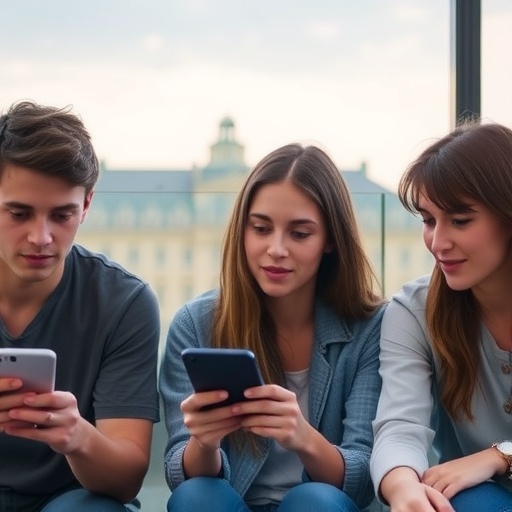
A recent comprehensive study delves into the nuanced relationship between social media usage and loneliness among U.S. college students aged 18 to 24, revealing trends with profound implications for mental health on campuses nationwide. This investigation, published in the Journal of American College Health, uncovers that more than half of the student population experiences loneliness, with heavier social media users disproportionately affected. The results call for urgent attention by educational institutions to address this emerging public health concern through evidence-based intervention strategies.
The research hinges upon a vast dataset, encompassing nearly 65,000 college students from over 120 institutions, making it one of the largest analyses of its kind focused on young adults navigating the critical transitional phase of early adulthood. Loneliness was measured quantitatively by surveying participants on how often they felt isolated, lacked companionship, or experienced exclusion. This rigorous approach allowed researchers to establish a robust link between excessive social media engagement—defined as 16 or more hours per week—and elevated feelings of loneliness.
Intriguingly, the study details that social media use beyond two hours daily correlated with a graded increase in loneliness risk. For example, students engaging with social platforms for 16 to 20 hours a week exhibited a 19% higher likelihood of loneliness compared to non-users. The association intensified with usage, reaching a 38% increased risk among those spending 30 hours or more weekly on social media. These findings highlight a dose-response relationship that casts new light on the mental health costs of digital overconsumption.
It’s important to note the bidirectional nuances explored by the researchers. They suggest a complex interplay where heavy social media use can both contribute to social isolation and serve as a coping mechanism for those already feeling disconnected. Dr. Madelyn Hill, lead investigator and assistant professor at Ohio University, articulates that this dual causality underscores why simply restricting screen time may not be a panacea but rather a component of a multifaceted approach.
Demographic analysis unearthed disparities within the student population. Female and Black students reported higher incidences of loneliness, pointing to potential underlying social and cultural factors that amplify vulnerability. Additionally, mode of study influenced loneliness levels; students enrolled in hybrid classes reported feeling less isolated compared to those fully engaged in face-to-face instruction, possibly due to sustained ties with prior social networks alongside new academic experiences.
Residential status also proved significant. Students living at home reported greater loneliness than peers residing in campus accommodations, suggesting that physical proximity to campus communities facilitates meaningful social interactions. Furthermore, fraternity and sorority members consistently reported the lowest loneliness rates, likely benefiting from built-in social frameworks and event-driven engagements that reinforce a sense of belonging.
The study’s findings resonate with extant psychological theories linking social isolation to adverse health outcomes. Chronic loneliness has been previously established as a risk factor for depression and premature mortality, positioning it as a major public health concern beyond mere emotional discomfort. This research extends the discourse by situating social media consumption patterns as an influential behavioral factor intersecting with these health risks in a demographic already grappling with major life changes.
Despite acknowledging the limitations inherent in self-reported data, including potential underestimation of online activity, the researchers emphasize the practical implications of their work. They advocate for universities and colleges to proactively educate students about the psychological repercussions of excessive social media use. Instituting digital literacy programs and encouraging time management strategies regarding screen engagement could mitigate the loneliness epidemic.
Moreover, the authors stress facilitating offline social connections to counterbalance the isolating effects of digital immersion. Campus initiatives promoting social events, peer support groups, and inclusive community-building activities emerge as critical pillars in crafting a more connected and mentally resilient student body. These social interventions, coupled with guidance on healthy technology use, could transform the academic environment into one fostering well-being rather than eroding it.
Senior author Dr. Ashley L Merianos from the University of Cincinnati highlights that such insights demand a holistic public health strategy. Enhancing supportive peer relationships outside the digital realm holds promise for reshaping how young adults experience college life amidst pervasive digital distractions. This approach transcends simplistic admonitions against social media, instead advocating nuanced, evidence-informed solutions.
This landmark study not only unveils the heightened risk of loneliness linked with excessive social media use but also invites a multidisciplinary conversation involving psychology, public health, education, and digital technology fields. Understanding and addressing the social determinants behind these patterns is imperative as society negotiates the ever-deepening integration of technology into daily life and its psychological ramifications.
Ultimately, this research illuminates a critical challenge for contemporary higher education—balancing digital engagement with authentic human connection. As social media platforms continue evolving and embedding themselves into the social fabric, colleges must become proactive spaces that empower students to navigate these influences thoughtfully, fostering environments that nurture mental health and communal belonging.
Subject of Research: People
Article Title: Exploration of Excessive Social Media Use with Loneliness Among U.S. College Students
News Publication Date: 16-Feb-2026
Web References: http://dx.doi.org/10.1080/07448481.2025.2573108
References: Journal of American College Health
Keywords: Social media, Universities, Education, College students, Undergraduate students, Mental health, Emotions


