

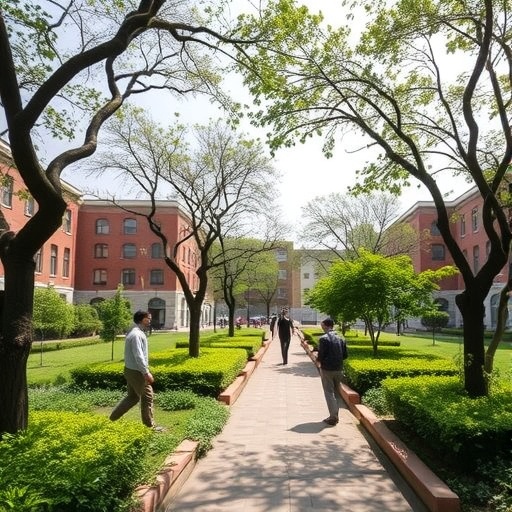
Urban green spaces play a pivotal role in enhancing the quality of life within metropolitan areas. Recognized as essential elements of urban ecosystems, these green spaces not only offer aesthetic appeal but also promote environmental sustainability, support biodiversity, and improve public health. A new study led by researchers Dasgupta, Thakur, and Hashimoto sheds light on the spatial accessibility and equity of urban green spaces specifically in New Delhi, one of the most densely populated cities in the world. This groundbreaking research employs advanced modeling techniques to assess the accessibility and equitable distribution of green spaces, a critical issue as urban areas continue to expand.
New Delhi, with its rich tapestry of parks, gardens, and recreational areas, faces an alarming challenge regarding the accessibility of such green environments. The researchers embarked on a mission to evaluate the fairness of access to these vital resources among various socio-economic groups within the city. This study is timely given the rapid urbanization of New Delhi, which has led to increased congestion, pollution, and a growing disparity in the availability of recreational spaces. By employing a meticulous methodology that includes accessibility mapping and socio-economic profiling, the study highlights significant inequities in the distribution of urban green spaces.
The researchers employed Geographic Information System (GIS) tools to analyze the spatial distribution of green spaces across different neighborhoods. The findings reveal stark contrasts in accessibility, with affluent areas enjoying a surfeit of green parks while lower-income neighborhoods remain vastly underserved. This data-driven approach not only underscores the need for equitable urban planning but also raises awareness about the health risks associated with inadequate access to green environments. The results indicate a critical relationship between socio-economic status and access to recreational areas, emphasizing that urban green spaces are not merely amenities but essential components of public health infrastructure.
Central to the study is the concept of spatial equity, an essential factor when considering the health and well-being of urban populations. The researchers determined that areas with higher poverty rates are often bereft of sufficient green spaces, which may exacerbate health disparities among residents. These findings lend credence to the argument that access to nature is a right, not a privilege. This study advocates that urban planners and policymakers must acknowledge the social determinants of health when devising strategies for urban green space allocation.
Another significant aspect of the research is its identification of barriers that prevent equitable access to urban green spaces. These barriers include physical obstacles such as roads, socio-economic challenges, and even cultural perceptions that can deter certain populations from utilizing available green spaces. By conducting focus group discussions and surveys within various communities, the researchers gathered qualitative data that enriches the understanding of how different demographics interact with urban green spaces. These insights are invaluable for creating effective outreach programs aimed at enhancing usage of these critical areas by marginalized groups.
The model developed by Dasgupta and colleagues serves as a valuable tool for future urban planning endeavors. It allows for the simulation of various scenarios, providing insights into how different policy interventions might alter the accessibility landscape for urban green spaces. For instance, the model can simulate the impact of increasing the number of parks in underserved areas or improving transportation links to existing green spaces. This capacity to predict the outcomes of various urban planning strategies emphasizes the importance of data-driven decision-making in creating healthier, more accessible urban environments.
Moreover, the researchers highlight the importance of community engagement in the planning and governance of urban green spaces. By incorporating local voices into the planning process, cities can ensure that the needs and preferences of all residents are addressed. This participatory approach fosters a sense of ownership among community members, which can lead to greater care and investment in these public spaces. Enhanced collaboration between stakeholders, including government entities, community organizations, and residents, is vital for effective management and promotion of urban green spaces.
The implications of this research extend beyond New Delhi, offering valuable lessons applicable to cities worldwide. As urbanization continues to escalate globally, understanding the dynamics of green space accessibility becomes paramount. Policymakers in other metropolitan areas can learn from New Delhi’s challenges as they seek to integrate equitable green space distribution into their urban development frameworks. This global perspective on a local issue underscores the interconnectedness of cities and their adaptability in addressing shared challenges.
Furthermore, the study concludes with a call to action for more rigorous urban planning policies that prioritize accessibility and equity in green space distribution. Investment in these areas not only promotes physical health but also contributes to mental well-being. Numerous studies have established the restorative effects of nature on mental health, including reducing stress, anxiety, and depression. Therefore, the equitable distribution of urban green spaces is not only a moral imperative but a practical necessity for fostering healthier communities.
In essence, Dasgupta et al.’s research sheds light on the pressing need to reevaluate how urban green spaces are planned and distributed. The study advocates for comprehensive policies that address not only the quantitative aspect of green spaces but also their qualitative availability. Moving forward, urban planning processes should prioritize inclusivity, ensuring that all residents, regardless of socio-economic background, have access to quality green spaces.
The narrative of access and equity in urban spaces is a compelling reminder of the inherent responsibility cities have toward their inhabitants. As urbanization intensifies, conversations about green spaces should not only focus on aesthetics but emphasize accessibility and social justice. Urban green spaces should be viewed not as luxuries but as fundamental rights that enhance urban living, serve as catalysts for community engagement, and ultimately lead to healthier, happier populations.
In conclusion, the challenges outlined in this groundbreaking study are not insurmountable; with adequate planning, investment, and community involvement, cities can chart a path toward greater equity in urban green space access. While New Delhi faces unique obstacles, the pursuit of equitable urban spaces presents an opportunity for innovation, collaboration, and meaningful legislative change. Through targeted interventions and strategic planning, urban green spaces can be transformed into tools for social equity, health promotion, and community resilience, setting a benchmark for cities worldwide.
Subject of Research: Spatial accessibility and equity of urban green spaces in New Delhi
Article Title: Modelling spatial accessibility and equity of urban green spaces in New Delhi
Article References:
Dasgupta, R., Thakur, R. & Hashimoto, S. Modelling spatial accessibility and equity of urban green spaces in New Delhi.
Discov Cities 2, 101 (2025). https://doi.org/10.1007/s44327-025-00142-7
Image Credits: AI Generated
DOI: https://doi.org/10.1007/s44327-025-00142-7
Keywords: Urban green spaces, spatial accessibility, equity, New Delhi, public health, urban planning


