

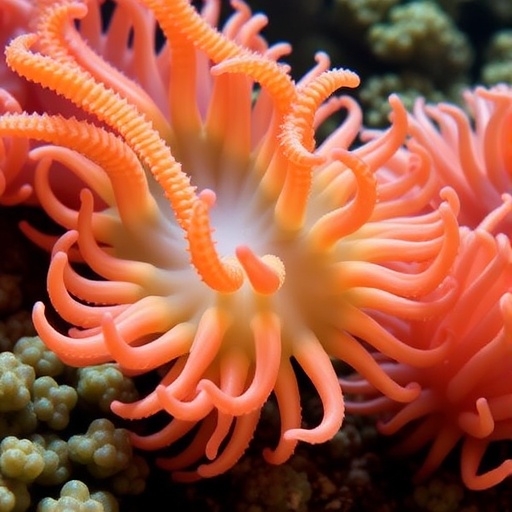
In a groundbreaking study published in 2025, researchers assessed the various organismal traits that define benthic cnidarians, an important group of marine organisms essential for maintaining ecological balance in ocean habitats. The research, authored by Guerbet, A., Chung, MT., and Wang, PL., dives deep into organismal traits such as morphology, reproduction, and behavioral patterns. Employing advanced statistical techniques alongside extensive field observations, the authors aimed to produce comprehensive comparative analyses of how different species within this group exhibit variations in their biological attributes.
The study highlights the often-overlooked diversity found in benthic cnidarians, which include jellyfish, sea anemones, and corals. These organisms play vital roles in their ecosystems, serving as both predators and prey. By underpinning the importance of understanding their organismal traits, the research emphasizes the contribution of these creatures to marine biodiversity and health. The variation in traits among species can reflect how they adapt to their environments, making this analysis crucial in understanding both current biodiversity trends and those forecasted in light of climate change.
Data collection for this meticulous study involved extensive fieldwork, with researchers spanning various geographical locations noted for their biodiversity. The researchers utilized rigorous sampling methods that ensured an accurate representation of the organismal traits in question. This included both quantitative measurements—such as the size and shape of organisms—and qualitative assessments that examined phenomena like coloration and texture. The combination of these data types allowed the researchers to discern patterns of trait variation across different populations and environmental conditions.
The researchers developed a robust framework to analyze these trait variations effectively. They employed various statistical models that could account for environmental influences and genetic factors. This quantitative approach provided a clearer picture of how traits are distributed among different cnidarian species, revealing striking differences in morphological adaptations linked to habitat types. Such insights offer pathways to explore evolutionary processes that shape organismal traits and adaptations over time.
One of the fascinating outcomes of the study is the identification of key ecological pressures that shape these variations. The researchers found that environmental factors such as temperature, light availability, and substrate type could influence morphological traits significantly. For example, in areas with strong water currents, certain cnidarian species exhibited more robust structures to withstand physical stress, underscoring the influence of ecological factors on the evolution of body forms in these organisms.
The study’s findings also underscore potential implications for conservation efforts aimed at protecting benthic cnidarians and their habitats. With climate change and anthropogenic influences putting significant stress on marine ecosystems, understanding organismal diversity and trait variation becomes increasingly essential. As cnidarians often serve as indicators of environmental health, this research could help inform effective conservation strategies needed to combat the negative impacts of global warming, pollution, and habitat destruction.
Furthermore, the research raises important questions about the resilience of benthic cnidarians in rapidly changing environments. As different populations adapt to varying ecological conditions, understanding these adaptations provides critical insights into their ability to survive future changes. This is particularly relevant as marine environments continue to be altered through human activity and climate dynamics, emphasizing the need for ongoing research in this domain.
In addition to enhancing our understanding of ecological adaptations, the study also invites a reevaluation of how we view biodiversity. It encourages researchers and conservationists alike to consider the performance of individual species—not just the richness of species in a given area. Recognizing that variations within a species can be biologically meaningful alters our focus on conservation priorities and strategies.
The researchers adeptly call for interdisciplinary approaches that combine ecology, genetics, and climate science to further investigate organismal trait variation in benthic cnidarians. By fostering collaborations across scientific disciplines, future studies can build on this foundational work to address broader questions regarding biodiversity and species interactions in marine ecosystems. The knowledge gained may provide critical frameworks for addressing ecological issues at local, regional, and global scales.
In this vein, a long-term vision must be adopted. Continuous monitoring and research into the traits of cnidarians and their responses to environmental stressors could yield vital information to drive sustainable practices and policymaking. Future investigations could extend this research to other marine invertebrates, broadening our understanding of biodiversity patterns and ecosystem functionality.
Conclusively, the study conducted by Guerbet, A., Chung, MT., and Wang, PL. marks a significant contribution to marine biology. By illuminating the complexities surrounding organismal trait variation in benthic cnidarians, they provide a nuanced perspective that could assist in preserving these essential organisms. Every finding thus serves to fortify the interconnected web of life within our oceans, reminding us of the importance of scientific inquiry in safeguarding our planet’s natural heritage.
Understanding the involved mechanisms of organismal traits not only enhances marine biology but serves as a pivotal point for future ecological research. With benthic cnidarians at the focus, the implications of trait variation broaden to encompass stability, adaptation, and resilience in marine ecosystems. As researchers continue to delve into this unexplored territory, we can only hope to unveil further mysteries of the ocean, emphasizing the need for ongoing commitment to the natural sciences.
As marine ecosystems face unprecedented challenges, the significance of studies like this cannot be understated. They not only champion for the future of research but also advocate for the health and sustainability of our oceans. The knowledge shared through this research provides a beacon of hope—a crucial step toward understanding and protecting the delicate balance of life beneath the waves.
Subject of Research: Trait variation in benthic cnidarians
Article Title: Comparative analysis of organismal trait variation in benthic cnidarians
Article References:
Guerbet, A., Chung, MT., Wang, PL. et al. Comparative analysis of organismal trait variation in benthic cnidarians. Coral Reefs (2025). https://doi.org/10.1007/s00338-025-02805-8
Image Credits: AI Generated
DOI: https://doi.org/10.1007/s00338-025-02805-8
Keywords: Marine biology, biodiversity, cnidarians, ecological adaptations, conservation strategies


