

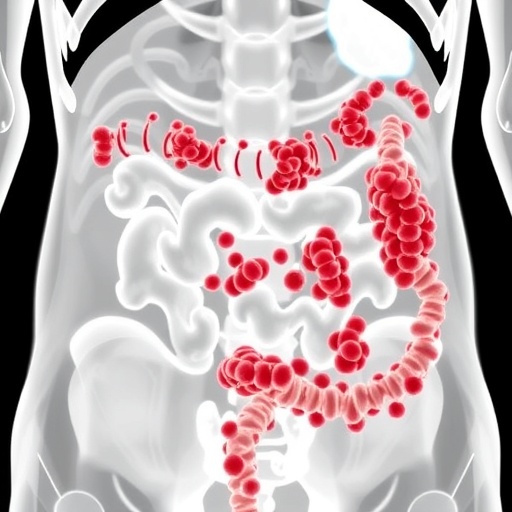
In the complex and evolving battlefield against colorectal cancer, a recent study sheds crucial light on the role of DNA polymerase epsilon catalytic subunit A (POLE) mutations—a pivotal gene implicated in DNA repair and chromosomal replication. This breakthrough research dissects the genetic architecture of colorectal adenocarcinomas harboring POLE mutations and reveals how these mutations interplay with coexisting genetic variations, potentially reshaping prognosis and therapeutic strategies.
Colorectal carcinoma (CRC) is a heterogeneous disease, with genetic alterations driving diverse tumor behaviors and responses to treatment. POLE, critical for DNA synthesis and repair fidelity, when mutated, ushers in a cascade of genomic instability. Prior studies have acknowledged the link between POLE mutations and an ultra-mutated phenotype, yet the full clinico-pathological and molecular landscape has remained elusive until now.
The investigative team conducted a comprehensive retrospective study on 34 CRC cases identified through advanced next-generation sequencing (NGS) panels, including a 161-gene panel and an expansive 505-gene panel. These panels facilitated a granular view of the mutational spectrum. Patients represented a broad median age profile with tumors predominantly located in the colon, revealing the commonality and clinical importance of these mutations across typical CRC presentations.
Analyses disclosed that POLE mutations predominantly manifest as missense mutations, scattered across exonuclease, catalytic, and nonfunctional domains of the polymerase. This distribution hints at the diverse functional impacts POLE mutations may exert, influencing DNA replication fidelity in distinct ways. Notably, only a minority of mutations were localized within the exonuclease domain, traditionally associated with proofreading activity, suggesting complex pathogenic mechanisms.
The research further identified two distinct molecular subgroups based on mutational burden—an essential discovery that refines our understanding of POLE mutant CRC. One subgroup displayed a high mutational load with over five mutations, exhibiting an “ultra-mutated” genotype. This molecular hypermutability likely fuels neoantigen formation, thereby increasing immunogenicity. The other subgroup exhibited a comparatively lower mutational burden, aligning more closely with classical CRC mutational profiles.
Co-mutation profiling revealed a striking co-occurrence of TP53 mutations in more than half of POLE mutant cases. TP53’s status—a tumor suppressor gene—appears to modulate tumor behavior, with a suggestive trend of improved survival in patients harboring TP53 wild-type tumors. Additionally, deficiencies in double-stranded DNA repair proteins were prevalent, significantly amplifying the overall mutational landscape, underscoring the intertwined impact of multiple DNA repair pathways in driving tumorigenesis.
Clinically, the dual nature of POLE mutant CRC represents two entities: one resembling traditional CRC driven by canonical mutations with secondary POLE alterations, and a second, purely POLE-driven ultramutant cancer that potentially responds distinctly to therapies. This bifurcation has profound implications for prognosis, as the ultramutant subset with higher mutation rates aligns with better clinical outcomes, possibly mediated by enhanced immune recognition.
The therapeutic ramifications are compelling, especially regarding immunotherapy. High mutational burden tumors often exhibit pronounced neoantigen landscapes that render them more susceptible to immune checkpoint inhibitors. Consequently, delineating POLE mutation status alongside co-mutations may serve as a biomarker for selecting patients most likely to benefit from such treatments, steering personalized oncology towards higher efficacy.
Moreover, the study illuminates the necessity for expanded genomic characterization in CRC. Standard classifications that omit POLE mutation subtyping risk overlooking critical prognostic and predictive information. A refined molecular taxonomy incorporating POLE mutation domains, co-mutation patterns, and mutational burden may transform diagnostic and therapeutic algorithms, enhancing precision medicine in colorectal oncology.
Importantly, this pioneering research opens avenues for further exploration. Prospective studies are needed to validate these findings and elucidate the mechanistic underpinnings governing differential outcomes among POLE mutant subgroups. Integration with transcriptomic and epigenomic data may reveal additional layers of regulation, offering targets for novel therapeutic interventions.
In summary, this study not only highlights POLE mutations as a hallmark of a unique colorectal cancer subset but also underscores the intricate genomic interplay that defines tumor phenotype and clinical trajectory. By bridging molecular insights with clinical correlates, it lays the groundwork for innovative prognostic models and tailored treatment paradigms that could redefine care standards for patients afflicted with this challenging malignancy.
The findings appeared in the Journal of Clinical and Translational Pathology, emphasizing the importance of continued research into the molecular intricacies of colorectal cancer. As the oncology community strives to conquer cancer’s heterogeneity, the elucidation of POLE mutant colorectal adenocarcinoma’s distinct genomic and clinicopathological landscape represents a significant leap toward precision oncology.
Subject of Research: DNA polymerase epsilon (POLE) mutant colorectal adenocarcinomas, genomic characterization, and clinicopathologic correlation.
Article Title: Characteristic Genomic and Clinicopathologic Landscape of DNA Polymerase Epsilon Mutant Colorectal Adenocarcinomas – A Retrospective Cohort Study
News Publication Date: 30-Dec-2025
Web References:
– Journal of Clinical and Translational Pathology, https://www.xiahepublishing.com/journal/jctp
– DOI: http://dx.doi.org/10.14218/JCTP.2025.00035
Keywords: Adenocarcinoma, Colon cancer, DNA polymerase epsilon (POLE), Colorectal carcinoma, Genomic mutations, TP53 mutation, DNA repair deficiency, Ultra-mutated phenotype, Next-generation sequencing, Immunotherapy, Molecular oncology, Tumor mutational burden


