

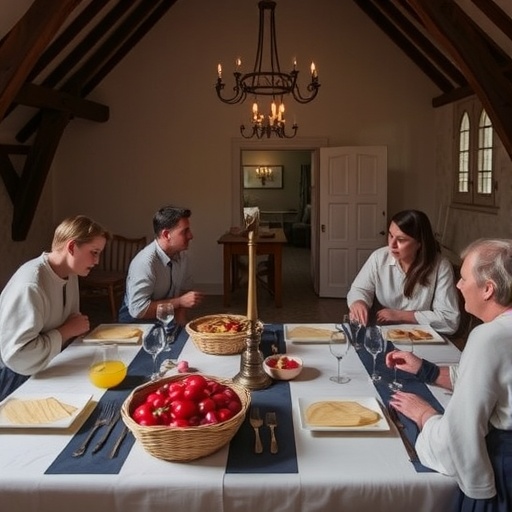
In a remarkable reinterpretation of medieval life and nutrition, a recent study delves into the diets of individuals living in the bustling mining center of Kutná Hora in Czechia during the tumultuous 14th century. This era, marked by recurrent mortality crises, particularly those related to famine and disease, serves as a crucial backdrop for understanding the interplay of health, mortality, and dietary practices. By meticulously reconstructing dietary habits through archaeological evidence, researchers aim to shed light on how the community adapted to these challenging circumstances.
The study, led by Drtikolová Kaupová, Frolík, Velemínský, and their team, reveals a complex picture of sustenance that transcends simplistic notions of starvation and survival. Using stable isotope analysis, they examined human remains from the region, providing vital insights into the types of foods consumed and the nutritional challenges faced by different social strata within the mining community. The isotopic data offers a proxy for understanding the metabolic responses to fluctuations in the availability of food resources.
Interestingly, the findings suggest a diverse diet that included a mix of plant and animal sources, varying significantly with socioeconomic status. Individuals from wealthier backgrounds appear to have had access to a broader range of foods, including higher quantities of protein-rich meats and dairy. In contrast, those from lower socioeconomic strata relied more heavily on grains, legumes, and foraged foods, which were often the default options during times of scarcity. This stratification in diet highlights not only the impacts of economic inequality but also the adaptive strategies employed by people in desperate situations.
The study contextualizes these dietary habits against the backdrop of the Black Death, which swept across Europe in the mid-14th century, causing unprecedented mortality rates. With such high death tolls, the community’s dynamics shifted, potentially resolving some of the complexities related to resource distribution. Budding evidence suggests that during times of crisis, traditional power structures and economic hierarchies began to wane, leading to a reconfiguration of dietary access that may have been both a survival mechanism and a response to social upheaval.
Moreover, the research uncovers the significant psychological and cultural impact of these recurrent crises on medieval society. The inhabitants of Kutná Hora not only faced imminent physical threats due to food scarcity but also the existential dread associated with the ever-looming specter of mortality. Communal gatherings during mealtime could have acted as vital social links that fostered resilience, reinforcing community bonds in an era characterized by uncertainty and despair.
The archaeological evidence unearthed in Kutná Hora points to seasonal dietary variations, raising questions about agricultural practices and food storage strategies. Ritualistic practices surrounding food preparation and consumption also emerge as areas of interest. Certain food items likely held symbolic meanings that transcended mere nutrition, serving as elements of cultural identity amidst widespread fear and vulnerability.
One intriguing aspect of the study is the examination of how local geology influenced agricultural practices and food choices. The mineral-rich landscape of Kutná Hora, primarily known for its silver mines, also provided unique soil conditions that may have affected crop yields. The interplay between the region’s economic activities and its agricultural output underscores the interconnected nature of landscape, labor, and sustenance in medieval life.
This in-depth examination of nutrition in the context of mortality crises contributes to our understanding of resilience in the face of adversity. It poses significant implications for contemporary discussions surrounding food security, social equity, and community health. The lessons learned from the past can inform current efforts to develop sustainable food systems, particularly in regions prone to economic instability and environmental challenges.
As the narrative of Kutná Hora unfolds through the lens of dietary practices, it reminds us of the deeper story behind the food on our plates. Each meal consumed during this tumultuous period was not merely a means to sustain life; it represented a moment of agency, connection, and resistance against the currents of fate. This comprehensive research provides a vivid portrayal of a bygone era, encouraging reflection on our own food systems and societal structures today.
In conclusion, the work conducted by this team of researchers stands as a testament to the resilience of communities in the face of crises and the fundamental role that diet plays in shaping human experience. As science continually uncovers the layers of our past, it is essential to recognize that the remnants of what we consume tell a story of survival, adaptation, and, ultimately, our shared humanity. This research is not just an archaeological endeavor; it is a crucial step towards understanding the vital intersections of history, culture, and health.
Through their innovative methodologies and rigorous analysis, Kaupová and her colleagues have provided us with a potent narrative tied to food and mortality, sparking a renewed interest in the archaeological study of dietary habits in historical contexts. By sharing these findings, they not only illuminate the past but also raise critical questions for the present and future, grounding the human experience in the rich tapestry of our dietary choices.
As we reflect on these insights, we are reminded of the importance of food as more than just sustenance but as a crucial player in the drama of human life—a thread weaving through the narratives of health, culture, and survival across centuries.
Subject of Research: Dietary reconstruction in the medieval mining center of Kutná Hora during the 14th century.
Article Title: Life and death in the medieval mining centre of Kutná Hora – reconstructing diets during the recurrent mortality crises of the 14th century AD (Czechia).
Article References: Drtikolová Kaupová, S., Frolík, J., Velemínský, P. et al. Life and death in the medieval mining centre of Kutná Hora – reconstructing diets during the recurrent mortality crises of the 14th century AD (Czechia). Archaeol Anthropol Sci 18, 17 (2026). https://doi.org/10.1007/s12520-025-02392-3
Image Credits: AI Generated
DOI: https://doi.org/10.1007/s12520-025-02392-3
Keywords: Medieval diets, Kutná Hora, mortality crises, stable isotope analysis, food security, historical nutrition, archaeological science.


