

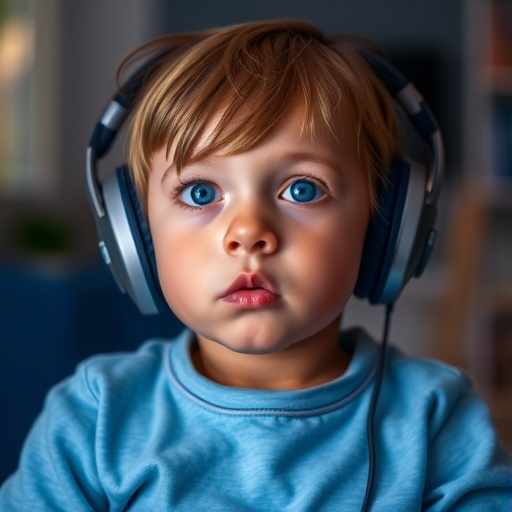
In the contemporary educational landscape, the intersection of media and social-emotional learning (SEL) for young children has gained significant traction among researchers and educators alike. A recent study spearheaded by L.E. Izuagie, titled “Media and Social-Emotional Learning in 3–6-Year-Olds: A Mixed-Methods Study in Nigeria,” provides an in-depth analysis of how various media formats can influence the behavioral and emotional development of preschool-aged children. This research emerges as a critical focal point for understanding not just educational methodologies, but also how children’s engagement with media shapes their social dynamics.
For decades, the role of media in childhood development has oscillated between being seen as a villain and a hero. Parents often grapple with the challenge of determining how much screen time is appropriate, while educators aim to integrate suitable media into their teaching styles. Izuagie’s study endeavors to unravel these complexities, presenting nuanced insights into how targeted media can serve as a catalyst for emotional intelligence in early childhood settings.
A mixed-methods approach was employed in this study, which combines quantitative data and qualitative observations, providing a robust framework for understanding the intricate dynamics at play. By assessing various media types—ranging from educational cartoons to interactive apps—the study seeks to discern their unique contributions towards enhancing children’s emotional and social skills. Through surveys and direct observations of children’s interactions, the research investigates patterns in emotional expression and peer relationships closely linked to media consumption.
One of the standout findings of this research is the significant impact that well-crafted educational media has on young children’s emotional literacy. This term refers to the ability to identify, understand, and manage one’s own emotions, as well as the capacity to empathize with others. Izuagie proposes that exposure to educational media specifically designed with SEL principles can markedly enhance children’s ability to navigate emotional challenges and foster positive interactions with peers.
Moreover, the research highlights the importance of context in determining how media influences social-emotional learning. For instance, the communal viewing of educational programs at home or in classrooms serves to enhance relational dynamics among children. It offers them shared experiences that form the bedrock of empathy and collaborative play. These findings challenge the simplistic notion that media consumption is intrinsically dangerous; rather, the implication is that the quality and context of media interactions matter significantly.
In addition, the research emphasizes the essential role of guidance from adults when children engage with media. It suggests that discussions initiated by caregivers or educators around the themes presented in the media can deepen children’s understanding and facilitate richer emotional learning experiences. This heroic role of the adult emphasizes the need for active engagement rather than passive consumption of media.
Nevertheless, the study does not shy away from addressing the potential pitfalls associated with media consumption among young children. It discusses scenarios where inappropriate or non-educational media can lead to adverse outcomes, such as increased aggression or social withdrawal. Such insights serve as a clarion call for parents and educators to be discerning about the media children are exposed to.
Interestingly, Izuagie’s research also opens up discussions about the role of culture in shaping the interactions between children and media. The Nigerian context in which this study was undertaken positions it uniquely, suggesting that cultural backgrounds significantly inform how children interpret and interact with media. This cultural lens is crucial to developing educational resources that are both relevant and effective for diverse populations.
The findings not only hold water for Nigerian contexts but also resonate on a global scale, where multi-cultural elements are increasingly becoming a staple of educational content. Thus, the implications of this study stretch beyond academic research, providing vital insights for policymakers and media producers aiming to create impactful educational tools for children worldwide.
As schools and parents face the dual challenge of integrating technology while fostering emotional intelligence, Izuagie’s work serves as a significant resource. It urges a shift toward a more balanced approach where technology is not viewed merely as a substitute for traditional learning, but as a complementary tool that, when utilized appropriately, can enhance differing aspects of emotional and social learning.
As we continue to navigate our increasingly digital world, Izuagie’s research offers a roadmap for parents, educators, and policy makers to foster environments that nurture emotional intelligence. The integration of high-quality media into early childhood education can forge pathways for children, extending far beyond mere academic achievement and into the realms of emotional resilience, empathy, and social connectivity.
In conclusion, the study by Izuagie encapsulates the pressing need to reevaluate how media is approached in the context of early childhood education. As the research illuminates the productive coexistence of media and social-emotional learning, it passionately advocates for well-structured strategies that harness the potential of media to better prepare children for a complex world.
The discourse surrounding this research will surely pave the way for future inquiries into the field of early education and media influence, setting the stage for a new era where mindful media engagement becomes integral to the development of well-rounded, emotionally intelligent children.
Subject of Research: The influence of media on social-emotional learning in preschool-aged children.
Article Title: Media and Social-Emotional Learning in 3–6-Year-Olds: A Mixed-Methods Study in Nigeria.
Article References:
Izuagie, L.E. Media and Social-Emotional Learning in 3–6-Year-Olds: A Mixed-Methods Study in Nigeria.
IJEC (2025). https://doi.org/10.1007/s13158-025-00469-7
Image Credits: AI Generated
DOI: https://doi.org/10.1007/s13158-025-00469-7
Keywords: media, social-emotional learning, preschool, emotional intelligence, education, Nigeria, mixed-methods research.


