

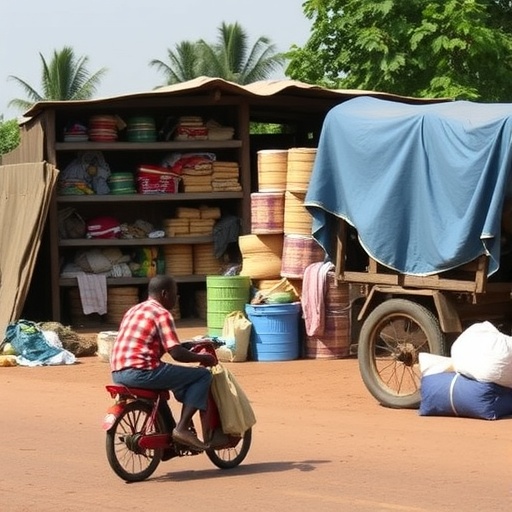
Informal cross-border trade in Africa has emerged as a crucial element in the economic landscape of the continent, as highlighted in a systematic review conducted by Dzawanda and colleagues. This extensive research not only sheds light on the significant role of informal trade but also examines its potential to contribute to the realization of Africa’s Vision 2030. The findings suggest that informal trade, while often overlooked, plays a pivotal role in enhancing regional economic integration and fostering resilience in the face of global economic challenges.
The driving forces behind informal cross-border trade in Africa are multifaceted. Economic necessity is a primary motivator, as many individuals in border communities engage in trade activities to supplement their incomes. The allure of better prices or more diverse goods on the opposite side of the border further fuels this trend. Moreover, regulatory environments that may be perceived as cumbersome often push traders into the informal sector, where they can operate more freely.
A vital aspect of this research is the recognition of the socio-economic benefits that informal cross-border trade can provide to communities. It not only creates livelihood opportunities but also contributes to food security by facilitating the movement of essential goods and commodities. In areas where formal employment is scarce, informal trade becomes a lifeline, enabling individuals and families to support themselves and their communities. Moreover, it often leads to the establishment of informal networks that reinforce social ties and strengthen community bonds.
However, despite its advantages, informal cross-border trade is not without challenges. Traders often face significant risks associated with their activities, including harassment from law enforcement and sudden changes in trade regulations. The lack of formal recognition can also leave traders vulnerable to exploitation and exclusion from essential services, which highlights the need for policies that adequately support this sector. The review emphasizes the necessity of striking a balance between regulation and facilitation to enable informal traders to thrive while ensuring compliance with national and regional trade standards.
The study brings attention to the importance of policy frameworks that can create an inclusive environment for informal trade to flourish. Implementing measures such as simplifying customs procedures, offering training programs, and establishing legal recognition for informal traders can transform the sector and enhance its contributions to national and regional economies. By integrating informal trade into the formal economy, governments can harness its potential and drive sustainable economic growth.
Furthermore, the research identifies regional integration as a crucial component in optimizing the benefits of informal trade. The African Continental Free Trade Area (AfCFTA) presents an opportunity for countries to align policies and practices that facilitate smoother trade across borders. By leveraging this platform, nations can work towards harmonizing regulations and reducing trade barriers, ultimately fostering a more conducive environment for informal trade to evolve.
The implications of this systematic review extend beyond individual economies; they resonate with the broader ambition of Vision 2030 for Africa. This vision encompasses not only economic growth but also sustainable development, poverty alleviation, and enhanced regional cooperation. By recognizing the transformative power of informal cross-border trade, stakeholders can work towards building resilient economies that are better equipped to withstand external shocks.
Moreover, the review highlights the potential for digital technologies to play a transformative role in the informal trade sector. Mobile platforms and e-commerce can empower traders by providing access to market information, facilitating transactions, and enhancing their bargaining power. By embracing technology, informal traders can expand their reach, optimize their operations, and compete more effectively in both domestic and international markets.
An important thread running through the review is the acknowledgment of the impact of global events on informal trade dynamics. The COVID-19 pandemic, for example, prompted significant shifts in trade patterns, as lockdowns and restrictions disrupted traditional trading routes. As economies begin to recover, understanding how these changes affect informal trade will be critical for developing robust policies that can adapt to evolving circumstances.
In conclusion, the findings from Dzawanda et al.’s review underscore the vital role that informal cross-border trade plays in African economies. Far from being a fringe activity, informal trade represents a significant avenue for economic growth, community empowerment, and regional integration. By embracing innovative policies and leveraging technological advancements, stakeholders can unlock the full potential of this dynamic sector, fostering sustainable development in line with the aspirations of Vision 2030.
As the global economy continues to evolve, it is imperative for African nations to recognize and nurture the role of informal cross-border trade. Actions must be taken to support traders, promote fair practices, and ensure the integration of this vital economic activity into formal channels. In doing so, Africa can not only enhance its economic resilience but also pave the way for a brighter, more prosperous future for all its citizens.
Subject of Research: Informal cross-border trade in African economies
Article Title: A systematic review of informal cross-border trade in African economies towards vision 2030.
Article References:
Dzawanda, B., Matsa, M.M., Gumbo, E.B. et al. A systematic review of informal cross-border trade in African economies towards vision 2030.
Discov Sustain (2025). https://doi.org/10.1007/s43621-025-02443-8
Image Credits: AI Generated
DOI: 10.1007/s43621-025-02443-8
Keywords: Informal trade, cross-border trade, African economies, Vision 2030, regional integration, socio-economic benefits, policy frameworks, digital technologies.


