

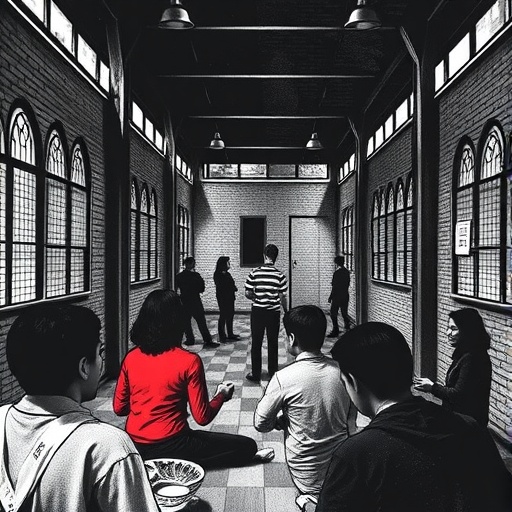
In the labyrinthine world of prison environments, collective violence represents a perplexing and harrowing phenomenon. H. Smith’s groundbreaking research, “Meet Me at the Rock: The Behavioral Patterns of Collective Violence in Prison,” delves into this dark facet of incarceration, illuminating the triggers and underlying psychological dynamics that lead to such outbreaks of aggression among inmates. This investigative study, published in a forthcoming issue of the American Journal of Criminal Justice in 2026, promises to reshape our understanding of not just prison violence but the very ecosystem of human behavior under extreme conditions.
The topic of collective violence in prisons is not simply an issue of physical confrontations; it speaks to the core of social interaction in environments where hierarchical structures dictate the flow of power. Smith meticulously outlines that such violence often emerges as a response to perceived threats, territorial disputes, or as a means of establishing dominance. By applying various behavioral theories to the subject matter, he posits that these violent occurrences are not merely random outbursts but are often calculated responses driven by socio-political dynamics within the prison system.
An essential element of Smith’s research is the comprehensive analysis of the psychological constructs at play among incarcerated individuals. Typically, prisons are rife with hostility, stemming from a lack of fundamental human rights and chronic overcrowding. Smith’s exploration into how these environmental factors influence inmate psychology provides crucial insights that extend beyond mere statistics. His findings indicate a correlation between environmental stressors and the propensity for violent behavior, suggesting that changing the prison environment may directly influence inmate aggression.
Moreover, Smith presents a fascinating study that combines field research and psychological assessments of inmates involved in violent incidents. By engaging with inmates directly and analyzing their testimonies, he gathers qualitative data that unveils the recurring themes of fear, desperation, and survivalist instincts. He notes that many violent episodes stem from a deep-seated need for security, which often manifests as aggression towards others. The alarming frequency at which such sentiments arise underscores the dire need for institutional reforms that prioritize mental well-being alongside physical safety.
Incorporating sociological perspectives, Smith examines the role of group dynamics in fostering violence. He explains how collective identities form among inmates, leading them to engage in violent actions as a cohesive unit. The concept of “being part of a gang” emerges as a critical point, illustrating how the need for belonging can push individuals into violent behavior. Smith elucidates that gang affiliations not only provide emotional support but also foster a sense of power among inmates, which often translates into an elevated likelihood of enacting violence as a means of protecting or advancing their group’s interests.
Smith does not shy away from addressing the systemic issues that facilitate collective violence. He identifies specific prison policies that inadvertently exacerbate tensions, such as the inadequate allocation of resources, which can lead to inter-group conflicts over territory and basic necessities. The examination of such policies highlights the importance of systemic reform in mitigating violent outcomes. Therefore, prison officials must recognize the link between administrative decisions and the violent behaviors that follow, paving the way for more humane and effective management strategies.
One of the most critical takeaways from Smith’s research is the call for a re-evaluation of rehabilitation programs within the prison system. Smith argues that many current programs do not adequately address the root causes of violent behavior. Instead, they often treat the symptoms of violence without understanding the underlying motivations. He advocates for the development of programs that incorporate emotional intelligence training and conflict resolution skills, which have the potential to not only reduce violence but also empower inmates to make more constructive choices upon reintegration into society.
By employing a multi-disciplinary approach, Smith’s study enriches the conversation surrounding prison violence, integrating insights from psychology, sociology, and criminology. This holistic view is essential for developing comprehensive strategies to combat the rising tide of violence in correctional facilities. Smith implores stakeholders in the criminal justice system to recognize the interconnectedness of mental health, community support, and institutional policies when addressing the epidemic of violence in prisons.
As Smith’s poignant research sets the stage for future discussions, it draws attention to the often-overlooked voices of those affected by collective violence—both inmates and corrections officers alike. The harsh realities of prison life underscore the urgent need for dialogue concerning not only how we treat those incarcerated but also how violent behaviors can be redirected towards constructive avenues. This approach has the potential to significantly alter the trajectory of rehabilitation efforts and public safety measures.
Facing the stark realities of incarceration, Smith boldly posits that systemic changes are not only necessary, but also truly possible when awareness is combined with action. He envisions a future where prison systems do not merely exist to punish but also to rehabilitate and reintegrate individuals as constructive members of society. The journey towards a more humane prison environment begins with open conversations about violence and its systemic roots.
In conclusion, H. Smith’s work serves as a crucial stepping stone towards understanding the complexities of collective violence in prisons. By shedding light on the behavioral patterns and socio-political undercurrents at play, he provides a roadmap for reform. This study emphasizes the need for society to take responsibility for its incarcerated populations, advocating for environments that prioritize mental health, support, and genuine rehabilitation rather than mere containment and punishment. As the conversation continues to evolve, the insights offered by Smith may very well lead to transformative changes in how we view and address violence within correctional facilities.
Research and discourse surrounding prison environments have an impact that extends far beyond their walls. This exploration of collective violence allows for critical reflections on the structures of our society and challenges us to question how we can create a future where violence is not a normalized aspect of incarceration, but an avoidable tragedy that warrants thoughtful intervention and effective change.
Strongly rooted in psychological and sociological theories, Smith’s findings will likely provoke further research and debates in the fields looking to understand the behaviors that define such extreme human interactions. The interconnectedness of environment, individual psychology, and institutional policy emerges as a crucial narrative in the quest to reduce violence in prisons, highlighting the need for comprehensive, empathetic approaches to a complex issue that has long been entrenched in stigma and misunderstanding.
Through unflinching analysis and a commitment to revealing the uncomfortable truths of incarceration, Smith’s findings will undoubtedly resonate with scholars, policymakers, and advocates dedicated to fostering constructive change in correctional systems worldwide. The call to action resonates loud and clear: to meet at the rock of understanding, embracing the urgent need for reform, policy changes, and above all, compassion in our approach to those who are often invisible to society.
Subject of Research: Collective Violence in Prisons
Article Title: Meet Me at the Rock: The Behavioral Patterns of Collective Violence in Prison
Article References: Smith, H. Meet Me at the Rock: The Behavioral Patterns of Collective Violence in Prison. Am J Crim Just (2026). https://doi.org/10.1007/s12103-025-09881-0
Image Credits: AI Generated
DOI: https://doi.org/10.1007/s12103-025-09881-0
Keywords: Prison Violence, Collective Violence, Inmate Behavior, Psychological Impact, Criminal Justice Reform.


