

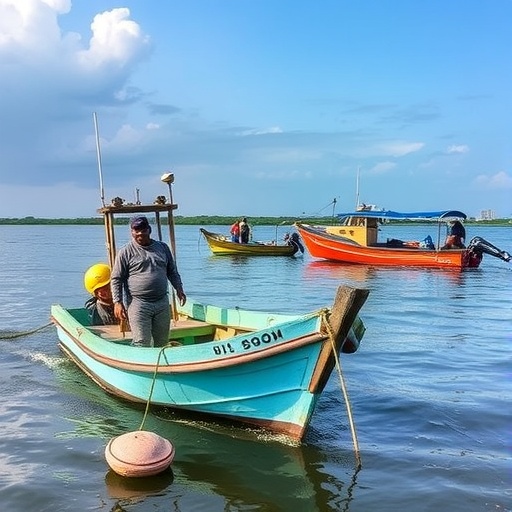
In the ever-evolving narrative of sustainable development and environmental preservation, coastal fishing communities in Bangladesh have emerged as a pivotal focal point. A recent study conducted by Biswas, Choudhury, and Sharmin sheds light on the intertwined realities of these communities, accentuating the complexities of boat-based livelihoods. This investigation not only highlights the socio-economic challenges faced by these fishermen but also delves into the ecological significance of their practices and the urgent need for sustainable interventions.
For generations, the fishing communities along the coastal regions of Bangladesh have relied heavily on the abundance of marine resources. The study underscores the dependence of these communities on traditional fishing methods and the critical role of boats as both a source of livelihood and a cultural symbol. The livelihoods of the fishermen are directly tied to the health of marine ecosystems, making their practices significant to both local economies and broader environmental considerations. However, the current state of marine resources begs the question of sustainability, as overfishing and environmental degradation increasingly threaten the fisheries that these communities depend on.
The research illustrates that while fishing remains a cornerstone of economic activity in these coastal regions, socio-political factors often complicate this straightforward narrative. The fishermen face significant hurdles, including limited access to modern fishing technologies and fluctuating market prices, which exacerbate their vulnerabilities. Furthermore, the encroachment of industrial fishing practices poses a direct threat to the fish populations and diminishes the communities’ traditional fishing yields.
Interestingly, the study draws attention to the resilience and adaptability of these communities. It highlights various strategies employed by fishermen to navigate their challenges, such as diversifying their catch and exploring alternatives to traditional fishing. By embracing innovative methods and exploring new markets, these fishermen are not merely surviving; they are finding ways to thrive amidst adversity. This adaptability not only reflects their deep understanding of the marine ecosystem but also their lifelong connection to the ocean.
In addition to economic pressures, the research also notes the impact of climate change on coastal fishing communities. Rising sea levels, shifting weather patterns, and increased frequency of natural disasters have profound implications for fishing practices. The changing environment not only affects fish populations but also threatens the physical infrastructure of the fishing industry, including the boats that are vital for these livelihoods. The study calls for a greater emphasis on climate resilience in policies aiming to support these communities, advocating for a comprehensive approach that takes into account both social and environmental factors.
Understanding the intricate relationship between livelihood and environmental health is crucial. The research posits that sustainable fishing practices are not just beneficial for the ecosystem; they are essential for maintaining the cultural heritage of these communities. Fishing is more than a means of earning a living in Bangladesh; it is a way of life that shapes identities and communities. As such, any efforts aimed at promoting sustainability must involve local fishermen themselves, whose knowledge and practices are indispensable.
In light of these findings, the authors advocate for collaborative efforts involving local communities, policymakers, and environmental organizations. By fostering partnerships aimed at sustainable resource management, it is possible to create frameworks that not only protect fish populations but also secure the livelihoods of those dependent on them. Empowering local communities through education, access to resources, and innovative fishing practices is a critical step towards ensuring long-term sustainability.
Moreover, the study highlights the value of integrating traditional ecological knowledge with modern scientific strategies. While scientific research provides valuable insights into marine ecosystems, the lived experiences of fishermen offer a wealth of information that can inform sustainable practices. Bridging these two worlds can pave the way for effective conservation strategies that honor both the environment and the cultural nuances of coastal communities.
As the research unfolds, it brings to light the pressing need for targeted interventions designed to support coastal fishing communities in Bangladesh. Investing in sustainable fishing practices reduces the pressures on marine ecosystems and enhances the resilience of these communities against economic and environmental shocks. Ensuring that fishing communities are integral to discussions about marine resource management is vital for achieving equitable solutions.
The findings of this study resonate beyond the shores of Bangladesh, offering a template for understanding the global challenges faced by coastal communities. From rising sea levels to the encroachment of industrial fishing, the issues confronting these communities are mirrored in various parts of the world. This universal relevance emphasizes the importance of leveraging the insights gained from this research to foster a global conversation around sustainable fishing practices and community resilience.
In conclusion, the study by Biswas and colleagues not only highlights the myriad challenges faced by coastal fishing communities in Bangladesh but also provides an optimistic outlook on the potential for sustainable practices. By weaving together the threads of tradition, innovation, and advocacy, it offers a compelling vision for the future of these communities. As dialogues surrounding sustainability continue to expand, the lessons learned from the coastal fishermen of Bangladesh serve as a crucial reminder of the delicate balance between human livelihoods and ecological health.
The intricate tapestry of coastal fishing communities demands our attention and action. As we move forward, fostering collaborative partnerships, embracing innovative practices, and prioritizing sustainability will be paramount in ensuring that these communities not only survive but thrive. Through concerted efforts and a commitment to understanding the complexities of boat-based livelihoods, we can work towards a future where both fishermen and marine ecosystems flourish.
Subject of Research: Coastal fishing communities in Bangladesh and their livelihoods.
Article Title: Boat-Based livelihoods and the realities of coastal fishing communities in Bangladesh.
Article References:
Biswas, S.K., Choudhury, M.E.H., Sharmin, R. et al. Boat-Based livelihoods and the realities of coastal fishing communities in Bangladesh.
Discov Sustain 6, 1412 (2025). https://doi.org/10.1007/s43621-025-02213-6
Image Credits: AI Generated
DOI: https://doi.org/10.1007/s43621-025-02213-6
Keywords: Coastal fishing, livelihoods, sustainability, Bangladesh, marine ecosystems, climate change, traditional knowledge, fisheries management, community resilience.


