

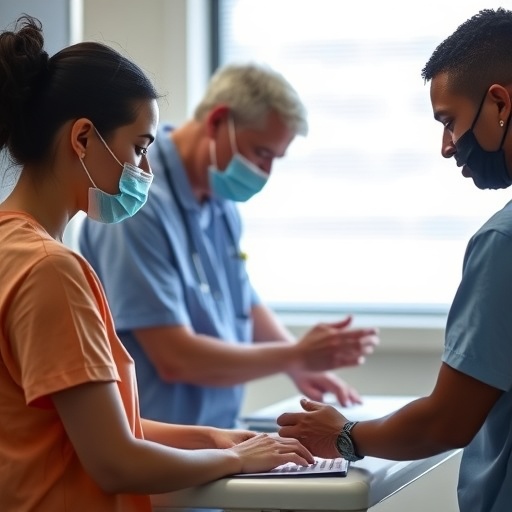
In an era defined by rapid advancements in medical education, the pursuit of excellence in graduate medical education within the field of critical care has emerged as a vital topic of discourse among educators, practitioners, and policymakers alike. The assessment methods employed to evaluate the competency of medical graduates are not merely academic exercises; they represent a cornerstone of patient safety, clinical effectiveness, and overall healthcare system functionality. A recent scoping review conducted by Jaramillo-Villegas and colleagues has shed light on the diverse array of assessment methodologies currently employed in graduate medical education, particularly focusing on the critical care domain.
This comprehensive review meticulously collates and synthesizes existing literature to unveil the breadth of assessment strategies in critical care education. Central to the discourse is the recognition that critical care environments are inherently complex and demanding. This complexity necessitates innovative and multifaceted approaches to training and assessment that extend beyond traditional rote memorization of facts. The findings underscore the urgent need for frameworks that assess not only theoretical knowledge but also practical skills, clinical judgment, and the ability to function within high-pressure environments.
The study highlights various assessment techniques employed in medical education, including both formative and summative evaluations. Formative assessments serve as ongoing feedback mechanisms, allowing educators to identify areas for improvement in students’ learning and skills development. Conversely, summative assessments, often conducted at the end of a training period, are designed to evaluate whether a learner has achieved the necessary competencies to practice independently. The balance of these assessment types plays a critical role in shaping a well-rounded educational experience.
Furthermore, the review emphasizes the importance of integrating simulation-based assessments into the curriculum. Simulation provides a safe and controlled environment where students can practice essential procedures and decision-making skills without the risk of patient harm. These immersive experiences are integral for cultivating proficiency in the intricate and high-stakes nature of critical care medicine. As technological advancements continue to evolve, so too does the potential for enhanced simulation techniques that can provide even more realistic and engaging learning environments.
Peer assessment is another significant facet of the evaluation methods discussed in the review. This approach encourages students to engage with their peers’ learning processes while enhancing their own critical evaluation skills. By assessing one another’s performance, students foster a culture of collaborative learning, which is essential in the medical field where teamwork and interdisciplinary collaboration are paramount. Peer assessment positively influences the educational experience, leading to enhanced accountability and ownership of the learning process.
In addition to innovative assessment techniques, the authors stress the necessity for a competency-based curriculum that aligns teaching methodologies with the requisite skills in critical care. This focus ensures that graduates are well-prepared to tackle the demands of real-world medical challenges. Competency-based education shifts the emphasis from time spent in training to the actual achievement of defined learning outcomes, which is particularly relevant in fast-evolving disciplines like critical care medicine.
The scoping review also identifies challenges related to assessment in critical care education. One prominent challenge is the need for standardized assessment criteria that can uniformly measure student performance across diverse educational settings. Current variability in assessment practices risks undermining the comparability of educational outcomes, making it difficult for institutions to evaluate and enhance their training programs effectively. Establishing such standards requires collaboration among medical institutions, educators, and accreditation bodies to ensure consistency and rigor in assessment methodologies.
Moreover, the psychological safety of students during assessment cannot be overlooked. The review notes that high-stakes evaluations can induce significant anxiety, potentially impairing performance and learning. Therefore, fostering an educational atmosphere where learners feel supported and safe to make mistakes is crucial for optimizing educational outcomes. Educators are encouraged to cultivate resilience and adaptability through constructive feedback and nurturing mentorship.
Cultural competency is yet another facet that requires careful consideration in assessment practices. Medical professionals operate in a diverse array of clinical settings, and the ability to work effectively within different cultural contexts is essential for delivering high-quality patient care. As such, assessment frameworks must incorporate elements that evaluate cultural awareness and effectiveness in communication, allowing graduates to navigate the complexities of patient interactions successfully.
The implications of this scoping review extend beyond individual educational institutions; they spark broader conversations about the future of medical education in critical care and its alignment with evolving healthcare needs. As the landscape of medical practice continues to shift, the educational approaches adopted today must remain adaptable, fostering the next generation of healthcare providers equipped to meet forthcoming challenges.
Educational stakeholders are now presented with an intricate tapestry of insights and recommendations emerging from Jaramillo-Villegas’ review, urging the integration of diverse assessment strategies. As medical education continues to evolve, so too must the assessment methods that underpin it. These insights not only serve to enhance the quality of graduate medical education but ultimately aim to uplift patient care standards and the healthcare system as a whole.
In an era where the demand for quality healthcare is at an all-time high, the scoping review paves the way for critical reflection and action, channeling attention toward responsible educational practices in critical care training. As we move forward, embracing innovation and fostering a culture of continuous assessment and improvement will be pivotal in preparing adept and competent healthcare professionals ready to excel in the face of adversity.
It is clear that the quest for excellence in medical education must be approached with diligence and a comprehensive understanding of effective assessment methodologies. This commitment not only enhances educational outcomes but also serves as a testament to the continuous evolution of the medical profession in its relentless pursuit of knowledge, skill, and competence. The future of medical education in critical care rests on the ability of institutions and educators to adapt and innovate in the face of changing demands, ensuring that the next generation of healthcare providers are not only knowledgeable but also truly prepared to save lives in the complexities of critical care environments.
The discourse initiated by Jaramillo-Villegas and their team serves as a clarion call for educators and institutions worldwide to critically evaluate and refine their assessment strategies within graduate medical education. As the field of critical care continues to advance, so too must the approaches we take in educating those who will navigate its challenges in the years to come.
Subject of Research:
Medical education assessment methods in critical care.
Article Title:
Assessment methods in graduate medical education in critical care: a scoping review.
Article References:
Jaramillo-Villegas, C., Hernandez-Rincon, E.H., Poveda-Henao, C.M. et al. Assessment methods in graduate medical education in critical care: a scoping review. BMC Med Educ (2026). https://doi.org/10.1186/s12909-025-08451-6
Image Credits:
AI Generated


