

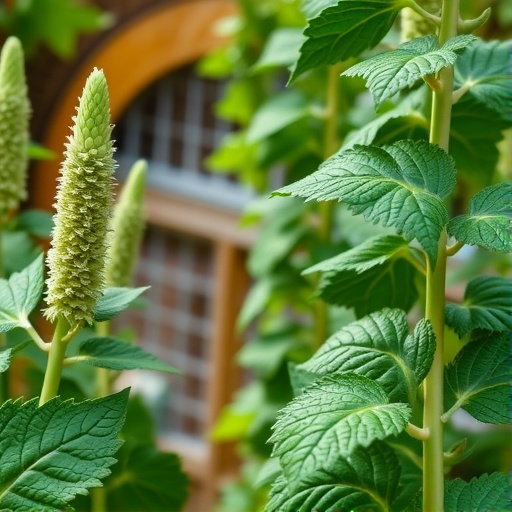
Recent advancements in genomics have provided new insights into the genetic makeup of various plants, revealing critical information that can enhance agricultural practices. In a groundbreaking study, researchers from India have taken a comprehensive approach to identify and analyze annexin encoding genes in the black gram, scientifically known as Vigna mungo. This work not only contributes to our understanding of this important leguminous plant but also opens up avenues for improving crop resilience and yield. The research emphasizes the potential of genomics in addressing agricultural challenges faced globally.
Black gram, a vital pulse crop primarily grown in tropical and subtropical regions, is revered for its high nutritional value. It is rich in protein, fiber, and various essential nutrients, making it a crucial food source for many communities. However, black gram is often susceptible to various abiotic and biotic stresses, which can severely impact its growth and productivity. Understanding the molecular mechanisms underlying these stresses is vital for developing more resilient varieties. The recent study provides a detailed genome-wide identification of annexin encoding genes that play pivotal roles in plant stress responses.
The annexin protein family is known for its calcium-dependent phospholipid-binding properties, which significantly influence numerous cellular processes, including signaling pathways, membrane trafficking, and stress responses in plants. The research team meticulously identified annexin genes in the Vigna mungo genome, using advanced bioinformatics tools and databases to mine these critical genetic regions. This comprehensive genomic analysis aims to not only catalog the annexin genes but also to elucidate their evolutionary relationships, expression patterns, and potential roles in different stress responses.
By employing various computational methods, the researchers elucidated the number of annexin genes present in the Vigna mungo genome, providing new insights into their functional diversification. Unraveling the phylogenetic relationships among these genes sheds light on their evolutionary adaptations and potential functional redundancies, further enhancing our understanding of plant resilience mechanisms. This systematic approach allows researchers to create a robust resource for those interested in functional studies of these genes.
Moreover, the study examined the expression levels of annexin encoding genes under various environmental stresses, including drought, salinity, and pathogen attack. This aspect of the research is particularly noteworthy, as it highlights the adaptive strategies employed by Vigna mungo to thrive in challenging conditions. The differential expression patterns observed provide a foundation for future functional characterizations of these genes, which could lead to the development of stress-resistant black gram varieties.
In addition to their roles in abiotic stress responses, the study also posits that annexin proteins play a crucial role in biotic stress management. Understanding how Vigna mungo utilizes these proteins to fend off pathogens can inform breeding programs aimed at enhancing disease resistance in this crop. This multifaceted approach to studying annexin genes is indicative of a broader trend in plant genomics aimed at integrating stress resilience into agricultural practices.
The research findings not only hold promise for improving black gram resilience but also have broader implications for legume cultivation globally. Legumes play a vital role in sustainable agriculture, as they enhance soil fertility through nitrogen fixation. By enhancing the resilience of Vigna mungo, researchers could indirectly benefit other crops in integrated farming systems. Improved varieties can contribute to food security, especially in developing nations where black gram serves as a staple food source.
As we delve deeper into the genomic makeup of crops like Vigna mungo, it becomes increasingly evident that the intersection of genomics and traditional agricultural practices allows for innovative solutions to meet global food demands. The identification of key genes related to stress responses is a significant step toward employing biotechnology tools for crop improvement. Such interventions can lead to sustainable agricultural practices that minimize the reliance on chemical inputs, aligning with global efforts to promote eco-friendly farming methods.
Looking ahead, the comprehensive analysis of annexin encoding genes in Vigna mungo lays the groundwork for future studies focusing on gene functional validation. By using techniques such as CRISPR gene editing or RNA interference, researchers can explore the precise roles of these genes in stress tolerance. Such experiments will not only validate their involvement in stress responses but can also reveal additional genetic pathways linked to plant resilience.
Collaborative efforts among researchers, agronomists, and plant breeders will be essential to translate genomic discoveries into practical applications. Understanding the genetic basis of stress resilience paves the way for the development of resilient crop varieties tailored to specific environmental challenges. This interdisciplinary approach can ultimately foster the commercialization of genetically enhanced crops, making them accessible to farmers facing the realities of climate change.
With the number of people relying on agriculture for their livelihoods continually growing, the impetus to innovate within this sector is stronger than ever. Research such as this is critical in informing policy and investment in agricultural biotechnology. By highlighting the genetic diversity present within crops like Vigna mungo, policymakers can advocate for strategies that support sustainable practices that ensure food sovereignty for future generations.
In conclusion, the research conducted by Sahoo, Swain, and Yadav marks a significant milestone in understanding the genetic complexity of Vigna mungo. The identification and functional analysis of annexin encoding genes not only provide critical insights into plant resilience but also stress the importance of integrating molecular biology with agricultural practices. As further research unfolds, the potential for creating improved varieties of black gram that can withstand the challenges posed by climate change and global food demands becomes increasingly viable.
The study exemplifies the power of genomics in driving agricultural innovation. As we continue to explore the intricate relationship between plants and their environment, we shall unlock new potential for feeding a growing global population while ensuring the sustainability of our agricultural systems.
Subject of Research: Genome-wide identification and analysis of annexin encoding genes in Vigna mungo.
Article Title: Genome-wide identification and comprehensive analysis of annexin encoding genes in Vigna mungo (L.) Hepper.
Article References:
Sahoo, L., Swain, B. & Yadav, D. Genome-wide identification and comprehensive analysis of annexin encoding genes in Vigna mungo (L.) Hepper.
Discov. Plants 3, 22 (2026). https://doi.org/10.1007/s44372-026-00480-9
Image Credits: AI Generated
DOI: https://doi.org/10.1007/s44372-026-00480-9
Keywords: Annexin genes, Vigna mungo, genomic analysis, crop resilience, abiotic stress, biotic stress, molecular genetics, sustainable agriculture.


