

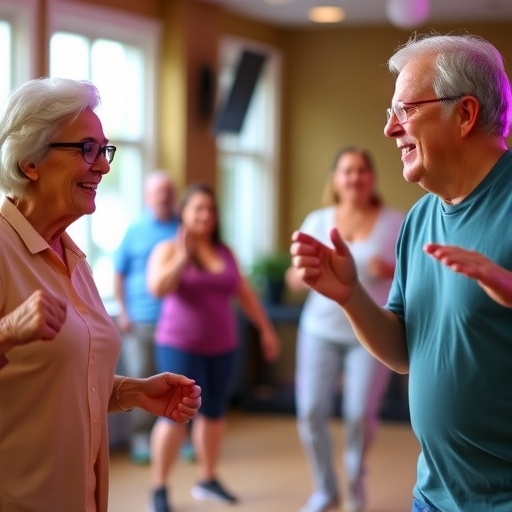
In a groundbreaking systematic review published in the March 2026 issue of Aging-US, researchers have brought to light compelling evidence highlighting the positive effects of exergames on the mood and mental health of older adults. Exergames—interactive video games that combine physical exercise with gaming—are increasingly gaining attention for their potential to promote well-being among aging populations. This meticulous review, conducted by a team from the Laboratory of Sport and Exercise Psychology at the Santa Catarina State University (UDESC) in Brazil, delves deep into the psychosocial benefits and mood enhancements triggered by these engaging activities.
The research team, headed by Camile de Bem Gaspar and Whyllerton Mayron da Cruz, with Alexandro Andrade as the corresponding author, embarked on an exhaustive search through 651 studies. Their stringent selection criteria distilled this number down to nine relevant trials involving 325 participants between the ages of 61 and approximately 79. This demographic is particularly crucial, as mental health challenges such as depression, anxiety, and mood disturbances are prevalent yet often underrecognized in older adults.
Their systematic review adhered to rigorous meta-analytical approaches, underscoring the integrity of the findings. The investigators found robust evidence associating exergame engagement with significant reductions in negative mood states—tension, anger, fatigue, and confusion—as well as a measurable decrease in depressive symptoms. These mood improvements were accompanied by heightened states of engagement, immersion, and social connectedness, which are thought to mediate some of the psychological benefits observed.
What sets this investigation apart from previous forays into physical activity and mental health is its focus on exergames as a unique modality that amalgamates cognitive, emotional, and physical stimulation. Unlike traditional exercises, exergames often provide immersive virtual environments that encourage sustained attention and social interaction, elements critically supportive of mental health maintenance in elderly cohorts. Participants across the studies consistently reported improvements in overall well-being, reinforcing the hypothesis that exergames serve not only as physical but also as psychological interventions.
Notably, none of the included studies documented a worsening of mood, a crucial detail that confirms the safety and acceptability of exergames among older adults. This finding dispels common concerns that introducing novel technologies to seniors could evoke stress or negatively influence mental states. Instead, the active involvement and enjoyment reported suggest exergames might be a strategically effective tool for counteracting loneliness and isolation, conditions widely recognized as detrimental to the mental health of the elderly.
Despite these encouraging findings, the authors caution that the evidence base remains limited and somewhat heterogeneous. The small number of eligible trials and the diversity of mood assessment tools used pose challenges to drawing definitive conclusions or making broad clinical recommendations. Variability in intervention duration, types of exergames, and participant characteristics further complicate the interpretation of results, highlighting the need for standardized protocols in future research.
The review calls for extended longitudinal studies to ascertain durability of the mood enhancements attributed to exergaming. Moreover, it underscores the necessity for larger, more diverse participant samples to ensure findings are generalizable across different demographic and cultural subsets of the older population. Tracking mood outcomes over extended periods will clarify whether the immediate positive effects observed translate into sustained mental health benefits.
Another focal point of the review is the call for practical implementation research, particularly exploring home-based and low-cost exergame interventions. Accessibility remains a pivotal concern, as technological literacy and economic limitations might restrict widespread adoption among older adults. Designing interventions that leverage affordable platforms and simple user interfaces could significantly amplify the public health impact of exergames.
This innovative line of inquiry bridges the fields of gerontology, psychology, exercise science, and digital technology, forging a multidisciplinary path forward for promoting healthy aging. By integrating physical activity with enjoyable digital engagement, exergames might reshape existing paradigms of mental health interventions tailored to older adults, making them more appealing and less stigmatized.
Given the global trends of aging populations, scalable and effective solutions like exergames bear promises not only for individual well-being but also for societal health care systems. Enhancing mood and mental health in the elderly can reduce healthcare resource utilization by delaying the onset or mitigating the severity of mood disorders and associated cognitive impairments.
In conclusion, while the matrix of exergaming’s effects on mood in older adults is still being charted, current evidence clearly points to its potential as a safe, enjoyable, and psychologically beneficial activity. This systematic review sets the stage for more rigorous, expansive research efforts that could lead to novel, hybrid interventions combining physical and mental health benefits in one accessible package. Health practitioners, researchers, and policymakers should take note, as exergames may well be a cornerstone of future geriatric mental health strategies.
Subject of Research: People
Article Title: What are the effects of exergames on the mood states of older people? A systematic review of experimental studies, impacts on mental health and recommendations
News Publication Date: 18-Mar-2026
Web References:
https://doi.org/10.18632/aging.206361
https://www.aging-us.com/issue/v18i1/
Image Credits: Copyright: © 2026 Gaspar et al. This is an open access article distributed under the terms of the Creative Commons Attribution License (CC BY 4.0).
Keywords: aging, electronic games, older adults, BRUMS, mental health, physical activity


