

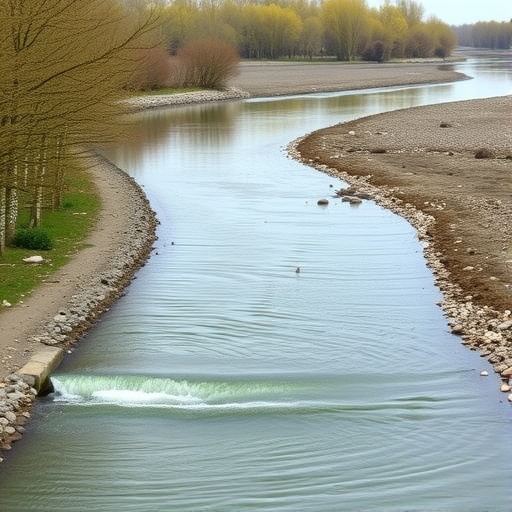
In a groundbreaking study, researchers have turned the spotlight on the notorious Yamuna River, particularly focusing on the alarming levels of contaminants that seep into this vital waterway from the Najafgarh Drain in India. This research not only highlights the degradation of one of India’s major rivers but also offers an innovative solution through a process known as phycoremediation. By employing advanced analytical techniques such as Liquid Chromatography-Mass Spectrometry (LC-MS), the team, led by Dr. Deepak Kumar along with his colleagues, sought to assess the extent of pollution and identify potential bioremediation strategies.
The Yamuna River, flowing through several states in northern India, has long been a subject of environmental concern due to incessant pollution caused by industrial effluents, sewage, and agricultural runoff. The Najafgarh Drain, a significant contributor to the river’s contamination, carries a mixture of hazardous substances that pose threats not only to aquatic life but also to the millions of people who rely on its waters for drinking and agricultural purposes. In this research, the authors meticulously explored the variety of pollutants entering the river from this drain, showcasing the urgency of addressing the environmental crisis facing the region.
Utilizing the powerful capabilities of LC-MS, the researchers were able to identify and quantify a myriad of contaminants in water samples collected from the Yamuna River. This sophisticated technique allowed them to detect trace levels of heavy metals, pesticides, and pharmaceuticals, showcasing the complex nature of the pollution. The implications of these findings are profound, as they reveal not only the current state of the river’s health but also the potential risks these contaminants pose to human health and the ecosystem.
Phycoremediation, the process of using algae for the removal or neutralization of pollutants, emerged as a beacon of hope in this investigation. The study demonstrated that specific algal strains could effectively uptake and detoxify the contaminants present in the Yamuna’s waters. This bioremediation technique not only offers a sustainable solution to the pollution problem but also minimizes the reliance on chemical treatments, which can further harm the environment.
Throughout the research process, the scientists conducted a series of controlled laboratory experiments to elucidate the efficiency of different algal species in removing various contaminants. Their results were compelling, showing significant reductions in pollutant concentrations, suggesting that phycoremediation could serve as an ecological restoration strategy for the heavily affected portions of the Yamuna River. The study’s findings add to the mounting evidence supporting the use of biological methods in environmental clean-up initiatives, marking a shift towards more natural and less invasive remediation techniques.
The authors also highlighted the socio-economic implications of the research, emphasizing that restoring the health of the Yamuna River could improve the quality of life for millions of residents who depend on its waters. By reducing pollution levels, the study proposes that the river could once again be a source of clean drinking water, support agricultural activities, and restore local biodiversity. The potential economic benefits of revitalizing such an important natural resource could be enormous, providing better living conditions and improved livelihoods for communities along its banks.
The study received keen interest from policymakers and environmentalists alike, who recognized the urgency of implementing sustainable practices to combat water pollution. As cities and populations grow, the pressure on water bodies increases, necessitating innovative and eco-friendly solutions. The research advocates for collaboration between scientists and governmental agencies to develop and enact effective water management policies, ensuring the health of the Yamuna for future generations.
Furthermore, the researchers stressed the importance of public awareness and community involvement in preserving the environment. Educating the public about the sources and impacts of pollution can empower residents to take action in their local environments, reduce waste, and advocate for cleaner water practices. The study suggests that community-led initiatives, coupled with scientific interventions, can significantly contribute to restoring the Yamuna River and its surrounding ecosystems.
In conclusion, the comprehensive approach taken by the research team demonstrates a new pathway for tackling one of India’s most pressing environmental challenges. Through the integration of advanced analytical techniques and biological remediation methods, they have offered tangible solutions that could greatly benefit the Yamuna River and its users. This study sets an exciting precedent for future research on environmental restoration and the potential of phycoremediation in combating pollution worldwide.
As environmental challenges continue to escalate globally, the insights gained from this investigation into the Yamuna River may inspire similar efforts in other regions grappling with pollution issues. The innovative marriage of technology and nature showcased in this research could lead to a more sustainable approach to environmental remediation and offer a glimmer of hope for compromised ecosystems around the world.
Dealing effectively with pollution is an urgent global priority. The authors present a model that could, indeed, be replicated in polluted rivers worldwide, making it potentially influential in shaping the future of environmental science and public health initiatives.
With science constantly evolving to address society’s challenges, the outcomes of this study underline the critical role of interdisciplinary research in finding innovative solutions. By harnessing nature’s capabilities and integrating modern technologies, the quest for cleaner rivers may finally be within reach, fostering healthier ecosystems and sustainable communities for the long term.
Subject of Research: Assessment and phycoremediation of Yamuna river contaminants
Article Title: Assessment and phycoremediation of Yamuna river contaminants originating from the Najafgarh Drain, India, using LC-MS
Article References:
Kumar, D., Sahoo, S., Chourasia, R. et al. Assessment and phycoremediation of Yamuna river contaminants originating from the Najafgarh Drain, India, using LC–MS.
Environ Sci Pollut Res (2025). https://doi.org/10.1007/s11356-025-37280-9
Image Credits: AI Generated
DOI: https://doi.org/10.1007/s11356-025-37280-9
Keywords: Yamuna River, Najafgarh Drain, phycoremediation, LC-MS, environmental pollution, bioremediation, algae, contaminants, water quality, sustainability, India, ecosystem restoration, public health.


