

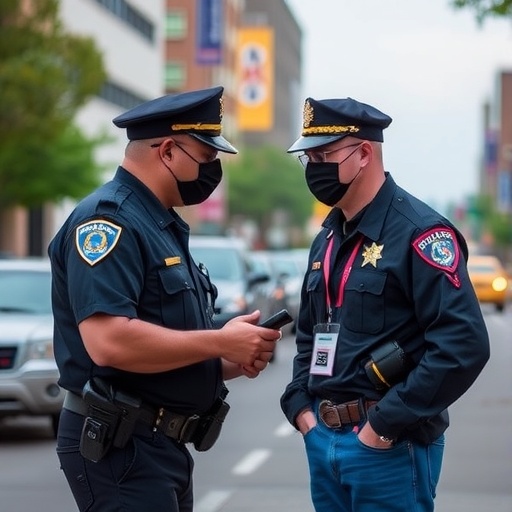
In the wake of the global response to police violence that erupted following the death of George Floyd, a nuanced examination of law enforcement dynamics has become increasingly urgent. B.J. O’Guinn’s upcoming article, “The Role of Officer Characteristics in the Post-Floyd Era: A New Approach to De-Policing Research,” set to release in the American Journal of Criminal Justice, delves into the intricate relationship between officer attributes and the evolving landscape of policing. This research is particularly pertinent as communities grapple with the implications of various policing strategies amidst public outcry for reform and accountability.
O’Guinn ventures beyond conventional policing studies, proposing a fresh lens through which to view the effects of individual officer characteristics on the overall policing framework. By analyzing factors such as age, race, education, prior experiences, and psychological profiles, the study aims to establish a clearer connection between these attributes and the tendencies towards either aggressive or restrained policing. This approach could significantly enhance our understanding of the mechanics behind de-policing, where officers choose to limit their enforcement activities in response to societal pressures.
One compelling aspect of O’Guinn’s research is the focus on the psychological and emotional states of police officers during the critical months following George Floyd’s murder. The study posits that officer temperament and mental health significantly influence policing strategies and discretion. With heightened scrutiny and community unrest, many officers reported feelings of increased stress and anxiety, which O’Guinn argues could lead to overreactions or overly cautious behavior in the field. This psychological component is often an overlooked factor in discussions about law enforcement efficacy.
Furthermore, O’Guinn examines how the composition of police departments can influence overall community relations. With varying sociodemographic backgrounds among officers, the study seeks to uncover how these differences impact community interactions and perceptions. It stands to reason that a police force reflective of the community it serves may foster better communication and trust, which are crucial in today’s volatile climate. This line of reasoning challenges traditional notions that all police forces operate effectively the same way, regardless of their internal diversity.
Another critical dimension of this research addresses the societal implications of de-policing behaviors. As some officers choose to withdraw from proactive policing in response to intense criticism, this withdrawal could inadvertently contribute to a rise in crime rates, complicating the narratives around crime and policing practices. This paradox poses significant questions regarding safety, community welfare, and the best practices for modern law enforcement agencies in a post-Floyd world.
Moreover, O’Guinn emphasizes the urgent need for interventions focused on officer training that prioritizes emotional intelligence and mental health. In light of the tragic events following Floyd’s death, the demand for police reform has intensified, leading to calls for increased support for officers to equip them to handle their roles more effectively. The implementation of programs that prioritize self-care, peer support among officers, and psychological resilience training could be a proactive step toward minimizing negative outcomes for both officers and communities.
Delving deeper into the research findings, O’Guinn outlines the empirical methods employed to analyze data derived from various police departments across the country. In doing so, he provides a structured methodology that other scholars can utilize, expanding the study’s reach. This systematic approach bears the potential for replicability in various settings, notably among agencies aiming to refine their practices in the aftermath of the societal upheaval stirred by Floyd’s death.
Comparatively, various models of policing illuminate the constructive potential of integrating diverse officer backgrounds into a cohesive unit. O’Guinn’s analysis points out how departments that embrace diversity often experience enhanced problem-solving capabilities and improved community relations. By synthesizing data across a broad spectrum of departmental structures, the research drives home the point that composition matters in creating the necessary conditions for effective policing.
As public discourse around policing continues to evolve, the role of officer characteristics becomes increasingly critical. O’Guinn’s research thoughtfully navigates the complexities of policing in a climate rife with scrutiny, urging continued dialogue and investigation into how individual qualities and collective departmental cultures impact the mission of law enforcement. The findings of this research are set to ignite conversations within policy-making circles, potentially leading to reforms that confront the challenges highlighted.
Consequently, the insights derived from O’Guinn’s work may indeed serve as a vital resource for community leaders and policymakers. The call to action is clear: understanding the human element within the police force is essential for fostering constructive reform and enhancing public safety. As law enforcement agencies seek pathways to rebuild trust with the communities they serve, the implications of this research will undoubtedly resonate in ongoing discussions surrounding police practices and community engagement.
In summary, “The Role of Officer Characteristics in the Post-Floyd Era” promises to illuminate critical facets of policing that have often gone underexplored, offering a unique vantage point from which to understand the contemporary challenges faced by law enforcement. Building bridges between officers and community members will require a concerted effort to examine the nuanced interplay between officer attributes and policing outcomes—a challenge O’Guinn’s research is fully prepared to tackle in the years ahead.
While the conversation surrounding police reform will undoubtedly continue to be complex and multifaceted, O’Guinn’s laid groundwork enhances our understanding of how individual characteristics can impact broader societal outcomes. This intersection of human dynamics and policing not only shapes public safety but sets the stage for future reformation efforts aimed at restoring public trust and accountability within law enforcement.
As his article nears publication in 2025, the anticipation builds not only among academic circles but also within communities yearning for transformation. With a clear call for research-informed practices, O’Guinn stands poised to contribute significantly to the ongoing dialogue about policing, community relations, and the inherent responsibilities of those entrusted with upholding the law.
Subject of Research: Officer characteristics and their influences on policing in the post-Floyd era.
Article Title: The Role of Officer Characteristics in the Post-Floyd Era: A New Approach to De-Policing Research.
Article References: O’Guinn, B.J. The Role of Officer Characteristics in the Post-Floyd Era: A New Approach to De-Policing Research. Am J Crim Just (2025). https://doi.org/10.1007/s12103-025-09871-2.
Image Credits: AI Generated.
DOI: https://doi.org/10.1007/s12103-025-09871-2.
Keywords: policing, officer characteristics, George Floyd, de-policing, police reform, community relations, emotional intelligence, mental health in policing, diversity in law enforcement.


