

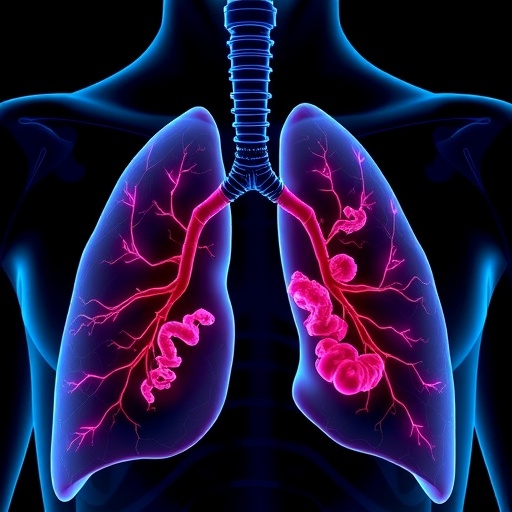
In a groundbreaking study that delves into the molecular mechanisms of chemotherapy resistance, researchers have unveiled promising insights into the use of Evodiamine as a potential therapeutic agent against cisplatin-resistant non-small cell lung cancer (NSCLC). Cisplatin, a platinum-based chemotherapy drug, is a cornerstone in the treatment of NSCLC, yet its efficacy is often thwarted by the development of drug resistance. This recent investigation spearheaded by Patra, S., Pradhan, S., Ansari, Z., and colleagues harnesses advanced genomic technologies to chart the landscape of gene expression changes that accompany cisplatin resistance, illuminating new avenues for therapeutic intervention.
The study tackles one of the most formidable challenges in oncology: overcoming resistance mechanisms that cancer cells evolve to evade chemotherapeutic agents. NSCLC, which accounts for a significant fraction of lung cancer cases globally, presents a clinical conundrum when tumors cease to respond to cisplatin. By employing differential gene expression analysis, the researchers identified a repertoire of genes that are distinctly modulated in resistant cells compared to their cisplatin-sensitive counterparts. These genetic alterations not only underpin the resistant phenotype but also point toward vulnerabilities that could be exploited by pharmacological agents like Evodiamine.
Evodiamine, a naturally occurring alkaloid extracted from the fruit of Evodia rutaecarpa, has gained traction in recent years owing to its multifaceted pharmacological properties. The molecule’s antiproliferative and pro-apoptotic effects have been documented across various cancer models, but its potential in drug-resistant NSCLC had remained largely unexplored until now. The research team undertook a meticulous exploration of Evodiamine’s capacity to modulate the expression of genes implicated in cisplatin resistance, thereby restoring sensitivity or mitigating the aggressive traits of resistant cancer cells.
At the heart of the investigation lies a comprehensive transcriptomic profiling that revealed differential expression in pathways intimately linked to DNA repair, apoptosis regulation, drug efflux, and cellular metabolism. These pathways are notorious for their roles in mediating resistance and tumor survival under chemotherapeutic stress. The intricate interplay among these genetic networks creates a robust shield that cancer cells wield against cisplatin—a shield that Evodiamine appears poised to penetrate.
The researchers demonstrated that treatment with Evodiamine led to a significant downregulation of genes involved in DNA damage repair mechanisms, notably those enhancing nucleotide excision repair pathways typically responsible for rectifying cisplatin-induced DNA lesions. This suppression compromises the cancer cells’ ability to rectify cisplatin-induced damage, thereby amplifying the drug’s cytotoxic effect. Moreover, Evodiamine was observed to activate apoptotic cascades, tipping the balance from survival to programmed cell death, which is a pivotal strategy for eradicating cancer cells that have acquired resistance.
Further scrutiny revealed that Evodiamine impairs the expression of multidrug resistance (MDR) transporter genes such as those coding for ATP-binding cassette (ABC) transporters, which frequently pump chemotherapeutic agents out of cells, diminishing intracellular drug accumulation. By attenuating this efflux system, Evodiamine promotes higher intracellular retention of cisplatin, thereby enhancing its efficacy. This multifactorial targeting contrasts with traditional single-pathway approaches, underlining Evodiamine’s potential as a multidimensional anti-cancer agent.
The study also places emphasis on the metabolic reprogramming of resistant NSCLC cells. The researchers found that Evodiamine disrupts aberrant metabolic pathways that facilitate the survival and proliferation of resistant cells. Tumors are known to adapt their metabolism to support rapid growth and withstand oxidative stress, and targeting these metabolic adaptations presents a promising therapeutic angle. Evodiamine’s impact on metabolic gene expression may cripple this survival strategy, sensitizing tumors to chemotherapy.
Importantly, the authors highlighted the significance of selective targeting in preserving normal cells. Their data suggest that Evodiamine exerts minimal cytotoxic effects on non-cancerous cells, which is a crucial consideration for clinical translation to avoid adverse side effects common in chemotherapy. This selectivity may arise from differential expression of target genes in malignant versus normal tissues, further advocating Evodiamine’s therapeutic index.
The implications of these findings extend beyond NSCLC. The molecular underpinnings of cisplatin resistance, such as enhanced DNA repair and drug efflux, are prevalent in a spectrum of malignancies. Hence, Evodiamine or derivatives thereof could emerge as broad-spectrum adjuvants to existing chemotherapies, reinstating their potency and improving patient outcomes.
The researchers meticulously validated their gene expression findings through in vitro cellular models and corroborated these results with functional assays measuring cell viability, apoptosis induction, and drug accumulation. These converging lines of evidence bolster the credibility of their conclusions and lay a robust foundation for future preclinical and clinical evaluations.
This study arrives at a critical juncture in cancer therapeutics when the paradigm is shifting from indiscriminate cytotoxicity to targeted therapy that exploits cancer-specific vulnerabilities. By elucidating the genetic architecture of cisplatin-resistant NSCLC and revealing how Evodiamine can subvert this architecture, the research injects fresh hope into overcoming chemotherapy resistance—a major cause of treatment failure and mortality.
Moreover, the research methodology underscores the power of integrative genomic analyses combined with natural compound pharmacology. By embracing a holistic view of the tumor biology landscape, the study exemplifies how multi-omics data can be leveraged to identify novel therapeutics and combinatory regimens that can surmount drug resistance.
Looking ahead, these findings prompt critical questions surrounding optimal dosing, pharmacokinetics, and potential synergy with other therapeutic agents. The transition from laboratory insight to clinical application will necessitate rigorous investigation, including in vivo models and eventual clinical trials to establish safety, efficacy, and patient stratification biomarkers.
The enthusiasm generated by this research is palpable in the oncology community, given the pervasive challenge posed by cisplatin resistance. Should Evodiamine’s therapeutic promise translate to clinical success, it could redefine treatment protocols and significantly improve survival for patients afflicted with NSCLC and possibly other solid tumors.
By advancing our understanding of resistance biology at the genetic and molecular levels, this study not only charts a pathway for Evodiamine’s deployment but also exemplifies a broader scientific principle: that the complexity of cancer can be wrestled into submission by precisely targeting its adaptive machinations.
In summary, the research conducted by Patra and colleagues represents a pivotal advancement in the fight against drug-resistant NSCLC. Through identification of differentially expressed genes and mechanistic insights into Evodiamine’s modulatory effects, the study lays a compelling foundation for the development of new therapeutic strategies that have the potential to surmount one of oncology’s most daunting obstacles.
This profound integration of genomic science and pharmacological innovation signals a new horizon in personalized cancer treatment—one where overcoming resistance is not a distant dream but a near-future reality.
Subject of Research: Investigating the therapeutic potential of Evodiamine in overcoming cisplatin resistance in non-small cell lung cancer through identification and analysis of differentially expressed genes.
Article Title: Investigating therapeutic potential of Evodiamine by identifying differentially expressed genes in cisplatin resistance non-small cell lung cancer.
Article References:
Patra, S., Pradhan, S., Ansari, Z. et al. Investigating therapeutic potential of Evodiamine by identifying differentially expressed genes in cisplatin resistance non-small cell lung cancer. Med Oncol 43, 42 (2026). https://doi.org/10.1007/s12032-025-03178-2
Image Credits: AI Generated


