

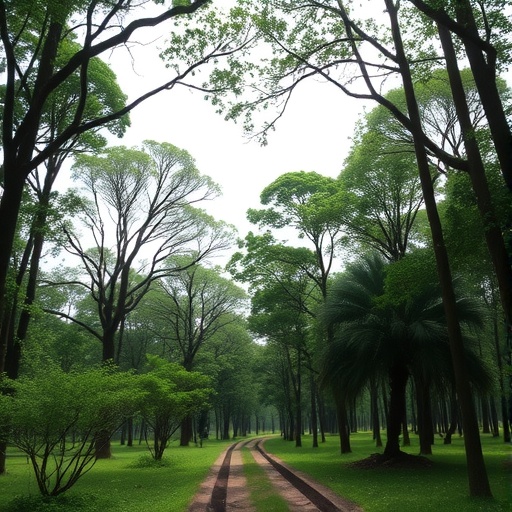
In recent years, urban environments have come to be recognized as ecosystems that provide myriad services essential for the well-being of city dwellers. Among the myriad ecosystem services provided by urban forests, the role of trees in improving air quality, regulating temperature, and enhancing biodiversity has earned critical attention. A new study conducted by Nandi and Jashimuddin, titled “Assessment of urban forest ecosystem services using the i-Tree Eco Model in Chattogram City Corporation, Bangladesh,” sheds light on the intricacies of these benefits and the importance of urban greenery.
In Chattogram City, where rapid urbanization and population density have become pressing concerns, the assessment of urban forest ecosystem services has unveiled remarkable insights into how trees enhance ecological balance. The adoption of the i-Tree Eco Model, a scientifically recognized tool for quantifying urban forest benefits, allows researchers to evaluate ecosystem services such as air purification, carbon sequestration, and stormwater management. This innovative approach not only quantifies the benefits but also presents them in a way that captures the attention of policymakers and urban planners.
The findings of this research are particularly relevant in the context of Chattogram City, where challenges like pollution, urban heat islands, and loss of green spaces are prevalent. The study illuminates how urban forests can serve as natural mitigators of these issues, providing a critical counterbalance to the negative effects of urban expansion. Trees in the urban landscape work tirelessly to absorb carbon dioxide and other pollutants, releasing oxygen and improving the overall quality of life for residents.
One of the key insights gleaned from Nandi and Jashimuddin’s research is the quantification of air quality improvements associated with tree cover. The i-Tree Eco Model estimates the amount of pollutants removed by urban forests, which in turn translates into significant monetary savings in healthcare costs. By mitigating respiratory illnesses and allergies, urban trees serve as guardians of public health in densely populated areas, making their preservation crucial for sustainable city planning.
Moreover, urban forests have been shown to play a pivotal role in carbon sequestration. This process is vital in the context of climate change, where urban areas contribute substantially to greenhouse gas emissions. Nandi and Jashimuddin’s findings suggest that by expanding tree canopy cover, cities like Chattogram can enhance their carbon storage capacity, contributing to global efforts aimed at reducing atmospheric CO2 levels. The implications of their research underscore the potential for urban forests to act as vital components of climate resilience strategies.
Water management is another critical aspect highlighted in the study. As urban areas grapple with stormwater runoff and water quality issues, trees provide a natural solution by absorbing rainfall and reducing surface soil erosion. The i-Tree Eco Model offers valuable data on how increased tree cover can decrease the volume of runoff and improve water quality, which is essential for urban ecosystems and human inhabitants alike. The role of urban forests in managing stormwater thus becomes an integral part of sustainable urban design and infrastructure.
Furthermore, the study dives into the socioeconomic aspects of urban forest ecosystems. The researchers emphasize the importance of public awareness and community engagement when it comes to the preservation and enhancement of urban forests. Involving local communities in tree planting and maintenance not only ensures the sustainability of these green spaces but also enriches community bonds and fosters a shared sense of stewardship.
Additionally, the aesthetic and recreational benefits of urban forests cannot be overlooked. Green spaces provide essential opportunities for recreation, relaxation, and social interaction, all of which contribute to overall mental health and social cohesion. The presence of trees has been shown to enhance property values, making urban landscapes more appealing to residents and potential investors alike. Thus, this research ultimately advocates for greater investment in urban greening as a means to enhance city livability.
The importance of continuous monitoring and research cannot be overstated. As urban environments evolve, so too will the dynamics of forest ecosystems. The ongoing utilization of models like i-Tree Eco can provide compelling data that tracks changes in urban tree cover and its associated benefits over time. This data will be essential for future policymakers and urban planners to make informed decisions regarding urban forestry initiatives in Chattogram and beyond.
In conclusion, the work conducted by Nandi and Jashimuddin is a landmark contribution to our understanding of urban forest ecosystems in Bangladesh. By employing the i-Tree Eco Model, they have effectively quantified the numerous services provided by trees and their undeniable importance to urban sustainability. Their findings call for renewed focus on urban forest conservation and expansion—an undertaking that promises to yield extensive benefits for cities globally.
As urban centers around the world strive to adapt to the multifaceted challenges posed by climate change and urbanization, this research serves as a crucial reminder of the invaluable role that urban forests play. The integration of scientific research and public policy in managing these vital resources could very well be the key to ensuring healthier, more resilient urban environments for generations to come.
Ultimately, this study can inspire similar assessments in other urban environments, urging cities globally to understand their unique ecosystems—their trees—and the indispensable services they provide. The overarching message is clear: investing in urban forests is investing in the future, a future where cities can thrive in harmony with nature.
Subject of Research: Urban Forest Ecosystem Services
Article Title: Assessment of urban forest ecosystem services using the i-Tree Eco Model in Chattogram City Corporation, Bangladesh.
Article References:
Nandi, R., Jashimuddin, M. Assessment of urban forest ecosystem services using the i-Tree Eco Model in Chattogram City Corporation, Bangladesh.
Discov. For. 1, 57 (2025). https://doi.org/10.1007/s44415-025-00059-4
Image Credits: AI Generated
DOI: https://doi.org/10.1007/s44415-025-00059-4
Keywords: Urban forest, ecosystem services, air quality, carbon sequestration, stormwater management, i-Tree Eco Model, Chattogram City, sustainability, urbanization, green spaces.


