

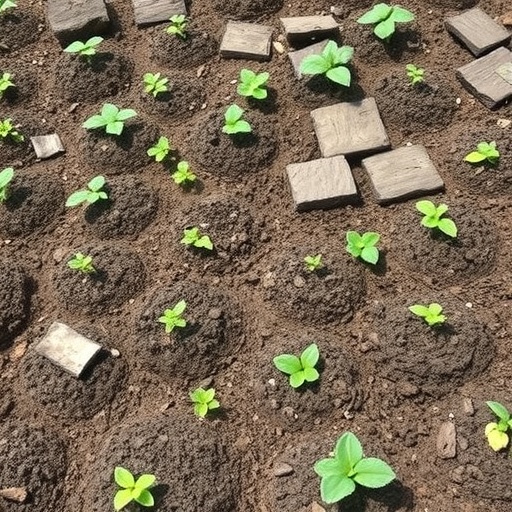
In a recent study published in the journal “Environmental Monitoring and Assessment,” researchers evaluated the presence of trace elements and fluoride pollution in various land-use types within the southern hilly region of China. This assessment brings to light significant environmental concerns, highlighting the impact of agricultural practices, urbanization, and industrial activities on soil quality, which in turn, can have profound implications for human health and ecosystem sustainability.
China’s southern hilly region is known for its rich biodiversity and varied land uses, including agriculture, forestry, and urban development. However, these land use practices also contribute to the accumulation of harmful trace elements and fluoride in the soil. The study conducted by Wang and colleagues emphasizes the need for a comprehensive monitoring system to understand the extent of soil contamination and its potential risks. The detailed analysis incorporates a range of methodologies, including soil sampling, chemical analysis, and environmental assessments, to comprehensively evaluate soil quality across different land uses.
Trace elements such as arsenic, lead, and cadmium have been identified as major pollutants in many regions around the world. These elements can enter the soil from various sources, including agricultural fertilizers, industrial discharges, and mining activities. The research team took a systematic approach to quantify the levels of these contaminants across different land uses, revealing alarmingly high concentrations in certain areas. Their findings underscore the urgent need for regulatory measures to mitigate contamination and promote sustainable land-use practices.
Moreover, fluoride, often overlooked in discussions of environmental pollutants, was assessed for its concentration in the soil samples analyzed. High levels of fluoride can adversely affect soil health, crop yield, and ultimately human health through the food chain. By evaluating fluoride alongside trace elements, the researchers provide a more holistic view of soil contamination, which is crucial for policymakers and environmental scientists alike.
The research team also employed soil quality indicators to assess the overall health of the soil in relation to its contamination levels. These indicators included soil pH, organic matter content, and microbial activity, all of which are essential for maintaining fertile soils. The analysis showed a direct correlation between high levels of trace elements and fluoride and a decline in soil quality metrics. This relationship highlights how pollution not only threatens immediate environmental health but can also lead to long-term degradation of soil resources.
In conducting their assessment, Wang et al. utilized a comparative methodology to analyze areas with varying land uses, such as residential zones, agricultural lands, and industrial sites. This comparison allowed for a clearer understanding of how different economic activities contribute to soil contamination levels. The study revealed that agricultural practices, particularly the use of fertilizers and pesticides, are major contributors to the elevated levels of trace elements in the soil. Such findings carry profound implications for agricultural policy and practices in the region.
The interaction between land use and soil quality is complex, influenced by numerous factors including local geological conditions and climatic variations. The research highlights the importance of localized studies to address specific environmental issues comprehensively. Policymakers are urged to consider these regional differences when developing agricultural guidelines and environmental protection strategies.
Furthermore, the implications of poor soil quality extend beyond environmental consequences; they also affect food security and public health. Contaminated crops can lead to serious health issues among populations reliant on local agriculture for sustenance. The study serves as a wake-up call, urging local governments and agricultural stakeholders to prioritize soil health in their efforts to ensure food safety and environmental justice.
As urbanization continues to expand in southern China, the study’s findings present a critical opportunity for intervention. Urban planning must incorporate strategies that minimize soil pollution and promote sustainable land management. The researchers advocate for the integration of soil assessment in urban development plans, aiming for a balanced approach that prioritizes both economic growth and environmental stewardship.
Future research will be essential in addressing the ongoing challenges surrounding soil pollution. Longitudinal studies are needed to monitor trends in soil health over time, particularly as climate conditions change and urban expansion accelerates. Understanding these dynamics will be crucial for crafting effective policies aimed at mitigating soil contamination.
In conclusion, the assessment of trace elements and fluoride pollution in southern China reveals an urgent and multifaceted challenge that requires immediate attention. The study by Wang et al. underscores the necessity for comprehensive environmental monitoring, sustainable land management practices, and robust regulatory frameworks aimed at protecting soil health. As researchers continue to unravel the complex relationships between land use, soil contamination, and public health, it is clear that collaborative efforts will be essential in safeguarding these vital resources for future generations.
This study not only contributes to the body of knowledge regarding soil pollution in southern China but also sets a precedent for other regions facing similar challenges. As the global community grapples with environmental issues, the insights gleaned from this research may serve as a valuable reference for developing more effective soil management strategies.
By taking proactive measures and adopting a systems approach to soil health, it is possible to reverse trends of contamination and promote sustainability, ensuring a healthier environment for all inhabitants. The journey towards cleaner soil is a shared responsibility that will require the collaboration of governments, scientists, and citizens alike, and this study provides a critical first step in that direction.
Subject of Research: Assessment of trace elements and fluoride pollution with soil quality evaluation under different land use types in southern hilly region of China.
Article Title: Assessment of trace elements and fluoride pollution with soil quality evaluation under different land use types in southern hilly region of China.
Article References: Wang, X., Li, Y., Zhang, M. et al. Assessment of trace elements and fluoride pollution with soil quality evaluation under different land use types in southern hilly region of China. Environ Monit Assess 198, 68 (2026). https://doi.org/10.1007/s10661-025-14904-8
Image Credits: AI Generated
DOI: https://doi.org/10.1007/s10661-025-14904-8
Keywords: soil pollution, trace elements, fluoride, soil quality, land use, environmental assessment, agricultural practices.


