

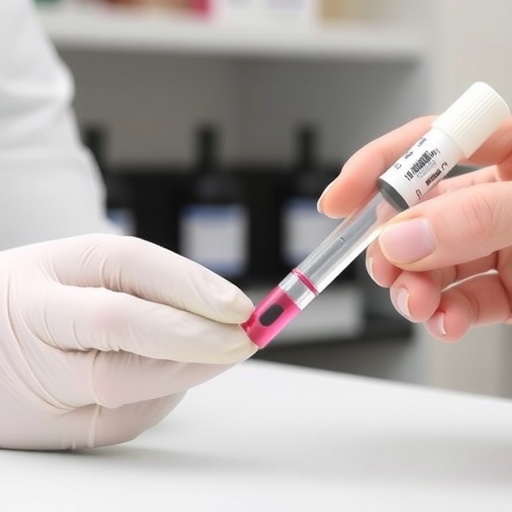
In a groundbreaking study led by a team of researchers, the advancements in point-of-care testing have taken a significant leap forward, particularly in the field of parathyroid surgery. The study explores the variations between the new point-of-care assay and traditional laboratory intraoperative parathyroid hormone (PTH) testing. The implications of this research are monumental, shedding light on the critical need for accuracy in hormone measurement during surgical procedures.
The rise of point-of-care testing has revolutionized medical diagnostics, offering rapid results that can shape immediate clinical decisions. This is particularly relevant in the context of parathyroid surgery, where timely hormonal assessment can be crucial in determining the success of the operation. The research led by Kwatra, Wakeford, and Ally aims to bridge the gap between traditional laboratory tests and these innovative point-of-care options, which could substantially influence patient outcomes.
Historically, intraoperative assays have relied on laboratory testing, which involves a range of logistical challenges including time delays and sample handling complications. These factors can lead to prolonged surgical times and increased risk of complications due to uncertainties regarding the patient’s hormonal status. This study compares these traditional methods with a promising new assay that has the potential to deliver results in a fraction of the time, thus optimizing surgical intervention.
Key to understanding this study is the concept of concordance – how closely the results of the new point-of-care assay align with the established laboratory tests. The researchers meticulously evaluated various parameters, including sensitivity, specificity, and overall accuracy. Their findings reveal not just the qualitative effectiveness of the point-of-care assay, but also highlight areas of significant disparity which could influence clinical decisions.
One of the standout features of this research is its comprehensive statistical analysis. By employing an extensive cohort of surgical patients, the study ensures robust data collection. This allows for a meaningful comparison between results obtained through both testing methods, thus providing a clearer picture of their relative advantages and drawbacks.
Moreover, the implications of this study extend beyond individual surgeries. As healthcare systems worldwide grapple with efficiency improvements and patient-centered care models, adopting point-of-care testing can lead to a broader reshaping of surgical protocols. Emphasizing rapid results fosters a more dynamic surgical environment, enhancing overall patient satisfaction and outcomes.
The societal impact of improved parathyroid hormone testing cannot be overstated. Given the prevalence of conditions that necessitate parathyroid surgery, such as hyperparathyroidism, advancements in this area could affect thousands of patients. A quicker and more accurate approach to hormonal assessment during surgery means that healthcare providers can make better-informed decisions, thereby reducing complications and refining recovery processes.
Another critical aspect of this study is the technological innovation behind the point-of-care assay itself. Researchers detail the mechanisms of how the new device functions, including its design and the biochemical reactions that facilitate rapid measuring of parathyroid hormone levels. Such innovations not only enhance the immediacy of test results but also assure clinicians of the reliability of data—essential in a surgical context where time is often of the essence.
The study even delves into the cost-effectiveness of implementing these point-of-care tests across surgical facilities. While initial investments in new technology may be challenging, the long-term benefits highlight considerable savings in operational costs, primarily through reduced surgical times and minimized complications. Thus, the economic viability of such assays further strengthens the argument for their adoption.
Notably, the researchers have addressed potential barriers to implementation. This includes the need for proper training and familiarization for surgical teams to integrate these rapid tests into routine practice efficiently. Furthermore, the acceptance of new testing protocols among the clinical community may require ongoing education and demonstration of the efficacy showcased in studies like this one.
In conclusion, the study spearheaded by Kwatra, Wakeford, and Ally presents a compelling case for the future of parathyroid hormone testing in surgical contexts. It highlights the urgent need for advancement in medical technology, especially when it can significantly sway clinical outcomes. As research continues to unfold in this area, the hope is that this study acts as a catalyst for a wider acceptance of point-of-care testing, benefiting both patients and healthcare professionals alike.
With a thorough investigation into the concordance and disparity of testing methods, the research underscores the necessity of innovation in medical testing. This is not simply about adopting new technology; it is a matter of improving lives, enhancing surgical practices, and ultimately transforming patient care. The potential for point-of-care testing to reshape the landscape of parathyroid surgery could hold promise for a better future in surgical endocrinology.
By addressing both the clinical and technical aspects of parathyroid hormone testing, this research paves the way for future investigations that could expand the capabilities of point-of-care assessments across other surgical specialties. As the medical community continues to evolve, studies like these serve as a reminder of the critical role of research in driving progress and ensuring patient safety and well-being.
As surgeons and healthcare providers look ahead, the findings from this study will likely become a cornerstone in revising protocols for intraoperative hormone assessment. The enthusiasm surrounding the promise of this new point-of-care assay indicates that the future of surgical care is not just about the surgery itself but about the entire patient experience—timely interventions, accurate results, and informed decisions at every step of the process.
The journey of integrating this new technology into surgery is only beginning, but the groundwork laid by the research of Kwatra and colleagues resonates with the urgency of addressing modern healthcare challenges. As the medical field strives for greater efficiency and higher standards of care, innovations like point-of-care hormone assays will undoubtedly play an integral role in that evolution.
Subject of Research: Parathyroid hormone testing methods in parathyroid surgery
Article Title: Interpreting the drop: concordance and disparity between a new point-of-care assay and laboratory intraoperative parathyroid hormone testing in parathyroid surgery.
Article References:
Kwatra, D., Wakeford, W., Ally, M. et al. Interpreting the drop: concordance and disparity between a new point-of-care assay and laboratory intraoperative parathyroid hormone testing in parathyroid surgery.
BMC Endocr Disord (2026). https://doi.org/10.1186/s12902-025-02112-x
Image Credits: AI Generated
DOI:
Keywords: Parathyroid hormone, point-of-care testing, intraoperative testing, parathyroid surgery, concordance, surgical outcomes, medical diagnostics, technology innovation, healthcare systems, hormone measurement.


