

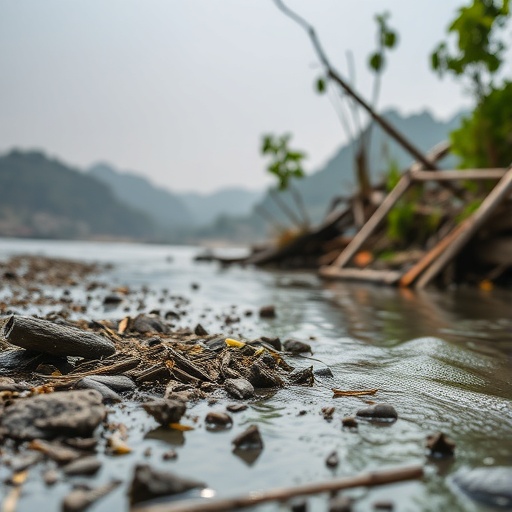
In a groundbreaking study led by recent researchers, a thorough assessment of heavy metal contamination and ecological risks associated with the sediments of the Buriganga River in Dhaka, Bangladesh has uncovered alarming findings. The Buriganga River is one of the most significant waterways in the region, yet it has faced an onslaught of pollution, primarily from industrial waste and urban runoff. The implications of this study extend beyond mere academic interest; they signal a potential environmental crisis that could affect millions living in the vicinity of this vital water source.
The research team, comprising Pervez, Ahmmed, Rana, and other specialists, performed a comprehensive analysis, sampling sediments from various locations along the river. Their goal was to evaluate the levels of heavy metals such as lead, cadmium, copper, and mercury, which are notorious for their toxicity and persistence in aquatic environments. What the researchers found is both astonishing and alarming. Elevated levels of these heavy metals were detected, raising serious questions about the safety of the river’s ecosystem and its utility for drinking, fishing, and recreational activities.
One noteworthy aspect of this study is the methodology employed to assess the sediment samples. The researchers utilized advanced analytical techniques including Atomic Absorption Spectroscopy (AAS) and Inductively Coupled Plasma Mass Spectrometry (ICP-MS). Such methods are vital for accurately quantifying the concentrations of heavy metals, thereby providing robust data that could inform future regulatory actions. Given the increasing industrialization surrounding the Buriganga, these findings underline an urgent need for ongoing monitoring and effective management strategies.
Heavy metals, often introduced into waterways through anthropogenic activities, can accumulate in sediments, posing long-term risks not just to aquatic life but also to human health. The effects of these toxic substances can be devastating, affecting not only the flora and fauna of the river but also the communities that depend on these natural resources. This presents a complex challenge for policymakers and environmentalists alike, who must weigh the economic benefits of development against the significant ecological costs.
In light of their findings, the researchers also evaluated the ecological risks posed by heavy metal pollution in the Buriganga River. They used various sediment quality guidelines to assess potential toxic impacts on benthic organisms and other aquatic life forms in the riverbed. The results indicated that the ecological risk to organisms living in or near the river exceeds safe thresholds in multiple sampling sites, highlighting the urgent need for improved waste management practices in the region.
Of particular concern was the finding that certain locations along the river demonstrated contamination levels that can lead to bioaccumulation, a process through which toxic metals accumulate in the tissues of living organisms over time. This not only threatens local aquatic biodiversity but also raises alarms about the potential for heavy metals to enter the human food chain through fish consumption. Given that fish constitutes a significant part of the local diet, this is an issue that cannot be overlooked.
The study’s authors recommend implementing stringent regulations to curb industrial discharges and promote sustainable waste management practices around the Buriganga. They emphasize the importance of public awareness campaigns to educate residents about the potential health risks associated with consuming contaminated water and aquatic organisms. Further, inter-agency coordination between environmental protection authorities and health departments is crucial for developing proactive strategies to mitigate risks associated with heavy metal pollution.
The ramifications of heavy metal contamination extend beyond ecological impacts. The study serves as a clarion call to action for local governments and global stakeholders, emphasizing that immediate intervention is necessary to protect vulnerable communities from the long-lasting effects of environmental degradation. By fostering collaborative efforts between scientists, policymakers, and the public, there is potential for meaningful change to occur in the Buriganga River basin.
Moreover, the researchers have suggested future studies focusing on the effects of heavy metal exposure on human health, particularly among populations residing near the river. Such investigations could provide invaluable insights into the long-term consequences of this pollution on community health, thus reinforcing the imperative to take action now. Indeed, the burden of proof lies with the stakeholders engaged in riverine governance to align environmental health priorities with sustainable development objectives.
This important research sheds light on a growing environmental concern as megacities like Dhaka continue to grapple with the consequences of rapid urbanization and industrial growth. As cities expand and populations surge, it is crucial to prioritize environmental integrity along with economic development. Understanding the complex interplay between human activity and ecological health is essential for fostering a sustainable future.
As we move towards a world increasingly affected by climate change and environmental crises, studies like these are vital. They highlight the delicate balance that must be struck between growth and sustainability, urging us to reflect on our responsibilities toward the environment. The Buriganga River is a microcosm of wider global challenges, and the findings from this study could influence pollution policies not only in Bangladesh but also in similar urban settings worldwide.
In conclusion, the assessment of heavy metal contamination in the Buriganga River underscores an urgent environmental issue that requires immediate and sustained action. Continued research, policy reform, and public engagement are essential to reversing the tide of pollution that endangers the health of both ecosystems and human communities alike. The road ahead is intertwined with challenges, but through collaboration and innovation, it is possible to restore the Buriganga River to health while safeguarding the future for generations to come.
Subject of Research: Heavy metal contamination and ecological risks in the Buriganga River sediments
Article Title: Assessment of heavy metal contamination and ecological risks in sediments of the Buriganga River, Dhaka, Bangladesh
Article References:
Pervez, M.E., Ahmmed, M.S., Rana, M.S. et al. Assessment of heavy metal contamination and ecological risks in sediments of the Buriganga River, Dhaka, Bangladesh. Environ Monit Assess 198, 173 (2026). https://doi.org/10.1007/s10661-026-15032-7
Image Credits: AI Generated
DOI: https://doi.org/10.1007/s10661-026-15032-7
Keywords: heavy metals, environmental pollution, ecological risks, Buriganga River, sediment assessment, aquatic life, human health


