

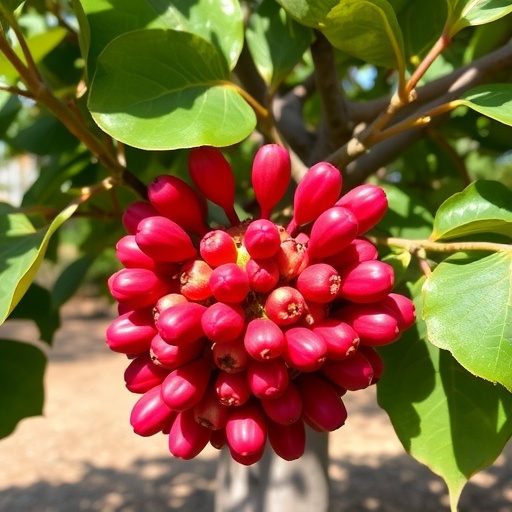
In the heart of South Africa’s Mpumalanga province lies a unique and ecologically valuable species, the Transvaal red milkwood, scientifically known as Mimusops zeyheri. This tree has become a cornerstone of not only the local ecosystem but also the cultural heritage of the communities residing within its shadow. The significance of this tree goes beyond mere aesthetic appreciation; it holds a repository of ethno-medicinal knowledge that local populations have developed and refined over centuries. In a recent study, researchers Mkhonto, Dhladhla, and Mbeng explored the interplay between the ethnomedicinal uses of Mimusops zeyheri and the conservation strategies necessary to safeguard this vital species for future generations.
The findings indicate a deep, intertwined relationship between the community and the Transvaal red milkwood, revealing that its uses extend well into traditional medicine. Historical records and oral traditions suggest that various parts of the tree—its bark, leaves, and fruit—are employed in treating an array of ailments, ranging from common colds to more serious health issues. This knowledge has been passed down through generations, emphasizing the need to not only preserve the tree itself but also the cultural narratives associated with its usage.
Interestingly, the research underscores the challenges facing Mimusops zeyheri. As urbanization and agricultural expansion increase in the region, the habitats conducive to the growth of this species are threatened. The study highlights the urgent need for local conservation strategies that harness the knowledge of indigenous communities regarding the tree’s benefits. Without integrating this knowledge into broader conservation efforts, Mimusops zeyheri may face further endangerment.
In their survey, the researchers documented various methodologies employed by locals in utilizing the tree. For instance, the leaves are often boiled to create a natural remedy for fevers and infections, showcasing a practical application that underscores its importance in everyday health care. The bark, on the other hand, is used to fashion remedies for skin-related ailments. By cataloging these practices, the study aims to validate and preserve the local ecological knowledge surrounding the species.
One of the most compelling aspects of the research is its focus on community perceptions. The authors found that many individuals view the Transvaal red milkwood as a spiritual symbol. This perspective not only enriches its medicinal narrative but also reinforces the necessity of its protection. When people have a meaningful connection with the plants in their environment, they tend to advocate for their conservation more vigorously.
As part of the study’s recommendations, Mkhonto, Dhladhla, and Mbeng call for collaborative conservation efforts that include local communities in decision-making processes. Such inclusion ensures that conservation strategies are culturally relevant and more likely to gain community support. Additionally, the researchers advocate for educational programs that highlight the importance of Mimusops zeyheri, not just in terms of biodiversity but also in fostering a sense of identity and heritage.
The research is further bolstered by a statistical analysis of the tree’s current status and distribution in Mpumalanga. Data indicates a decline in Mimusops zeyheri populations, prompting the researchers to propose a series of action steps aimed at sustainable management. These would include habitat restoration initiatives, legal protections against exploitation, and incentives for local farmers to cultivate native tree species.
Moreover, the role of Mimusops zeyheri extends into ecological balance. Its presence is crucial to various fauna, serving as a food source for numerous bird species, insects, and mammals. Thus, the conservation of this tree not only preserves cultural identity but also supports biodiversity within the broader ecosystem. Climate resilience can be significantly impacted by ensuring the health of such indigenous species.
The researchers also delve into potential economic benefits. Sustainable harvesting and bioprospecting of Mimusops zeyheri for its medicinal properties could lead to job creation in the community. By leveraging traditional knowledge in a contemporary market context, locals can benefit from their heritage in a sustainable way, further incentivizing the need to protect the tree.
As the discourse around climate change and conservation continues to evolve, this study serves as a poignant reminder of the wisdom embedded in indigenous practices. The authors emphasize that understanding the historical and cultural context of a species can inform more effective conservation strategies. Not only does it help protect biodiversity, but it also empowers local communities, ensuring their voices are heard in the ecological dialogue.
The findings from this research call for an urgent societal conversation about the balance between development and conservation. Infrastructure projects that encroach upon natural habitats must be evaluated with an understanding of their long-lasting impacts on local biodiversity and cultural heritage. A collaborative approach to planning can mitigate the loss of invaluable species such as Mimusops zeyheri.
Looking ahead, we must recognize that the fate of trees like the Transvaal red milkwood lies not within the bounds of scientific inquiry alone but within the hearts of the communities that cherish and utilize them. By elevating the voices of indigenous peoples and integrating their knowledge into broader environmental frameworks, we can carve a sustainable path forward. It signifies a dual victory: safeguarding biodiversity while fostering cultural preservation.
This in-depth exploration of Mimusops zeyheri demonstrates its vital role as both a medicinal resource and an ecological keystone. The study opens avenues for further research into the intricate relationships between human health, cultural traditions, and biodiversity. Navigating the path toward conservation requires a holistic understanding of these connections—a commitment to not only protecting species but also honoring the wisdom that guides their use.
As we face inevitable ecological challenges, the findings from this study showcase the importance of drawing upon multiple perspectives, weaving together scientific knowledge and traditional wisdom. The comprehensive understanding of Mimusops zeyheri could offer critical insights into creating more resilient and adaptive communities amidst the challenges posed by climate change and loss of biodiversity.
Subject of Research: Ethnomedicinal uses and conservation of Mimusops zeyheri in Mpumalanga, South Africa.
Article Title: Transvaal red milkwood (Mimusops zeyheri Sond.) in the Mpumalanga province, South Africa: perceptions of its ethnomedicinal uses and conservation.
Article References:
Mkhonto, C., Dhladhla, M., Mbeng, W.O. et al. Transvaal red milkwood (Mimusops zeyheri Sond.,) in the Mpumalanga province, South Africa: perceptions of its ethnomedicinal uses and conservation.
Discov Sustain 7, 115 (2026). https://doi.org/10.1007/s43621-025-02547-1
Image Credits: AI Generated
DOI: https://doi.org/10.1007/s43621-025-02547-1
Keywords: Mimusops zeyheri, conservation, ethnomedicine, Mpumalanga, South Africa, biodiversity, traditional knowledge, community involvement.


