

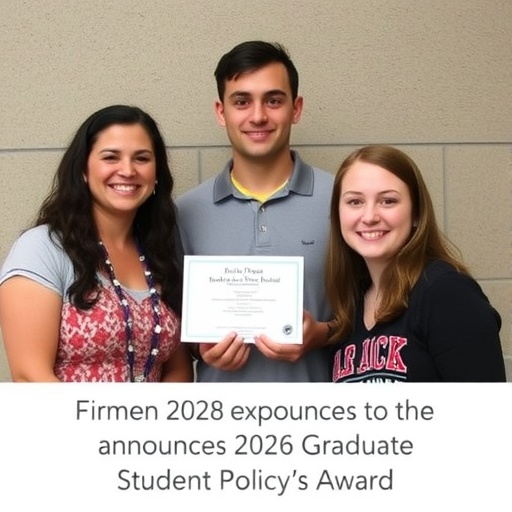
The Ecological Society of America (ESA) has revealed the distinguished selection of recipients for the 2026 Katherine S. McCarter Graduate Student Policy Award (GSPA), celebrating a cohort of twenty emerging leaders in ecological science and policy advocacy. This prestigious program aims to bridge the critical gap between rigorous ecological research and impactful environmental policy. Awardees are chosen based on their demonstrated commitment to science advocacy, with the program offering comprehensive policy, communication, and career training in Washington, D.C., culminating in direct engagement with lawmakers on Capitol Hill. This initiative underscores the growing recognition that effective environmental decision-making requires scientifically informed leadership from ecologists versed in both research and public policy spheres.
The ESA President, Peter Groffman, emphasized the remarkable potential of these recipients as future stewards of ecological knowledge applied to societal challenges. He noted that the GSPA cohort’s dedication to public service and science communication bodes well for the future integration of ecological insights in legislative and regulatory frameworks. Their engagement will contribute to shaping research priorities that address global environmental crises, including climate change, biodiversity loss, and ecosystem degradation. The ASA’s support facilitates direct experiences that enrich the students’ capacity to translate ecological science into actionable policy instruments.
The 2026 cohort includes a diverse range of projects across numerous ecological disciplines and systems, reflecting both fundamental research and applied conservation efforts. Olivia Aguiar, for instance, investigates white-nose syndrome dynamics in North American bats, utilizing disease ecology to inform conservation strategies critical to bat population recovery. Such work involves understanding pathogen spread and host-pathogen interactions at a community level, essential for devising mitigation protocols in wildlife disease management. Aguiar’s commitment to outreach and inclusivity in science aligns with broader societal efforts to democratize scientific knowledge.
Another notable recipient, Noah J. Andexler, employs cutting-edge molecular techniques to unravel brown and black bear ecology. By combining DNA analysis with isotopic data, his research enhances our understanding of bear population structure and feeding patterns, offering concrete data to inform national park management. This genome-centric approach exemplifies how advances in molecular ecology can revolutionize species conservation and ecosystem monitoring at landscape scales, fostering precision conservation practices.
Olabisi Atofarati’s work employs DNA metabarcoding to dissect fish diet and gut microbiome compositions across diverse aquatic ecosystems. Such analyses delve into trophic interactions and ecosystem function, shedding light on how microbial communities within hosts affect energy flow and nutrient cycling. Given the critical role fish play in global food security and livelihoods, this research has direct implications for sustainable fisheries management, marrying molecular ecology with indigenous knowledge systems to shape inclusive conservation policies.
Lillie M. Bradshaw’s research tackles climate impacts and anthropogenic pressures on coral reef ecosystems within the Florida Keys. By integrating ecological data with policy frameworks, she investigates restorative mariculture strategies aimed at enhancing reef resilience. Her work employs spatially explicit analyses and collaborations with socio-political stakeholders, illustrating the complex interplay between ecological science, resource management, and environmental governance in coastal zones vulnerable to climate change and human use.
Remote sensing and machine learning form the cornerstone of Gabriel F. Calistro’s project investigating algal blooms in Sierra Nevada mountain lakes. By developing autonomous monitoring systems, he aims to predict bloom occurrences, which are critical for freshwater ecosystem health and water quality management. This typifies the growing trend of employing AI-driven technologies for large-scale ecological monitoring, enhancing rapid response capabilities to environmental disturbances.
At the intersection of urban ecology and public health, Emma C. Daily examines the influence of particulate matter on forest ecosystems and human well-being. Her interdisciplinary approach, supported by NSF URBAN program, integrates biogeosciences with environmental policy to address air pollution and climate change’s effects on ecosystem services. Daily’s presence at COP29 highlights the imperative for ecological considerations in global climate governance frameworks, underscoring the policy relevance of urban ecological research.
Braden Charles DeMattei’s investigation into toxic cyanobacteria blooms elucidates the cascading impacts on freshwater plankton food webs and associated ecosystem services. Combining computer vision with ecological data processing, his work exemplifies innovative methodologies advancing ecological understanding of harmful algal blooms, which threaten freshwater biodiversity and water security worldwide. DeMattei’s goal to inform resource management mirrors the necessity for science-policy interfaces tackling freshwater ecosystem challenges.
At Yale, Jonathan Gewirtzman delves into greenhouse gas fluxes in forested and wetland ecosystems, emphasizing carbon-climate feedback mechanisms critical to climate mitigation. By integrating empirical data and modeling approaches, his research directly informs nature-based climate solutions and emission reduction strategies. Gewirtzman actively communicates these findings to both policymakers and the public, reinforcing the societal relevance of ecosystem biogeochemistry.
Koa Grabar’s research foregrounds human-wildlife coexistence in Hawaiian wetlands, elucidating the socio-ecological drivers behind endangered waterbird interactions. Employing place-based conservation tactics, his work advocates for policies that reconcile biodiversity conservation with community stewardship, reflecting an integrated approach to environmental management sensitive to cultural contexts.
In socio-ecological genomics, Chukwudi Michael Ikegwu studies amphibians and reptiles in West and Central African montane systems, combining biodiversity mapping with conservation genetics. His use of open biodiversity data to identify conservation gaps is pivotal for adaptive management plans in these underrepresented ecosystems. Ikegwu’s interdisciplinary and cross-institutional collaborations also reflect the global nature of ecological science as a tool for policy reform in biodiversity hotspots.
Sikander Khare’s theoretical and empirical analyses at the University of Florida assess how biodiversity underpins ecosystem stability and carbon sequestration, advancing understanding of ecosystems’ role in mitigating climate change. His expertise in negotiation and stakeholder engagement enhances his capability to bridge scientific evidence with environmental policymaking, embodying the role of scientists as policy advisors.
These twenty awardees collectively embody the next generation of ecological leaders equipped to synthesize scientific inquiry with policy advocacy. Their research spans molecular techniques, ecosystem monitoring, theoretical ecology, and applied conservation, all critical to addressing the pressing environmental challenges facing humanity. The ESA’s GSPA program not only cultivates expertise but also fosters a collaborative spirit, essential for advancing ecological science within societal frameworks.
The recipients’ trajectory through policy immersions and Capitol Hill meetings equips them with firsthand experience in legislative processes, communication strategies, and stakeholder negotiations. Such training is vital for transforming research findings into influential policy recommendations, ensuring that ecological insights shape laws and regulations that govern natural resource management, climate action, and biodiversity conservation.
In a broader context, this award underscores the necessity of scientific literacy among policymakers and the value of equipping scientists with skills beyond traditional research. The seamless integration of ecological science and policy is imperative for sustainable development, environmental justice, and global climate resilience. Through this program, the ESA not only affirms its leadership role in ecology but also sets a benchmark for how learned societies can actively foster science-policy synergy.
The 2026 Katherine S. McCarter Graduate Student Policy Award recipients reflect a diverse and interdisciplinary cohort, poised to catalyze impactful environmental governance with rigorous science as their foundation. Their work spans geographic and thematic scales, yet converges on the fundamental mission of promoting ecological understanding within decision-making arenas. This initiative thus contributes meaningfully to shaping a scientifically informed and ecologically conscious future.
Subject of Research: Ecology, Conservation Biology, Environmental Policy, Disease Ecology, Molecular Ecology, Ecosystem Function, Climate Change Impacts, Biodiversity, Urban Ecology, Ecological Genomics, Human-Wildlife Coexistence, Ecosystem Services, Science-Policy Interface
Article Title: Emerging Ecological Leaders: Recipients of the 2026 Katherine S. McCarter Graduate Student Policy Award
News Publication Date: Not provided
Web References:
– Ecological Society of America website: https://esa.org
– ESA Journals: https://esajournals.onlinelibrary.wiley.com/
– ESA Annual Meeting 2026: https://esa.org/saltlake2026/
Image Credits: Ecological Society of America
Keywords: Ecology, Conservation, Environmental Policy, Graduate Student Award, Science Advocacy, Disease Ecology, Molecular Ecology, Ecosystem Management, Climate Change, Biodiversity, Urban Ecology, Science Communication


