

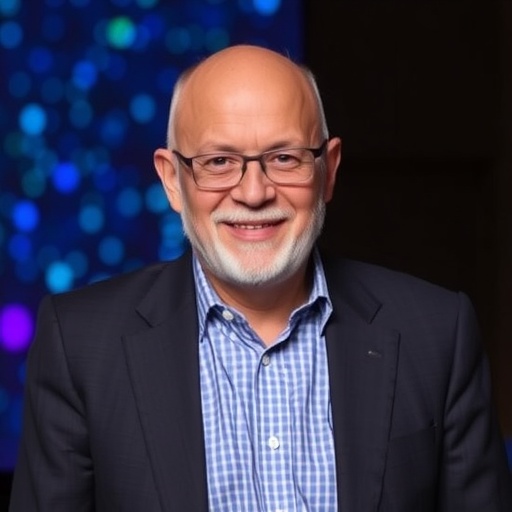
The Synapsy Centre for Neuroscience Research in Mental Health at the University of Geneva’s Faculty of Medicine has recently conferred its inaugural Synapsy Prize to Professor Eric Nestler, widely acknowledged as a transformative figure in neurobiology related to depression and addiction. This prestigious award celebrates lifelong dedication to translating fundamental neuroscience discoveries into tangible clinical advancements in mental health, a bridge that has long been elusive in psychiatric research.
Psychiatry, traditionally compartmentalized and often detached from underlying biological mechanisms, has undergone a profound evolution over the past two decades. This paradigm shift aims to integrate neuroscience and psychiatry within a unified framework. The goal is to elucidate the molecular and cellular substrates underlying mental disorders to improve both diagnostics and therapeutic interventions. The Synapsy Centre, established in 2010 as a national research hub and transitioning to a permanent faculty entity in 2022, embodies this translational mission, emphasizing the urgent need to address the global mental health crisis. According to the World Health Organization, nearly one billion people suffered from mental disorders in 2019, predominantly anxiety and depression, conditions which exert profound societal and economic burdens.
Eric Nestler’s work represents the vanguard of this translational approach. His career has been dedicated to dissecting the neurobiological underpinnings of psychiatric conditions by examining how chronic stress and exposure to addictive substances induce lasting alterations in gene expression within critical brain circuits. Nestler’s pathbreaking research has revealed that these persistent molecular changes affect neural networks governing reward, motivation, and mood regulation, providing a mechanistic foundation for understanding the persistence and recurrence of mental illnesses like depression and substance use disorder.
Christian Lüscher, the director of Synapsy and chair of the prize committee, highlights Nestler as a pioneer who convincingly demonstrated the imperative of forging strong connections between basic neuroscience research and clinical psychiatry. This bridge-building is central to the modern vision of psychiatric neuroscience that Synapsy promotes—an outlook that champions open, collaborative science aimed at alleviating the profound psychological suffering experienced by millions worldwide.
A prolific author with over 700 scientific publications, Eric Nestler has significantly shaped scientific understanding of resilience, a concept that moves beyond the simplistic dichotomy of vulnerability versus protection. Instead, Nestler’s research posits resilience as an active, dynamic molecular program that can be strategically targeted to enhance an individual’s capacity to adapt to adversity and recover from psychologically traumatic events. This molecular resilience framework opens new avenues for developing therapeutics aimed at reinforcing the brain’s endogenous coping mechanisms.
Eric Nestler’s unique qualifications as both a psychiatrist and a neuroscientist position him ideally to integrate clinical observations and experimental neuroscience. His research methodology typically involves an iterative process beginning with clinical phenotyping of patients, followed by the generation of animal models that recapitulate key features of human mental disorders. These models are then validated with analyses of post-mortem human brain tissue, allowing for a feedback loop that refines experimental hypotheses and informs potential clinical translation. Several molecular pathways identified through this approach have now progressed to clinical trial phases, underscoring the translational potency of Nestler’s research.
Looking to the future, Nestler underscores the necessity for next-generation research paradigms that encompass multiscale biological inquiry, spanning molecular pathways, cellular networks, neural circuits, and behavioral phenotypes. Establishing causal links across these levels of organization is critical to developing a cohesive understanding of mental disorders and to tailoring precise, mechanism-driven interventions.
Equally important, Nestler advocates for a new breed of hybrid scientists, extensively cross-trained in both clinical psychiatry and fundamental neuroscience. By fostering a scientific ecosystem where researchers can fluidly navigate between bench and bedside, the translational pipeline can be greatly accelerated, ultimately benefiting patient outcomes.
Christian Lüscher echoes this vision, emphasizing that the longstanding divide between research and clinical psychiatry has impeded progress in mental health. Synapsy aims to cultivate a collaborative environment founded on mutual trust and interdisciplinary exchange. This environment will help generate innovative, biology-driven psychiatric approaches that maintain an unyielding focus on improving patient care.
The Synapsy Prize honors Eric Nestler not only as a scientist of extraordinary influence but also as a trailblazer inspiring an entire generation of researchers. His work serves as a beacon charting the path toward mental health treatments that are both scientifically robust and clinically impactful, grounded in human biology yet oriented towards alleviating suffering.
In conclusion, the recognition of Eric Nestler by the Synapsy Centre accentuates the urgent need to dismantle disciplinary silos in mental health research. It calls for a unified, translational neuroscience that addresses the complexity of brain disorders with precision and innovation. This award marks a seminal moment for psychiatric research, heralding a future where scientific discoveries seamlessly convert into effective therapies, ultimately transforming care for millions affected by mental illness worldwide.
Subject of Research: Neurobiological mechanisms of depression and addiction; translational psychiatry and neuroscience.
Article Title: Eric Nestler Receives the Inaugural UNIGE Synapsy Prize 2025 for Bridging Neuroscience and Clinical Psychiatry
News Publication Date: 2025
Web References:
https://mediasvc.eurekalert.org/Api/v1/Multimedia/be00d811-59a0-461a-846d-e83a08019832/Rendition/low-res/Content/Public
Image Credits: Credit: DR
Keywords: Eric Nestler, Synapsy Prize, neurobiology, depression, addiction, translational psychiatry, neuroscience, mental health, resilience, molecular psychiatry, brain circuits, clinical research


