

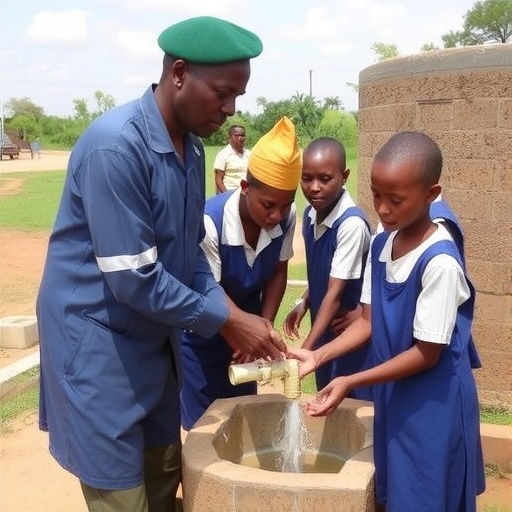
In recent years, the importance of water, sanitation, and hygiene (WASH) facilities in schools has gained significant attention, particularly in developing regions. A pivotal study conducted in the Mfantseman Municipality of Ghana has brought forth crucial insights about the management of these facilities within basic schools. With the increasing recognition of how pivotal these components are for ensuring not just educational outcomes but also overall community health, this study is poised to shed light on the intertwined nature of sanitation, hygiene, and academic performance in one of Ghana’s critical municipalities.
The study, spearheaded by researchers K.K. Annan, S. Mariwah, and A. Annan, explores how basic schools in the Mfantseman Municipality manage their water, sanitation, and hygiene facilities. With sanitation-related issues often leading to significant public health concerns, especially in areas with limited resources, the researchers set out to assess whether the current infrastructure in schools meets the requisite standards and how effectively these resources are managed. Furthermore, it delves into the implications of inadequate WASH facilities on students’ health and academic performance.
Water, sanitation, and hygiene are fundamental rights and essential for the eradication of poverty and achievement of sustainable development. In developing countries such as Ghana, the lack of proper WASH facilities is a barrier to delivering quality education. Schools without access to safe water and sanitation facilities tend to see higher rates of absenteeism among students, particularly girls who face unique challenges in maintaining hygiene during their menstrual cycles. This study underscores the necessity of not just establishing WASH facilities but also implementing effective management strategies to ensure their functionality and maintenance.
One notable finding from the research highlights that many schools in the Mfantseman Municipality struggle with inadequate water supply, poorly maintained latrines, and a lack of hygiene education among both students and staff. The absence of clean and accessible facilities can lead to the proliferation of waterborne diseases, which can disrupt students’ education due to illness. This cycle of poor health and educational setbacks particularly affects younger students who may not have the resilience to cope with frequent disturbances in their schooling.
Furthermore, the research connects the dots between equitable access to WASH facilities and broader educational outcomes. Schools that effectively manage their hygiene facilities and offer students appropriate education about sanitation practices tend to outperform their counterparts in terms of student attendance and academic success. The study reveals that elevating WASH facilities to an acceptable standard not only serves a health need but enhances the learning environment, contributing directly to better educational results.
The researchers employed a mixed-methods approach to gather qualitative and quantitative data from various schools within the Municipality. Surveys and interviews with school administrators, students, and parents were conducted to assess current levels of satisfaction with existing WASH facilities. The data revealed a stark contrast in how different schools manage their resources, with some schools demonstrating exemplary management practices fueled by strong community support, while others remain severely under-resourced and neglected.
Additionally, the study brought to light the importance of community involvement in the management and upkeep of school facilities. Schools that engage with parents and local authorities in decision-making processes regarding WASH facility management tend to develop stronger strategies for sustainability. This stakeholder engagement not only fosters accountability but also nurtures a sense of ownership among community members, leading to better maintenance and hygiene practices.
Moreover, the importance of educational campaigns in schools about hygiene practices was noted as a major factor in the sustainability of WASH facilities. When students are informed about the benefits of practicing good hygiene, they are more likely to utilize the facilities properly and maintain them. The researchers emphasize the need for incorporating hygiene education into the school curriculum, ensuring that students understand the significance of sanitation and water management from a young age.
The research also looks into the financial aspects concerning the management of WASH facilities in schools. Many institutions struggle with limited funding which impacts their ability to maintain existing facilities or upgrade them to meet health standards. The study encourages not only governmental intervention but also public-private partnerships to secure financial resources aimed at improving WASH conditions in schools. Investments in this sector could yield significant returns by enhancing the quality of education and ensuring a healthier future generation.
Looking at the role of policy, the study positions itself within the broader framework of national and international mandates regarding access to water and sanitation services. As such, it underscores the need for policymakers to prioritize WASH facility investment and create robust regulations that ensure schools adhere to health and safety standards. Establishing a legal framework around WASH management can drive accountability and improve outcomes in schools across Ghana and similar regions.
As the research concludes, it calls for immediate action not just at the school level but across the educational landscape in the Mfantseman Municipality and beyond. The results indicate that without proper management of WASH facilities, the gap in educational inequalities will likely widen, undermining the potential of future generations. This critical intersection of health and education needs urgent attention from both local authorities and the international community.
Ultimately, the findings from this pivotal study stress a universal truth: the future of education is closely tied to the health of students, which in turn is intrinsically linked to the management of water, sanitation, and hygiene facilities. As the global community advances toward achieving Sustainable Development Goals, the imperative remains clear; improving WASH facilities in schools must take center stage, especially in regions where the stakes are highest.
In essence, the findings of this research not only reflect a local challenge but resonate on a global scale, emphasizing that holistic educational reform cannot occur without addressing the underlying health issues affecting the student population. This study serves as a clarion call for concerted efforts to merge educational policies with public health initiatives, thereby fostering environments that support both learning and holistic wellbeing.
The call to action extends beyond mere recognition of the problem; it urges all stakeholders, from government bodies to non-profit organizations, to invest in solutions that foster comprehensive management strategies for water, sanitation, and hygiene facilities in schools. By prioritizing these issues, we can begin to forge a path toward equitable education, improved public health, and a sustainable future for all.
Subject of Research: Management of water, sanitation, and hygiene facilities in basic schools within the Mfantseman Municipality, Ghana.
Article Title: Management of water, sanitation and hygiene facilities in basic schools within the Mfantseman Municipality, Ghana.
Article References:
Annan, K.K., Mariwah, S., Annan, A. et al. Management of water, sanitation and hygiene facilities in basic schools within the Mfantseman Municipality, Ghana. Discov Sustain (2025). https://doi.org/10.1007/s43621-025-02504-y
Image Credits: AI Generated
DOI:
Keywords: Water, Sanitation, Hygiene, Education, Health, Ghana, Mfantseman Municipality, WASH facilities, Management, Sustainability, Community involvement, Public health, Educational outcomes.


