

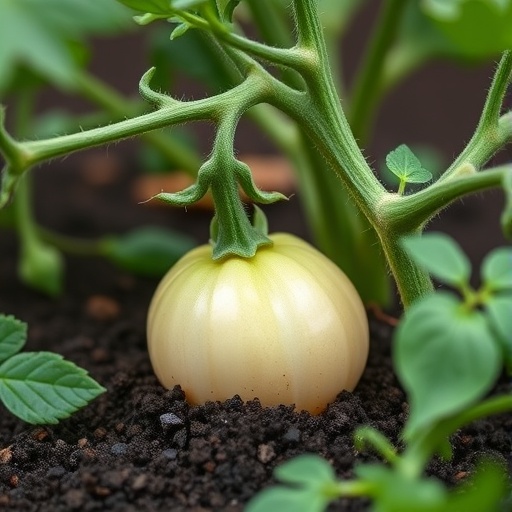
In recent years, the search for sustainable agricultural practices has intensified, driving researchers to explore innovative solutions to improve crop yields while minimizing ecological footprints. A recent study focuses on the biological treatment of whey using the potent fungus Trichoderma harzianum, a move expected to open new avenues in the realm of crop production, particularly for tomatoes. This research not only addresses waste management challenges associated with dairy industries but also evaluates the secondary benefits derived from whey treatment on germination rates of Solanum lycopersicum, commonly known as the tomato plant.
Whey, a byproduct of cheese production, often poses disposal challenges, as it is rich in lactose and other nutrients, leading to environmental pollution if not treated correctly. The accumulation of untreated whey can create adverse environmental effects, such as water pollution and eutrophication, thereby impacting local ecosystems. Cultivating Trichoderma harzianum, a well-studied fungal species recognized for its biocontrol capabilities and ability to degrade organic waste, presents a dual solution—safeguarding the environment and simultaneously enhancing agricultural productivity.
The crux of this research investigates how Trichoderma harzianum can effectively treat whey, breaking it down into simpler, more manageable compounds. The study explores various parameters that could affect the fungal growth rate and its efficiency in whey decomposition. Researchers meticulously crafted an experimental setup where whey was subjected to an optimal environment for Trichoderma harzianum growth, ensuring appropriate temperature, pH, and nutrient levels.
Additionally, the study juxtaposes the treated whey against untreated samples, through a series of tests aimed at measuring its effects on plant seeds, particularly focusing on Solanum lycopersicum. By conducting germination trials, researchers have uncovered significant variances in germination rates, vigor, and overall seed health. The application of fungi-treated whey is posited to improve soil structure and nutrient availability, setting the stage for a beneficial impact on seedling establishment once planted.
The implications of utilizing Trichoderma harzianum-treated whey extend beyond mere waste management. As agricultural inputs derived from organic waste gain momentum, the potential use of such bioproducts can stimulate a circular economy in agriculture. This particular study indicates that the use of treated whey could serve as a biofertilizer, enriching soil biodiversity and leading to enhanced plant growth while reducing dependency on chemical fertilizers—an important consideration amid growing concerns over chemical runoff and soil health deterioration.
Through comprehensive analyses, the study also examined how variations in treatment duration affect the phytostimulatory properties of whey. Initial results indicated that increased treatment periods corresponded with higher levels of beneficial metabolites produced by the fungus. This reinforces the idea that microbial activity not only plays a crucial role in waste degradation but also in plant growth promotion, positioning fungi as key players in sustainable agricultural practices.
On top of the germination benefits, the research highlights the nutrient profile of treated whey, emphasizing its balance of macronutrients and micronutrients that can be advantageous for tomato plants. Elements like nitrogen, phosphorus, potassium, and trace minerals contribute to enhancing plant growth and development, particularly in the early stages when nutrient uptake is critical for establishment. With the potential to support healthier, more resilient plants, the significance of this transformation extends past immediate agricultural applications.
Incorporating innovative microbial solutions into conventional farming can redefine how we approach plant nutrition and waste management simultaneously. In the context of Solanum lycopersicum, this biotechnological advancement suggests that the integration of natural products can provide agronomic benefits while fostering environmental stewardship, paving the way for more resilient farming practices in the face of climate change and resource scarcity.
Moreover, as agricultural scientists strive for holistic approaches to food production, this research serves as a model for other crop types, opening discussions on how similar methodologies could be adapted to different systems and scales. By reducing waste and creating usable fertilizers from byproducts of food industry processes, the agricultural sector would not only address waste management challenges but also increase food security by improving crop yield quality.
Future investigations stemming from this study could examine the adaptability of this approach across different soil types and climatic conditions, providing insights into the scalability of Trichoderma harzianum-based solutions. Insights gained could inform best practices for incorporating biowaste into various agricultural regimes, establishing benchmarks for the optimal use of such innovative approaches in real-world settings.
Overall, this groundbreaking study delivers vital information that advances our understanding of microbial biotechnology, waste recycling, and plant physiology. As the demand for sustainable agricultural methods increases, harnessing the capabilities of Trichoderma harzianum holds promise not only for enhancing tomato production but also for fostering a broader framework of sustainability in farming practices across the globe. With rigorous research backing these innovative approaches, it becomes increasingly conceivable that biologically treated waste products could play a significant role in shaping the future of agriculture.
The findings underscore the urgent need to rethink current agricultural paradigms by integrating biological and ecological fundamentals into production practices. This study stands as a call to action for agriculturalists, researchers, and policymakers, emphasizing the critical intersection of waste management, plant sciences, and sustainable agriculture in the quest for global food security.
As we look towards a future laden with ecological challenges, the findings from this research serve to steward hope and innovation in our agricultural pursuits, promoting a model that not only ensures bountiful harvests but also protects our precious ecosystems. The way forward lies in embracing nature-based solutions, integrating them where it matters most; at the intersection of innovation, agriculture, and environmental sustainability.
Subject of Research: The effectiveness of Trichoderma harzianum in the biological treatment of whey and its impact on tomato seed germination.
Article Title: Biological Treatment of Whey using Trichoderma harzianum and its Effect on the Germination of Tomato Seeds (Solanum lycopersicum).
Article References:
Rocio, RC., Virginia, MG., de Lucio Brianda Susana, V. et al. Biological Treatment of Whey using Trichoderma harzianum and its Effect on the Germination of Tomato Seeds (Solanum lycopersicum). Waste Biomass Valor (2026). https://doi.org/10.1007/s12649-025-03473-z
Image Credits: AI Generated
DOI: https://doi.org/10.1007/s12649-025-03473-z
Keywords: Crop production, Sustainable agriculture, Waste management, Trichoderma harzianum, Tomato germination, Biological treatments.


