

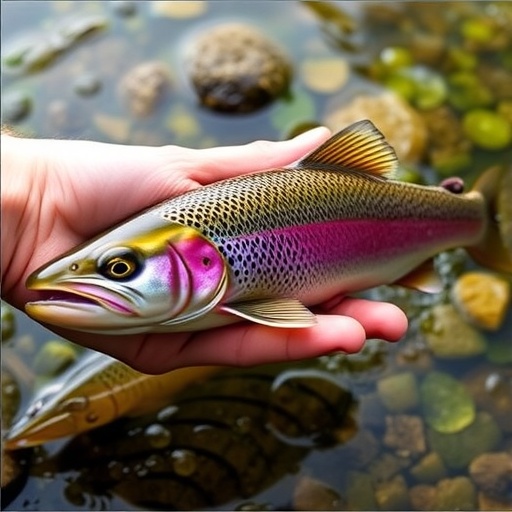
In recent years, the aquaculture industry has been striving for sustainable practices that not only elevate production efficiency but also align with environmental conservation efforts. As global populations rise and the demand for seafood increases, innovative solutions are being explored to enhance fish growth and health while reducing dependency on traditional feed sources. Researchers have turned their focus toward the incorporation of microalgal biomass into fish diets, particularly for species like the rainbow trout, scientifically known as Oncorhynchus mykiss. This remarkable fish is favored in aquaculture for its rapid growth and adaptability.
A pivotal study investigated the effects of supplementing the diet of rainbow trout with microalgal biomass within a closed aquaculture system. The research, spearheaded by a team of experts including Semjonovs, Ilgaža, and Začs, delves into how these microalgae contribute to enhancing growth rates and overall fish health. The study serves as a vital step forward, presenting the potential for microalgae to replace conventional fish feed ingredients, which are often derived from unsustainable sources like wild-caught fish.
Microalgae, microscopic aquatic plants, are renowned for their exceptional nutrient profiles. They’re rich in proteins, omega-3 fatty acids, vitamins, and various trace elements crucial for fish development. These attributes make them a promising alternative feed source. In an innovative twist, this research assessed not only the growth metrics of the trout but also their health biomarkers, such as immune response and disease resistance, which are critical for the sustainability of aquaculture practices.
Conducted using a controlled environment, the study provided detailed observations on how varying levels of microalgal supplementation in the diet impacted growth performance. Trout receiving higher concentrations of microalgal biomass demonstrated a significant increase in weight gain compared to those on traditional diets. These findings are transformative, as they support the hypothesis that microalgae not only promote better growth but could potentially lead to more robust fish stocks in farming scenarios.
Furthermore, the implications of such dietary changes extend beyond mere growth statistics. Incorporating microalgae into fish diets may also enhance the nutritional quality of the trout. The omega-3 fatty acids derived from these microalgae can enrich the fish meat, delivering not just an economic advantage but also a nutritional boon for consumers. As health-conscious individuals look for sustainable seafood options, trout enriched with microalgal content could become a highly sought-after product in markets.
The reduction of reliance on fishmeal, a commonly used ingredient in aquaculture that contributes to overfishing and environmental degradation, is another significant advantage of integrating microalgae into fish diets. A green, sustainable source of nutrients, microalgae farming presents an opportunity to create a closed-loop system where waste from fish can be recycled as nutrients for the algae, thereby fostering a more sustainable aquaculture practice overall.
The methodology of this groundbreaking research lays a solid foundation for future investigations into alternative aquaculture diets. The careful monitoring and analysis of growth patterns, health status, and feed conversion ratios provide a valuable dataset that can be utilized across various species in the aquaculture industry. Researchers aim to explore the potential of different species of microalgae and their effects on various fish types, further drawing on the ever-expanding understanding of aquafeed formulations.
The study’s structure is rigorous, incorporating replicates and appropriate controls to ensure reliable data. By providing transparency regarding the processes and evidence gathered, the research bolsters confidence in the shift toward microalgae-based feeding practices. Fisheries and aquaculture practitioners can rest assured that such dietary innovations are being vetted through diligent scientific inquiry.
Moreover, understanding the physiological responses of rainbow trout to microalgal diets helps in refining aquaculture management practices. It reveals crucial insights into how fish metabolism interacts with new feed sources. Potential shifts in nutrient absorption and utilization provide a roadmap for optimizing feeding regimens, which could revolutionize how fish farms operate globally.
Equally fascinating is the potential of microalgae to stimulate the immune system of rainbow trout. A robust immune response is essential for fish health, influencing their ability to combat diseases prevalent in aquaculture environments. The administration of microalgal supplements may evoke beneficial immune responses, thus reducing the need for antibiotics and other pharmaceuticals, which are often overused in aquaculture.
As the world grapples with sustainability challenges, this research stands testament to the innovative pathways being charted within aquaculture. It emphasizes the importance of collaborative efforts in scientific exploration, where gastronomy meets eco-consciousness, and cultivates a hope for a future where sustainable aquaculture flourishes.
The study not only highlights an essential partnership between nutrition and aquaculture sustainability but also showcases the potential for microalgae to reshape the industry. The extensive benefits of adopting microalgal diets for fish emphasizes the necessity of continuing this line of research, as findings have significant implications not just for fish farmers, but for consumers as well.
The future of aquaculture is increasingly tied to the resilience and innovation of its practices, and the integration of microalgal biomass represents a leap toward harmonizing economic viability with ecological sustainability. Continued research and field trials will be crucial in determining the long-term impacts, but initial results are undeniably promising.
In conclusion, the findings of the recent study provide robust evidence advocating for the inclusion of microalgal supplements in trout aquaculture. This development could spearhead broader changes within the industry, steering it toward more environmentally friendly practices while also meeting a growing consumer demand for healthy and sustainably sourced seafood. As such, this research not only informs the future of fish feed but also aligns with a global initiative toward sustainable food production.
Subject of Research: Effects of diet supplementation with microalgal biomass on rainbow trout in closed aquaculture systems.
Article Title: Effects of rainbow trout (Oncorhynchus mykiss) diet supplementation with microalgal biomass in closed aquaculture system.
Article References:
Semjonovs, P., Ilgaža, A., Začs, D. et al. Effects of rainbow trout (Oncorhynchus mykiss) diet supplementation with microalgal biomass in closed aquaculture system. 3 Biotech 16, 46 (2026). https://doi.org/10.1007/s13205-025-04666-y
Image Credits: AI Generated
DOI: https://doi.org/10.1007/s13205-025-04666-y
Keywords: Sustainable aquaculture, microalgae, rainbow trout, feed supplementation, fish health, omega-3 fatty acids, aquafeed innovation.


