

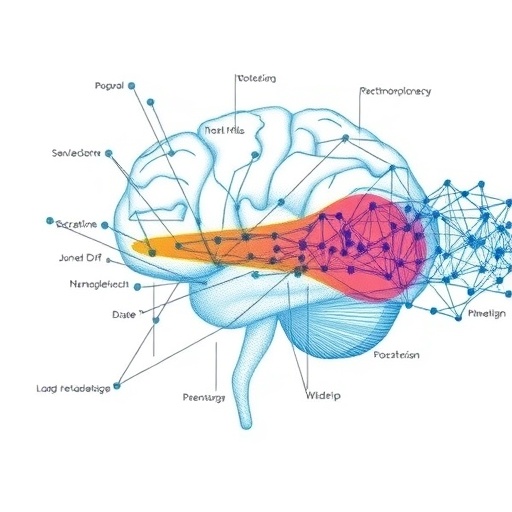
In a groundbreaking advance set to transform the landscape of Parkinson’s disease management, a team of researchers has introduced novel computational methods to optimize disease progression scales, promising unprecedented precision and potential for personalized therapeutic approaches. Parkinson’s disease (PD), a progressive neurodegenerative disorder characterized primarily by motor dysfunction and a spectrum of non-motor symptoms, has long challenged clinicians and researchers with its variable and often unpredictable course. Accurate measurement tools for tracking disease progression are essential—not only for clinical decision-making but also for evaluating the efficacy of therapeutic interventions in clinical trials.
The traditional scales used to measure Parkinson’s disease progression, such as the Unified Parkinson’s Disease Rating Scale (UPDRS), while foundational, are hampered by several limitations. Subjectivity in clinical assessment, inter-rater variability, and insensitivity to subtle changes in disease status impede the ability to capture the nuanced trajectory of PD in individual patients. These challenges have motivated the scientific community to seek improvements that can transform longitudinal patient monitoring from categorical and episodic snapshots into dynamic, high-resolution continuous assessment models.
Harnessing computational methodologies—particularly machine learning algorithms and advanced statistical modeling—researchers have sought to re-engineer these progression scales, injecting data-driven insights directly into the measurement process. By leveraging large, multidimensional datasets that encompass clinical, biochemical, genetic, and imaging information, these algorithms develop models that can discern patterns and correlations invisible to human analysis alone. Such models optimize the weighting and combination of individual scale components, improving sensitivity to change and removing noise from measurement.
One of the key innovations is the application of supervised learning techniques that train on extensive historical data from cohorts of Parkinson’s patients with known progression outcomes. These models are adept at predicting progression trajectories by identifying subtle signals embedded in the complex datasets. Deep learning approaches, in particular, can assimilate longitudinal data streams to forecast future disease states, enabling clinicians to anticipate and tailor interventions proactively. The computational methods also incorporate adaptive algorithms that refine themselves as new patient data become available, ensuring continual improvement in accuracy and relevance.
Furthermore, the integration of multimodal data sources—for example, merging motor scores with wearable sensor outputs, neuroimaging metrics, and molecular biomarkers—facilitates a more holistic characterization of disease state. Computational models can then synthesize these disparate data types into a unified progression score that reflects the multifaceted nature of Parkinson’s. This holistic scoring is crucial because PD’s expression varies widely among individuals, with differing contributions from motor and non-motor symptoms such as cognitive impairment, mood disorders, and autonomic dysfunction.
The researchers’ methodology includes rigorous validation procedures, employing independent cohorts to test generalizability and robustness across diverse populations and disease stages. Cross-validation techniques help prevent overfitting, ensuring that models not only perform well on training data but also maintain predictive power in real-world clinical settings. This careful validation underpins confidence that these computationally optimized scales can be deployed reliably in both research trials and routine patient care.
Crucially, such advancements promise to accelerate drug development pipelines. Improved progression scales translate into more sensitive endpoints that can detect treatment effects earlier and with smaller patient sample sizes, reducing costs and shortening trial durations. For pharmaceutical companies and regulatory agencies, having precise, objective, and reproducible measures of disease progression marks a significant step forward in the quest for disease-modifying therapies, a holy grail in Parkinson’s research.
The computational optimization also opens avenues for patient empowerment. By embedding these models into digital health platforms, patients might gain greater insight into their disease trajectory through intuitive visualizations and personalized prognostic information. Such feedback could enhance adherence to therapeutic regimens and lifestyle modifications, ultimately improving quality of life.
However, the deployment of these computational tools is not without challenges. Ensuring data privacy and security is paramount, especially given the sensitive nature of health information aggregated from multiple sources. Algorithmic transparency and explainability remain critical to secure trust among clinicians and patients. There also exists an ongoing need to address potential biases in datasets, which if unchecked, may lead to models less applicable to underrepresented populations.
Despite these hurdles, the trajectory of this technological advance is clear. The intersection of computational sciences and neurology heralds a new era in which the dynamic, complex progression of Parkinson’s disease can be measured with unprecedented granularity. This paradigm shift promises not only scientific insights into disease mechanisms but also practical tools that alter the clinical management landscape fundamentally.
Importantly, this work reflects a broader trend toward precision medicine in neurodegenerative diseases. By tailoring diagnostic and therapeutic approaches to the individual patient profiles generated from rich, computationally processed data, clinicians inch closer to an era of truly personalized care. This is especially critical in Parkinson’s, where the heterogeneity of symptoms and progression patterns has long confounded one-size-fits-all approaches.
Beyond scale optimization, the underlying computational frameworks may also be adapted to identify novel biomarkers or therapeutic targets by uncovering hidden relationships within the data. Such discoveries could catalyze new research avenues and interventions, potentially addressing unmet needs in treatment-resistant or atypical PD cases.
This research, published in the prestigious journal npj Parkinson’s Disease, sets a benchmark for computational innovation applied to clinical neurology. By bridging methodologic rigor with clinical relevance, it exemplifies multidisciplinary collaboration essential for tackling complex diseases. Going forward, broader adoption and continuous refinement of these optimized progression scales will depend on collaborative efforts among clinicians, data scientists, patients, and industry stakeholders.
The promise held by computationally optimized progression scales in Parkinson’s disease is emblematic of the power inherent in data-driven medicine. As these technologies mature and integrate seamlessly into clinical workflows, they offer hope for improved patient outcomes, accelerated discovery, and a deeper understanding of a disease that affects millions worldwide.
Subject of Research: Parkinson’s disease progression measurement and computational optimization of clinical scales.
Article Title: Optimizing Parkinson’s disease progression scales using computational methods.
Article References:
Benesh, A., Alcalay, R.N., Mirelman, A. et al. Optimizing Parkinson’s disease progression scales using computational methods. npj Parkinsons Dis. (2026). https://doi.org/10.1038/s41531-026-01259-1
Image Credits: AI Generated


