

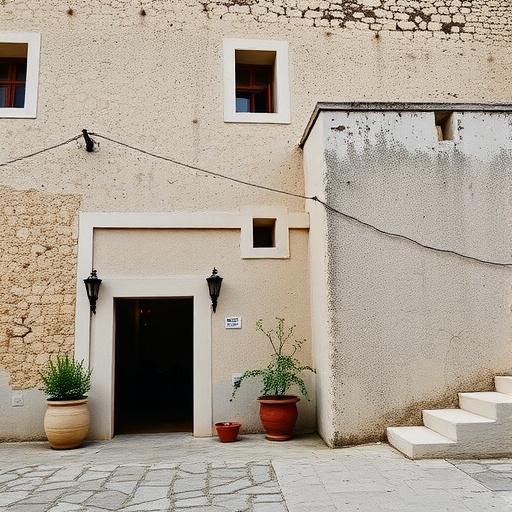
In a groundbreaking study, researchers have explored the transformative effects of commercially available Bentonite Nanoclay on the treatments of mortars utilized within heritage and historical structures. This research, conducted by a team led by Jalalifar, Niroumand, and Afsharpour, unravels the nuanced role of nanotechnology in restoration practices, particularly within the realm of architectural conservation. The study reveals that the application of Bentonite Nanoclay through a Nano Spraying Technique (NST) can significantly enhance the mechanical properties and durability of historical mortars, addressing common degradation issues faced by these critical cultural assets.
The advent of nanotechnology has heralded a new era in various fields, including materials science and restoration engineering. The introduction of nanoscale materials provides innovative solutions to long-standing challenges related to conservation. This research aims to shed light on how integrating such materials, specifically Bentonite Nanoclay, into traditional mortar compositions can vastly improve their performance metrics, thereby prolonging the lifespan of structures that are otherwise vulnerable to environmental wear and historical degradation.
Bentonite, a type of clay known for its plasticity and absorbent qualities, has proven to be an excellent candidate for enhancing the properties of mortars. When reduced to the nanoscale, Bentonite exhibits unique characteristics that differ significantly from its bulk counterparts. The study systematically details the properties of Bentonite Nanoclay, emphasizing its high surface area and reactivity, which facilitate better bonding with the traditional components of mortar, such as lime and cement.
The methodology employed in this research involved a comprehensive series of experimental tests designed to assess the effects of Bentonite Nanoclay on mortars. The researchers meticulously controlled the proportions of the nanoclay in various mortar mixes and applied innovative Nano Spraying Techniques to ensure uniform distribution. This careful preparation is vital as even slight discrepancies in application could lead to inconsistent outcomes. The study illustrates how these meticulous techniques can produce homogenous mixes that significantly increase the material’s resistance to external degradation factors such as moisture and temperature fluctuations.
Through rigorous testing including compressive strength assessments, water retention studies, and microstructural examinations via advanced imaging techniques, the study provides compelling evidence of the enhanced performance of mortars fortified with Bentonite Nanoclay. Results indicate marked improvements in tensile strength and elasticity, attributed to the enhanced interfacial adhesion between the constituents of the mortar and the nanoclay. This enhanced bonding is crucial for the structural integrity of historical buildings, which often exhibit complex material interactions due to the layers of historic repairs.
Moreover, the research not only addresses the mechanical performance of mortars but also their compatibility with traditional building techniques and materials. Conservation efforts often grapple with the challenge of using modern materials in a way that does not adversely affect the original fabric of heritage sites. The study’s findings advocate that the modified mortars maintain compatibility with original materials, ensuring that restoration efforts do not compromise the authenticity of historical features.
The implications of this research extend beyond mere enhancement of mortar properties. The study also discusses how the systematic application of such nanotechnology encourages sustainable restoration practices. The use of natural materials like Bentonite, in conjunction with advanced techniques, align with the growing call for environmentally responsible approaches in architecture and construction. By reducing the need for frequent repairs and replacements, the adoption of these methods could lead to cost-effective strategies for preserving cultural heritage.
In the broader context, the research opens a dialogue about the future of preservation technologies in art and architecture. The fusion of ancient wisdom in construction techniques with new technological advancements embodies a promising pathway for architects, conservators, and restoration engineers. It is crucial to embrace such interdisciplinary approaches that utilize the best of both worlds, ensuring that the legacy of historical structures is honored while adapting to contemporary needs.
The excitement behind the study is also reflected in its potential applications beyond the immediate field of historical preservation. The principles established herein could inspire innovations in various construction materials used in contemporary structures. For instance, the findings could stimulate the development of new high-performance mortars for use in demanding environments, thereby expanding the utility of Bentonite Nanoclay in modern engineering.
As the research gains visibility within academic and professional circles, it is likely to serve as a catalyst for further studies exploring the intersection of nanotechnology and architectural conservation. Researchers are now posed with the task of delving deeper into other types of nanoscale materials that could also revolutionize restoration practices, expanding the toolkit available to conservators worldwide.
In summary, Jalalifar and colleagues have significantly contributed to the field of heritage conservation by pioneering the use of Bentonite Nanoclay within historical mortar treatments. Their work reflects an important step forward in understanding how innovative materials can complement traditional practices, paving the way for more effective and sustainable conservation strategies. The study’s findings are set to influence not only the methodologies of current heritage preservation but also inspire future generations of architects and conservators committed to protecting our shared cultural history.
As we move into an era where heritage conservation and nanotechnology become ever more intertwined, this research exemplifies the potential for creating resilient structures that honor the past while preparing for the future. There is much anticipation about how these advancements will shape the landscape of architectural preservation in the years to come.
Subject of Research: The impact of Bentonite Nanoclay on the fortification of mortars in historical buildings.
Article Title: Correction: Impact of spraying commercial Bentonite Nanoclay on fortification of the mortar as Nano Spraying Technique (NST) in heritages and historical buildings.
Article References:
Jalalifar, S., Niroumand, H., Afsharpour, M. et al. Correction: Impact of spraying commercial Bentonite Nanoclay on fortification of the mortar as Nano Spraying Technique (NST) in heritages and historical buildings.
Sci Rep 15, 43562 (2025). https://doi.org/10.1038/s41598-025-30693-z
Image Credits: AI Generated
DOI:
Keywords: Nanotechnology, Bentonite, Mortar, Heritage conservation, Sustainable restoration practices.


