

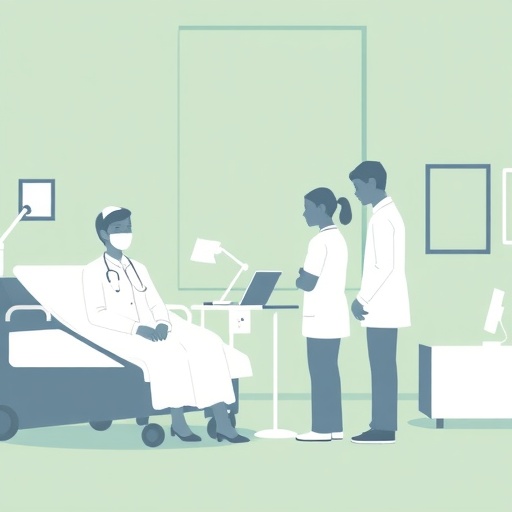
In an era defined by rapid advancements in healthcare, the training and preparation of future nurses have never been more critical. The ongoing transition from academic learning to practical clinical experience poses significant challenges for nursing students, which has prompted educators and researchers to explore innovative methodologies that can enhance the learning process. A groundbreaking study conducted by Haddeland, Briseid, Kaldheim, and their team shines a light on one such innovation: the use of simulation in nursing education. The findings of their focus group study outlined in “Empowering Future Nurses” shed valuable insights into how simulation can effectively bridge the gap between theory and practice.
Simulation in healthcare education is not a novel concept; it has been utilized for decades to provide students with safe environments to practice clinical skills. However, the recent study takes a deeper dive into the specific impacts of simulation on the transition to clinical practice. By employing focus group discussions with nursing students from various educational backgrounds, the researchers gathered qualitative data that revealed both the benefits and challenges associated with this mode of learning. The study’s outcomes are poised to influence nursing curricula globally, suggesting that simulation could become a cornerstone of nursing education moving forward.
The transition from the classroom to the clinic is often fraught with anxiety and uncertainty for nursing students. Many face a steep learning curve as they grapple with real-world scenarios that demand quick thinking, effective communication, and immediate application of theoretical knowledge. The focus group participants in the study consistently reported feelings of apprehension before entering clinical settings, mentioning concerns about their preparedness and confidence. These emotions underscore the urgent need for educational strategies that not only impart clinical knowledge but also build emotional resilience and practical skills.
The researchers proposed that simulation could serve as a vital tool in alleviating these fears by allowing students to engage in realistic clinical scenarios without the stakes of real patient care. Through immersive simulations, students can practice clinical procedures, sharpen their decision-making skills, and receive immediate feedback from instructors, all of which contribute to greater confidence when they eventually encounter actual patients. The study highlighted numerous scenarios where simulation could be particularly beneficial, from basic skills like taking vital signs to complex emergency response situations.
One of the compelling findings from the study was the sense of camaraderie and teamwork fostered during simulation exercises. Participants noted that working alongside their peers in simulated environments mirrored the collaborative nature of real healthcare settings. This point emphasizes the importance of teamwork in nursing, as effective communication and cooperation are critical components of quality patient care. By engaging in simulation-based learning, students not only develop their individual skills but also learn to appreciate the dynamics of working as part of a healthcare team.
Furthermore, the study yielded insights into the emotional responses of students during simulations. Many experienced an adrenaline rush akin to that felt in real clinical situations, providing a unique opportunity to practice stress management techniques. Educators involved in the research emphasized that teaching students how to manage anxiety and maintain composure is essential for their development as competent nurses. The exploration of simulation as a tool for emotional processing is a noteworthy contribution to nursing education literature, offering a framework for integrating emotional intelligence training into curricula.
The researchers also addressed some of the challenges associated with implementing simulation in nursing programs. One significant barrier is the resource-intensive nature of high-fidelity simulation labs, which require substantial financial investment and training for faculty. This aspect raises critical questions about equity in access to quality nursing education, especially for institutions with limited budgets. The study advocates for a balanced approach that weighs the benefits of simulation against logistical constraints, encouraging programs to explore innovative solutions to enhance accessibility while maintaining quality.
Another critical point highlighted in the study is the necessity of curriculum alignment. For simulation to be most effective, it needs to be seamlessly integrated into the broader educational framework. The researchers suggest that nursing programs must develop clear objectives for simulation exercises that align with overall learning outcomes. This alignment ensures that students are not only engaging in stimulating activities but are also acquiring the knowledge and skills deemed necessary by accrediting bodies and the healthcare community.
The focus group discussions further revealed the potential of technology-enhanced simulations, including virtual reality (VR) and augmented reality (AR). These technologies can create immersive learning environments that provide students with a safe space to practice skills and hone their judgment. While traditional simulation models offer substantial benefits, VR and AR have the potential to revolutionize nursing education by bringing scenarios to life in unprecedented ways. The researchers encourage nursing programs to explore the integration of these technologies into their curricula as they prepare for the future of nursing education.
Data from the study revealed an increase in job satisfaction amongst graduates who had undergone significant simulation training during their education. Those who felt better prepared for clinical practice were less likely to experience burnout in their early careers, contributing to a more robust nursing workforce. This correlation between simulation training and long-term job satisfaction serves as a compelling argument for nursing programs to invest in simulation as a fundamental educational technique.
In summary, Haddeland and colleagues’ study provides a comprehensive examination of how simulation can empower the next generation of nurses. By addressing the transition to clinical practice through immersive learning experiences, the research advocates for a paradigm shift in nursing education that prioritizes practical experience. As the nursing profession continues to evolve, such studies are crucial in providing evidence-based recommendations for educators tasked with preparing students for the realities of healthcare.
The potential impacts of simulation on nursing education are profound, not only for the students involved but also for the patients they will eventually serve. By enhancing preparedness and confidence among new nurses, the integrative use of simulation could lead to improved patient outcomes, reduced errors, and ultimately a healthier society. The urgent call to action is clear: educational institutions must leverage research such as this to reshape nursing curricula, ensuring that future nurses are not just knowledgeable but also equipped to face the complexities of clinical practice.
Empowering future nurses through improved educational practices is not just beneficial; it is essential for the evolving healthcare landscape. The findings of this focus group study serve as a roadmap for institutions seeking to enhance their approach to nursing education, paving the way for a new generation of confident, competent, and compassionate caregivers in the field of healthcare.
Subject of Research: The impact of simulation on nursing education and the transition to clinical practice.
Article Title: Empowering future nurses: a focus group study on simulation for transition to clinical practice.
Article References:
Haddeland, K., Briseid, H.S., Kaldheim, H.K.A. et al. Empowering future nurses: a focus group study on simulation for transition to clinical practice.
BMC Nurs (2025). https://doi.org/10.1186/s12912-025-04229-9
Image Credits: AI Generated
DOI:
Keywords: Nursing education, simulation, clinical practice, focus group study, healthcare training.


