

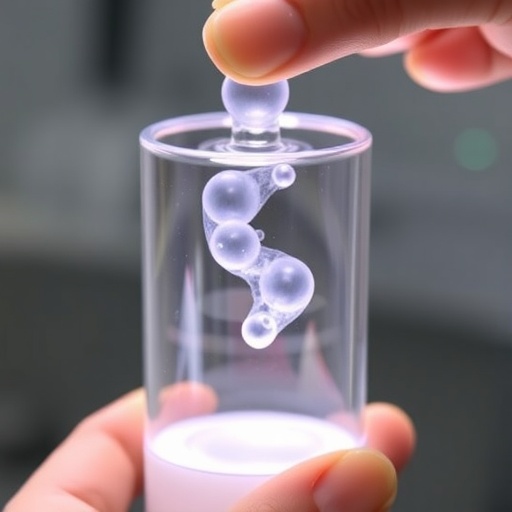
In the intricate process of in vitro fertilization (IVF), selecting the healthiest embryo to implant is a crucial yet challenging task. Despite advancements in reproductive medicine, success rates for IVF hover below 33 percent globally, underscoring the dire need for innovations that can enhance embryo evaluation. Embryologists heavily rely on visual cues observed under a microscope—subtle features such as precise cell division patterns and the formation of internal embryo structures are pivotal markers of viability. Thus, the ability to capture clear, undistorted images of these minute details is paramount for improving IVF outcomes.
Traditional embryo culture platforms have leaned heavily on the use of flat dishes or small microwell arrays dubbed “well‑of‑the‑well” (WOW) dishes. These three-dimensional microwells foster a more supportive microenvironment, aiding in the natural development of embryos by allowing spatial organization somewhat akin to in vivo conditions. However, a significant drawback emerges from the optical properties of materials commonly used in these microwells—mainly plastics and silicone-based substances like polydimethylsiloxane (PDMS). These materials possess refractive indices that differ from the culture medium, which consists predominantly of aqueous solutions. This mismatch causes light to refract unevenly, resulting in blurred visuals, edge warping, and optical artifacts that hinder the precise inspection of the embryo’s internal morphology.
Recognizing this persistent obstacle, a research team from Vanderbilt University unveiled a groundbreaking solution that leverages the nearly identical refractive indices of agarose hydrogel and the embryo culture medium. Agarose, a hydrogel composed of more than 90 percent water, serves as an almost transparent scaffold. By fabricating WOW dishes out of this material, the researchers effectively rendered the three-dimensional dish structure optically “invisible” from a microscopic standpoint. This index-matching strategy enables microscopy to produce images free from the distortions that plague traditional culture devices, facilitating unprecedented clarity in embryo visualization.
A series of rigorous experiments validated the optical superiority of agarose-based microwells over PDMS counterparts. Utilizing minuscule microspheres as reference targets, the team assessed key imaging benchmarks such as resolution and geometric fidelity. While conventional PDMS dishes produced images marred by visible manufacturing ridges and distortions, agarose dishes presented smooth, true-to-form visuals with almost no optical degradation. This morphological integrity is crucial for embryologists who need reliable imagery to discern subtle but meaningful developmental cues.
To quantitatively characterize the optical performance, a Shack–Hartmann wavefront sensor was employed. This sophisticated optical instrument maps the shape alterations of traveling light waves induced by the dish material. Results demonstrated that PDMS introduced complex, high-order aberrations that could confound microscopic evaluation. In stark contrast, agarose dishes exhibited wavefront profiles nearly indistinguishable from standard flat petri dishes, indicating virtually no aberration. This breakthrough confirms the agarose hydrogel’s exceptional suitability for maintaining the optical clarity essential for embryo assessment.
Beyond optical considerations, the biological compatibility of such innovative culture devices is paramount. The team cultured mouse embryos within these agarose WOW platforms to ascertain whether the new system could support normal embryonic development. Encouragingly, embryos exhibited growth trajectories and morphological characteristics consistent with those observed in established culture environments. Microscopy revealed crisp, well-defined internal structures, including the blastocyst cavity and trophectoderm cells—key indicators embryologists scrutinize when grading embryos.
This novel agarose-based approach effectively removes the longstanding trade-off imposed by traditional materials between supporting natural embryo development and enabling clear observation. With the optical distortions mitigated, embryologists can now monitor development in a nurturing 3D environment without compromising image quality. This dual advantage holds profound implications for refining embryo selection criteria, potentially increasing the precision of choosing embryos with the highest potential for successful implantation and pregnancy.
The innovation carries additional practical benefits. Agarose is a biocompatible, widely used material in biological research with minimal toxicity, making it ideal for delicate applications such as embryo culture. The fabrication process for agarose WOW dishes also lends itself to scalability and cost-effectiveness, promising broad applicability in fertility clinics. Importantly, the methodology unlocks new possibilities for integrating advanced imaging techniques, such as time-lapse microscopy and quantitative image analysis, which rely on undistorted, high-resolution visuals.
This advancement aligns with the broader trend in assisted reproductive technologies aiming to enhance non-invasive embryo diagnostics. By shining light—literally—on embryonic development with greater fidelity, researchers and clinicians can better discern developmental anomalies and subtle phenotypic markers predictive of successful pregnancy outcomes. Ultimately, this technology could contribute to reducing the incidence of multiple embryo transfers, which pose risks to both mothers and infants, by enabling single-embryo selection with increased confidence.
As the field progresses, further investigations will likely explore how agarose-based WOW platforms interact with other facets of embryo culture, such as nutrient diffusion dynamics and gas exchange. Additionally, adapting this design to human embryos and integrating it with clinical IVF workflows will be critical steps toward translating laboratory success into real-world patient benefit. The synergy between materials science and reproductive biology exemplified in this study sets a compelling precedent for interdisciplinary innovations that tackle longstanding clinical challenges.
In a domain where every cellular nuance can determine life’s earliest outcomes, the introduction of index-matched agarose microwells for embryo imaging heralds a significant leap forward. It promises to empower embryologists with sharper, more reliable windows into embryogenesis, enhancing their ability to select embryos destined for healthy pregnancies. This development stands poised to elevate IVF success rates and offers hope to millions of couples navigating the difficult journey of infertility worldwide.
Subject of Research: Embryo culture and imaging technology optimization
Article Title: Index matching improves the imaging quality of 3D well-of-the-well dishes for embryo culture
News Publication Date: 7-Jan-2026
Web References: https://www.spiedigitallibrary.org/journals/biophotonics-discovery/volume-3/issue-01/012103/Index-matching-improves-the-imaging-quality-of-3D-well-of/10.1117/1.BIOS.3.1.012103.full
References: Y. Zhao et al., “Index matching improves the imaging quality of 3D well-of-the-well dishes for embryo culture,” Biophoton. Discovery 3(1), 012103 (2026), doi 10.1117/1.BIOS.3.1.012103
Image Credits: Y. Zhao et al.
Keywords: Human reproduction, Embryo culture, IVF technology, Optical imaging, Agarose, Well-of-the-well dishes, Index matching, Biophotonics


