

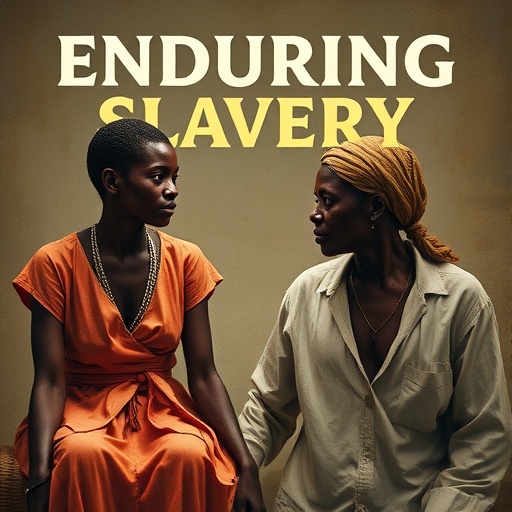
In a groundbreaking historical-demographic study, researchers from Radboud University and Wageningen University & Research have uncovered stark evidence confirming the pivotal role of maternal figures in the survival of children born into slavery on Surinamese plantations during the nineteenth century. Published recently in the journal Demography, their research delves deeply into over 19,000 cases recorded between 1830 and 1863. By meticulously analyzing these slave registers, the scholars have illuminated the devastating impact of maternal absence on child mortality and highlighted the broader protective influence of extended maternal kin, such as grandmothers and aunts, in conditions marred by colonial brutality and harsh living environments.
The rigors of plantation life during this era subjected enslaved communities to extreme adversity. Child survival was threatened not only by rampant epidemics and unsanitary conditions but also by the systemic dehumanization enslaved people endured under colonial rule. Within such a hostile setting, familial bonds emerged as crucial survival mechanisms. The study quantitatively establishes, for the first time with historical data, what had previously been mainly anecdotal: that the presence of mothers, and to a significant degree, maternal grandmothers and other close female relatives, provided indispensable care resources that markedly reduced the risk of early death for young children.
The researchers employed an extensive dataset derived from the Historical Database of Suriname and the Caribbean (HDSC), an ambitious citizen science initiative engaging hundreds of volunteers to transcribe and digitize historic slave registers. This allowed systematic, large-scale analysis that transcended limitations faced by earlier historiography and demographic studies focused on slavery. The availability of individual-level data offered fresh insights into family structures and mortality patterns, enabling the team to quantify mortality risks associated with maternal absence in infancy.
Their findings are compelling and sobering: infants whose mothers died within their first year were over six times more likely to perish compared to children whose mothers survived. This heightened vulnerability can be attributed largely to breastfeeding’s critical role in early-life nutrition and immune protection before the advent of modern alternatives. The authors emphasize that during the first eighteen months, the biological benefits of breastfeeding were irreplaceable, particularly given the poor quality and hygiene of substitute feeding methods available to enslaved populations. The absence of maternal breast milk thus had direct, fatal consequences.
While paternal information was largely absent from the records, constraining analyses to maternal lines, the study nonetheless underscores the critical influence of the maternal family cluster. By examining survival beyond infancy, the researchers uncovered that grandmothers and other maternal kin significantly enhanced survival odds between ages one to five. These relatives provided essential caregiving, nutritional support, and protection in a context where child mortality normally spiked due to infectious disease and neglect. The findings resonate with contemporary anthropological models of cooperative breeding and extended kin networks fostering child survival in high-risk environments.
Beyond purely biological considerations, the study sheds light on the social fabric of enslaved communities under oppressive plantation regimes. The data suggests that familial networks functioned as not only practical supports but also as sociocultural forms of resistance and resilience. As Björn Quanjer, a historian and co-author, articulates, “Even under the terrible conditions of slavery, family was a form of resistance. Together, you could survive.” This framing challenges narratives that view enslaved individuals solely as passive victims, instead highlighting agency exercised through kinship as a protective strategy.
The implications of this research extend into the contemporary era, offering insights into current Surinamese communities where extended family remains a fundamental part of social life. The historical evidence aligns with ethnographic observations that strong kin networks continue to mitigate social vulnerabilities. Moreover, the study contributes to a broader demographic understanding of how familial structures historically shaped survival trajectories in settings of extreme adversity.
An additional methodological advance in the research was harnessing citizen science for data transcription, a practice that expands the possibilities for historical demographic research into large archival datasets previously inaccessible to quantitative analysis. This approach paves the way for future studies using similar slave registers and other colonial administrative records globally, facilitating cross-comparisons and more nuanced understandings of kinship and mortality under slavery.
Looking ahead, the team aims to integrate data from post-abolition civil registries where paternal lineages are more thoroughly documented. This will enable a fuller mapping of the roles different family members played in child survival beyond the maternal line, potentially illuminating the evolving dynamics of family and social support following emancipation.
In summary, this study provides a powerful, data-driven narrative that mothers and maternal grandmothers were not merely caregivers but essential life-sustaining pillars in the most harrowing of historical circumstances. The interplay of biology, social networks, and historical realities unveiled here enriches our comprehension of survival strategies under slavery and underscores the enduring importance of family as a cornerstone of human resilience.
Subject of Research: Child survival and family structures among enslaved populations on Surinamese plantations between 1830–1863
Article Title: Mothers and Maternal Grandmothers Kept Children Alive During Slavery: Evidence From the Surinamese Slave Registers, 1830–1863
News Publication Date: 6-Feb-2026
Web References: http://dx.doi.org/10.1215/00703370-12446726
Keywords: Demography, Population, Slavery, Child Mortality, Family Structures, Suriname, Historical Demography, Maternal Care, Grandmothers, Kin Networks


