

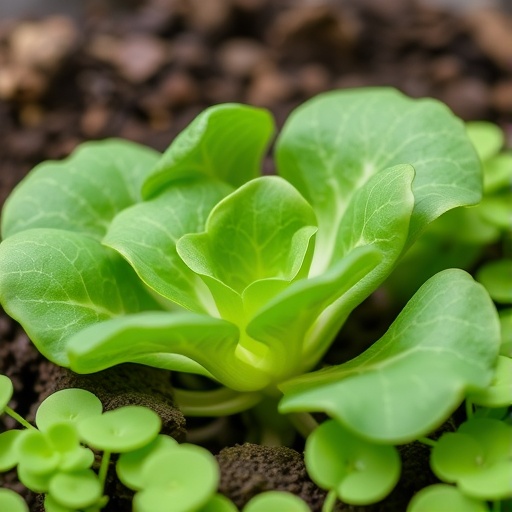
In a groundbreaking study published in Frontiers in Environmental Science and Engineering, researchers have unveiled the remarkable capabilities of an endophytic bacterium known as Sphingomonas sp. SaMR12. This bacterium has proven to be a critical ally for the plant Brassica juncea, commonly known as Indian mustard, in combating the detrimental effects of cadmium stress. Cadmium, an environmental pollutant, poses severe risks to plant health and, consequently, agricultural productivity. The findings from this research not only shed light on plant-bacterial interactions but also pave the way for innovative strategies to enhance crop resilience against heavy metal contamination.
The significance of Sphingomonas sp. SaMR12 lies in its unique ability to improve photosynthetic performance in Brassica juncea exposed to cadmium stress. This phenomenon is crucial since photosynthesis is the cornerstone of plant health, affecting growth and yield. The study meticulously details how the endophytic bacterium enhances chlorophyll content and increases the efficiency of photosystem II, allowing plants to harness solar energy more effectively, even when challenged by high levels of cadmium.
Moreover, the researchers conducted extensive experiments to quantify the effects of Sphingomonas sp. SaMR12 on various physiological parameters of Brassica juncea. Through rigorous assessments, they uncovered that the presence of this bacterium notably mitigates cadmium accumulation in plant tissues. This reduction is vital as cadmium is known to cause oxidative stress, leading to cell damage and impaired physiological functions. The findings suggest that the bacterium might be involved in detoxifying cadmium or sequestering it in a non-toxic form, offering a potential bioremediation strategy for contaminated soils.
The study’s methodology involved a two-pronged approach: comparative analyses of cadmium-stressed plants alongside those inoculated with Sphingomonas sp. SaMR12. Advanced imaging techniques were employed to assess chlorophyll fluorescence, providing insights into the variations in photosynthetic efficiency attributed to the bacterial presence. The results painted a promising picture—plants with microbial symbiosis displayed a significantly higher photosynthetic rate compared to their non-inoculated counterparts, illuminating the profound implications of microbial interactions in plant stress responses.
One of the most fascinating aspects of this research is the concept of plant-microbe synergy. By fostering a beneficial relationship with Sphingomonas sp. SaMR12, Brassica juncea appears to enhance its adaptive mechanisms against not just cadmium, but potentially other heavy metal stresses too. This interplay may reshape current agricultural practices, suggesting that the deliberate introduction of specific endophytic bacteria could lead to crops that are better equipped to thrive in polluted environments.
The broader implications of this research extend into the realm of sustainable agriculture. As industrial activities continue to elevate the prevalence of heavy metals in arable lands, finding biological solutions to mitigate these effects has become paramount. The potential to employ Sphingomonas sp. SaMR12 as a biostimulant or biofertilizer presents an environmentally friendly alternative to heavy metal remediation. This aligns with a growing trend in agricultural research that prioritizes ecological balance and promotes the health of agro-ecosystems.
In the context of global food security, research such as this is particularly timely. As the world population continues to rise, the demand for effective and sustainable agricultural practices intensifies. Innovations that enhance crop resilience—not only to cadmium stress but to other environmental challenges—are critical. The insights from this study may lead to breeding programs that integrate microbial symbiosis or the development of cultivation techniques that enhance the natural presence of beneficial microbes in soil.
Harnessing the power of Sphingomonas sp. SaMR12 could also inspire new avenues in the study of plant microbiomes. Understanding the microbial consortia associated with various plant species can provide invaluable insights into how plants optimize their growth and resist environmental stresses. This knowledge could revolutionize our approach to cultivating crops in diverse ecosystems, aiding in the transition toward more resilient agricultural landscapes.
Additionally, this research invites a deeper exploration into the biochemical pathways involved in the interactions between Brassica juncea and Sphingomonas sp. SaMR12. Future investigations could elucidate the specific mechanisms through which this bacterium mitigates cadmium toxicity, potentially leading to the discovery of novel compounds or genetic traits that enhance plant stress tolerance.
As this study gains traction in academic circles and beyond, it highlights the importance of interdisciplinary collaboration in tackling complex environmental issues. The integration of microbiology, plant physiology, and environmental science can yield holistic solutions to pressing agricultural challenges. The endorsement of such collaborative efforts may spark new research initiatives aimed at exploring other beneficial microbes that facilitate plant responses to a variety of stressors.
In conclusion, the work of Wang, Xu, and Wu et al. stands as a testament to the potential of endophytic bacteria in agriculture. The multifaceted benefits of Sphingomonas sp. SaMR12 to Brassica juncea under cadmium stress not only contribute to our understanding of plant-bacterial relationships but also highlight a promising pathway for enhancing crop resilience in an increasingly polluted world. As we continue to seek sustainable solutions to global challenges, such findings will undoubtedly inspire future research and innovation in the field of environmental science.
Subject of Research: Endophytic bacterium Sphingomonas sp. SaMR12 and its effects on Brassica juncea under cadmium stress.
Article Title: Endophytic bacterium Sphingomonas sp. SaMR12 facilitates photosynthetic responses to cadmium stress in Brassica juncea L.
Article References:
Wang, Q., Xu, S., Wu, Z. et al. Endophytic bacterium Sphingomonas sp. SaMR12 facilitates photosynthetic responses to cadmium stress in Brassica juncea L..
Front. Environ. Sci. Eng. 19, 147 (2025). https://doi.org/10.1007/s11783-025-2067-7
Image Credits: AI Generated
DOI: 10.1007/s11783-025-2067-7
Keywords: Endophytic bacterium, Sphingomonas, Brassica juncea, cadmium stress, photosynthesis, bioremediation, sustainable agriculture.


